How To Cook Thick Filet Mignon In Oven The Right Way
Cooking thick filet mignon in the oven is easier than you think. This guide walks you through every step to achieve a perfect pink center and a beautiful steak crust. You will learn the reverse sear method, proper internal temperature targets, and pro tips that elevate your oven-baked steak game. Whether you are a beginner or a seasoned home cook, these techniques guarantee juicy steak results.
There is something magical about a perfectly cooked thick filet mignon. The tender, buttery texture melts on your tongue. The golden-brown steak crust gives way to a warm, pink center. Yet, many home cooks fear tackling this cut. They think it requires a fancy steakhouse or expensive equipment. The truth is far from that. With the right approach, your oven-baked steak can rival any restaurant dish on the plate.
This guide covers everything you need to know about how to cook thick filet mignon in the oven. From selecting the right cut to mastering the reverse sear method, you will find practical steps that work every time. Whether you are cooking for a special date night or a weekend dinner with friends, these techniques deliver consistent, stunning results. Let us dive in.
Key Takeaways
- Thick-cut filet mignon needs low-and-slow oven cooking before searing: This ensures even doneness from edge to center.
- A meat thermometer is essential: It takes the guesswork out of reaching the perfect internal temperature for your desired steak doneness.
- The reverse sear method works best for thick steaks: Gentle oven heat followed by a hot sear creates an incredible steak crust.
- Resting your steak matters just as much as cooking it: Letting it rest redistributes juices for a truly juicy steak.
- Quality ingredients and proper seasoning make a huge difference: Simple steak seasoning, butter, and garlic are all you need.
- Avoid common mistakes like skipping the rest or overheating the pan: These small errors ruin an otherwise perfect thick cut steak.
📑 Table of Contents
- Why Oven Cooking Is Perfect for Thick Filet Mignon
- What You Will Need: Tools and Ingredients
- Step-by-Step Guide to Cooking Thick Filet Mignon in the Oven
- The Reverse Sear Method Explained
- Checking Doneness and Internal Temperature Guide
- Common Mistakes to Avoid
- Pro Tips for the Perfect Thick Filet Mignon
- Frequently Asked Questions
- Conclusion
Why Oven Cooking Is Perfect for Thick Filet Mignon
Thick-cut steaks demand a gentle, even cooking approach. A thick filet mignon typically measures at least 1.5 inches thick. Thinner cuts can handle high-heat grilling. But thick steaks need a different strategy. That is where your oven shines.
When you cook thick cut steak in the oven, you control the heat precisely. The oven wraps the meat in consistent, surrounding warmth. This prevents the dreaded gray band that forms when heat hits only one side. The result is a more evenly cooked steak from edge to center. And because the beef tenderloin is naturally lean and tender, it responds beautifully to this gentle method.
The oven also frees up your stovetop. You can prepare sides, sauces, or appetizers while your thick steak cooks slowly. This makes the whole meal feel effortless, even though the final plate looks impressive. Once you master oven-baked steak, you will never go back to overcooking your favorite cuts.
The Science Behind Oven-Cooked Steak
Understanding why this method works helps you trust the process. When heat surrounds the steak evenly, the protein fibers contract slowly. This preserves more moisture inside the meat. A juicy steak starts with gentle cooking. Then, a quick, high-heat sear on the stovetop adds that irresistible steak crust. The combination of low-and-slow oven time plus a blazing-hot sear is the secret behind restaurant-quality steak at home.
What You Will Need: Tools and Ingredients
Before you start, gather everything you need. Preparation makes the process smooth and enjoyable. You do not need a lot of fancy equipment. A few quality tools make all the difference.
Essential Tools
- A cast iron skillet: This holds heat incredibly well and creates a fantastic steak crust.
- A meat thermometer: This is non-negotiable. It tells you the exact internal temperature so you never overcook your thick filet mignon.
- A wire rack: This allows air to circulate around the steak during oven cooking.
- Tongs: For flipping and handling the hot steak safely.
- A baking sheet: To hold the wire rack steady inside the oven.
Ingredients for Perfect Filet Mignon
- Thick filet mignon steaks: Look for cuts at least 1.5 inches thick. Quality beef tenderloin makes a noticeable difference.
- Kosher salt: This draws out moisture gently and seasons deeply.
- Freshly cracked black pepper: Adds a bold, aromatic bite to your steak seasoning.
- Unsalted butter: Used for basting during the final sear.
- Fresh garlic cloves: Whole cloves add subtle flavor during the sear.
- Fresh thyme or rosemary: Aromatic herbs elevate the entire dish.
- A high-smoke-point oil: Like avocado or grapeseed oil for the initial sear.
Choosing the Right Filet Mignon
Not all thick cut steak is created equal. When shopping, look for deep red color with fine marbling. The fat should look creamy white, not yellow. Yellow fat can indicate older meat. Choose steaks that are uniformly thick. Uneven thickness leads to uneven cooking, which defeats the purpose of oven-baked steak. If you can, buy from a trusted butcher. They can cut custom thickness for you. This small step pays off enormously in flavor and texture.
Step-by-Step Guide to Cooking Thick Filet Mignon in the Oven
Now comes the fun part. Follow these steps closely, and you will pull off a flawless thick filet mignon every single time. This method uses the reverse sear technique, which is the gold standard for thick steaks.
Step One: Bring the Steak to Room Temperature
Remove your thick filet mignon from the refrigerator about 30 to 45 minutes before cooking. This lets the meat warm up evenly. A cold steak placed directly in a hot oven cooks unevenly. The outside overcooks while the center stays too cold. Pat the steaks dry with paper towels. Moisture is the enemy of a good steak crust. Dry surfaces sear better and brown more beautifully.
Step Two: Season Generously
Season both sides generously with kosher salt and freshly cracked black pepper. Do not be shy. Salt enhances the natural flavor of the beef tenderloin. Some cooks like to add garlic powder or onion powder to their steak seasoning. That is fine, but keep it simple first. The quality of the meat should shine through. Let the seasoned steaks sit at room temperature while you preheat the oven.
Step Three: Preheat and Set Up
Preheat your oven to 275 degrees Fahrenheit. This low temperature is the heart of the reverse sear method. Place a wire rack on top of a baking sheet. Set the seasoned steaks on the rack. The rack allows hot air to flow around the entire steak. This promotes even oven-baked steak cooking. Slide the tray into the oven and let the magic happen.
Step Four: Cook Low and Slow
Now you wait. A thick cut steak at 275 degrees will take roughly 20 to 30 minutes depending on thickness. Use your meat thermometer to monitor progress. Insert it into the thickest part of the steak. You want to pull the steak out when it reaches about 10 to 15 degrees below your target internal temperature. For a medium-rare finish, that means pulling at around 115 to 120 degrees Fahrenheit. The carryover heat will continue cooking the steak during resting.
Use this time to prepare your cast iron skillet. Place it on the stovetop over high heat. Let it get ripping hot. This usually takes about 3 to 5 minutes. A properly heated skillet is absolutely critical for building that perfect steak crust.
Step Five: The Sear
Remove the thick filet mignon from the oven. Carefully place the skillet on the stove over high heat. Add a small amount of high-smoke-point oil. Once the oil shimmers, lay the steaks gently into the pan. You should hear an immediate, satisfying sizzle. That sizzle means you are building flavor fast.
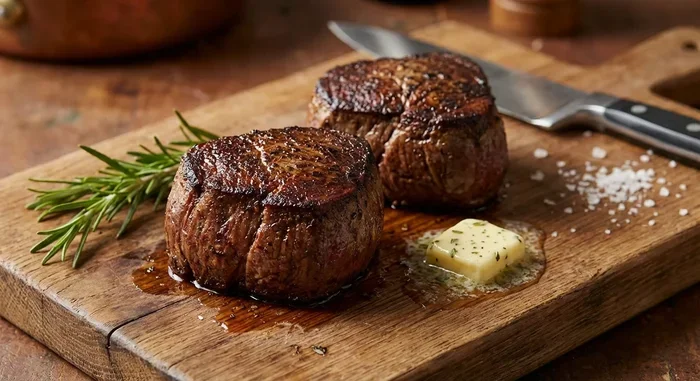
Sear each side for about 60 to 90 seconds. Use tongs to hold the steak and sear the edges too. This takes about 30 seconds per edge. During the final 30 seconds of searing, add butter, garlic cloves, and fresh herbs to the pan. Tilt the skillet slightly and spoon the melted butter over the steak repeatedly. This butter baste technique adds richness and incredible aroma to your oven-baked steak.
Step Six: Rest and Serve
Transfer the seared thick cut steak to a cutting board. Let it rest for at least 5 to 10 minutes. This step is not optional. Resting allows the juices to redistribute throughout the meat. If you cut too early, those precious juices run out onto the board instead of staying inside the steak. A well-rested juicy steak is a tender, flavorful juicy steak. After resting, slice against the grain and serve immediately.
The Reverse Sear Method Explained
The reverse sear method has become the go-to technique for cooking thick filet mignon. It flips the traditional approach on its head. Instead of starting with a blazing-hot pan, you start with a gentle oven.
Traditional searing puts the steak directly into a hot skillet. This works great for thinner cuts. But with thick steaks, the outside burns before the center reaches the right temperature. The reverse sear solves this problem completely. The low oven heat brings the entire steak up to a nearly uniform temperature. Then the quick, intense sear adds color and texture without overcooking the interior.
This method gives you incredible control over steak doneness. Because you are monitoring internal temperature throughout the oven phase, you know exactly where you stand. The margin for error shrinks dramatically. Even beginners can achieve a perfect medium-rare filet mignon using this approach. Professional chefs use it in steakhouses around the world. Now you can too.
Reverse Sear vs. Traditional Sear
Both methods produce excellent results. The traditional sear works best for steaks thinner than one inch. The reverse sear truly excels with thick cuts. Here is a quick comparison:
- Traditional sear: Fast, high-heat method. Best for thin steaks. Higher risk of uneven cooking in thick cuts.
- Reverse sear: Slow, gentle oven phase followed by a quick sear. Best for thick steaks. Delivers more even pink center throughout.
For thick filet mignon, the reverse sear method is the clear winner. It is more forgiving and produces more consistent results. Once you try it, you will wonder why you ever cooked thick steaks any other way.
Checking Doneness and Internal Temperature Guide
Knowing when your thick filet mignon is done is the most important skill in this process. A meat thermometer takes all the guesswork out. Here is a simple temperature guide for oven-baked steak after resting:
- Rare: 120 to 125 degrees Fahrenheit. Cool red center. Very soft texture.
- Medium-Rare: 130 to 135 degrees Fahrenheit. Warm pink center. This is the sweet spot for filet mignon.
- Medium: 140 to 145 degrees Fahrenheit. Slightly pink center. firmer texture.
- Medium-Well: 150 to 155 degrees Fahrenheit. Hint of pink. More done.
- Well-Done: 160 degrees and above. No pink. Not recommended for filet mignon.
Remember that carryover cooking raises the temperature by 5 to 10 degrees after you remove the steak from the heat. Pull your steak early and let the rest do the work. This simple habit transforms your thick cut steak from good to outstanding every time.
Never rely on the touch test alone. Your fingers are not as accurate as a meat thermometer. Invest in a reliable instant-read thermometer. It costs very little and pays for itself in perfectly cooked steak every single time.
Common Mistakes to Avoid
Even experienced cooks make errors with thick filet mignon. Awareness of these mistakes helps you avoid them. Here are the most common pitfalls:
Skipping the room temperature rest: Cooking a cold steak leads to uneven results. The outside overcooks while the center lags behind. Always let your thick cut steak sit out for at least 30 minutes before cooking.
Not drying the surface: Moisture creates steam. Steam prevents a good steak crust from forming. Pat your steaks thoroughly dry with paper towels before seasoning.
Overheating the skillet too early: If you preheat the pan before the steak is ready, you risk burning the oil. Time your skillet heating to coincide with the final oven phase.
Cutting into the steak too soon: The urge to check the center is strong. Resist it. Cutting releases precious juices. Trust your meat thermometer and let the steak rest undisturbed.
Using the wrong oil: Olive oil has a low smoke point. It burns at high temperatures and tastes bitter. Use avocado oil, grapeseed oil, or another high-smoke-point oil for searing.
Neglecting the butter baste: This small step adds enormous flavor. The butter baste with garlic and herbs creates a restaurant-quality finish on your oven-baked steak. Do not skip it.
Pro Tips for the Perfect Thick Filet Mignon
Here are some expert-level tips that separate good steak from unforgettable steak:
- Dry-brine your steaks: Salt them up to 24 hours in advance and leave them uncovered in the fridge. This draws out moisture, which gets reabsorbed. The result is deeper seasoning and a better steak crust.
- Use a wire rack, not a plate: Air circulation matters. A wire rack prevents the bottom from steaming and keeps the entire surface dry for searing.
- Let your skillet get smoking hot: If the pan is not hot enough, the steak will stew instead of sear. Wait for that beautiful wisp of smoke before adding the steak.
- Experiment with compound butter: Mix softened butter with minced garlic, fresh herbs, and a pinch of salt. Place a pat on top of your rested thick filet mignon and watch it melt into the meat.
- Sauce it simply: A pan sauce made from the drippings, a splash of beef broth, and a knob of butter takes your thick cut steak to the next level. Keep it simple and let the meat shine.
- Slice against the grain: Filet mignon is tender, but slicing correctly still matters. Find the direction of the muscle fibers and cut perpendicular to them. This ensures the most tender bite.
Pairing Suggestions for Your Oven-Cooked Filet Mignon
A great thick filet mignon deserves great sides. Here are some pairing ideas that complement the rich, buttery flavor:
- Crispy roasted potatoes: Tossed in olive oil, garlic, and rosemary.
- Grilled asparagus: A squeeze of lemon brightens the rich meat.
- Creamy mashed potatoes: The classic pairing that never disappoints.
- Simple green salad: Arugula with lemon vinaigrette cuts through the richness.
- Roasted carrots with honey glaze: A sweet and savory complement.
These sides keep the focus on your oven-baked steak while adding balance and variety to the plate. Keep the flavors clean and fresh. You do not want to compete with your beautifully cooked thick cut steak.
Frequently Asked Questions
How thick should my filet mignon be for oven cooking?
For the best results, your thick filet mignon should be at least 1.5 inches thick. Thinner cuts can overcook quickly in the oven. Thicker cuts benefit the most from the reverse sear method. If you can find 2-inch steaks, even better. They give you more room for error and produce a more dramatic pink center.
What temperature should I cook filet mignon in the oven?
Preheat your oven to 275 degrees Fahrenheit for the reverse sear method. This low temperature gently brings the steak up to a uniform internal temperature without overcooking the edges. The final sear on the stovetop adds the steak crust and color. This two-step approach is the secret to restaurant-quality results at home.
Do I need a cast iron skillet for searing?
A cast iron skillet is highly recommended but not absolutely required. Cast iron holds heat incredibly well, which is essential for building a great steak crust. If you do not have cast iron, use the heaviest stainless steel skillet you own. Avoid nonstick pans for searing. They do not get hot enough and cannot produce the same deep, caramelized exterior on your thick cut steak.
How long should I rest my steak after cooking?
Rest your thick filet mignon for at least 5 to 10 minutes on a cutting board. This allows the juices to redistribute throughout the meat. If you cut too early, those flavorful juices escape onto the board. A well-rested juicy steak stays moist and tender with every bite. Use this resting time to make a quick pan sauce or set the table.
Can I cook frozen filet mignon in the oven?
It is best to cook thick filet mignon from a thawed state. Frozen steaks cook unevenly and are harder to season properly. If you must cook from frozen, thaw the steak in the refrigerator overnight first. Never use hot water to thaw. Proper thawing ensures even oven-baked steak cooking and a better final result. Patience here pays off in flavor and texture.
What is the best seasoning for oven-cooked filet mignon?
Keep it simple. Kosher salt and freshly cracked black pepper are all you truly need for a quality beef tenderloin. If you want to add more, try garlic powder, onion powder, or a touch of smoked paprika. The butter baste with fresh herbs during searing adds the finishing layer of flavor. Let the natural taste of the thick filet mignon lead the way.
Conclusion
How to cook thick filet mignon in the oven is a skill anyone can learn. The reverse sear method takes the intimidation out of thick-cut steaks. With a low oven, a hot skillet, and a reliable meat thermometer, you can consistently produce restaurant-quality steak in your own kitchen. The key is patience and attention to detail.
Bring your steak to room temperature. Season generously. Cook low and slow in the oven. Then finish with a blazing-hot sear and a butter baste. Rest your thick cut steak properly before slicing. Follow these steps and you will never serve a dry, overcooked filet mignon again.
The beauty of this method is its simplicity. You do not need fancy gadgets or years of experience. You need good meat, a little time, and the confidence to trust the process. Your oven-baked steak will reward you with a juicy steak that has a perfect pink center and a gorgeous steak crust. Tonight is the perfect night to try it. Your taste buds will thank you.