How Long Does A Self Cleaning Oven Really Take To Clean
A self cleaning oven typically takes between 2 to 4 hours to complete the full cleaning cycle. The exact cleaning duration depends on your oven type, how dirty the interior is, and the specific cleaning mode you select. Most homeowners can expect the pyrolytic self-cleaning cycle to run for about 2.5 to 3 hours, while a steam clean cycle finishes in roughly 20 to 30 minutes. Understanding these timelines helps you plan your kitchen schedule and keep your oven running efficiently.
You just finished a big dinner party. The oven is covered in splattered grease, charred cheese, and stubborn food residue. You know you need to clean it, but scrubbing for hours is the last thing you want to do. That is where a self cleaning oven comes in handy. But here is the real question: how long does a self cleaning oven really take to clean?
The answer is not as simple as a single number. Several factors play into the cleaning duration, including your oven model, the level of grime, and the type of cleaning cycle you choose. Some cycles finish in under 30 minutes, while others take several hours. In this guide, we break down everything you need to know about oven cleaning time, what happens during each cycle, and how to get the best results without wasting time.
Key Takeaways
- Standard cleaning time: A pyrolytic self-cleaning cycle usually runs 2 to 4 hours depending on soil level.
- Steam clean is faster: The steam clean mode takes only 20 to 30 minutes for light maintenance.
- Preparation matters: Removing large food debris before starting can reduce cycle time and prevent smoke.
- Safety first: The oven door locks automatically during the cleaning cycle for your protection.
- Regular maintenance: Wiping down the oven interior after each use significantly cuts future cleaning time.
- Ventilation is key: Running a fan and opening windows helps manage odors and smoke during the cycle.
- Post-cleaning routine: Wiping away ash residue after the cycle completes keeps your oven in top shape.
📑 Table of Contents
- How Long Does A Self Cleaning Oven Take To Clean
- The Self-Cleaning Cycle Explained
- Factors That Affect Cleaning Time
- Step-By-Step Guide To Using Self-Cleaning Mode
- Safety Tips And Precautions
- Maintenance Tips To Reduce Cleaning Time
- Comparing Cleaning Methods: Pyrolytic vs. Steam vs. Manual
- Common Mistakes People Make With Self-Cleaning Ovens
- Expert Insights On Oven Cleaning Efficiency
- How Energy Consumption Factors Into Cleaning Time
- What To Do If Your Self-Cleaning Cycle Takes Too Long
- Final Thoughts
How Long Does A Self Cleaning Oven Take To Clean
The cleaning time for a self cleaning oven depends on the method it uses. Most modern ovens offer two main options: pyrolytic cleaning and steam cleaning. Each has a different timeline and works in a completely different way.
Pyrolytic Self Cleaning Cycle
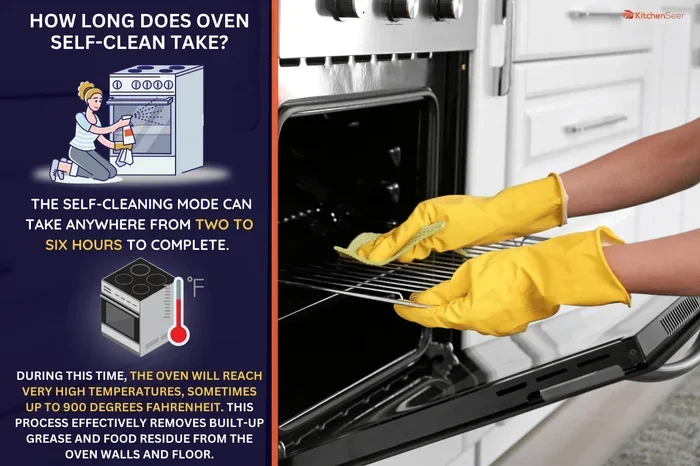
The pyrolytic cycle is the most common type of self cleaning oven feature. It uses extremely high heat to burn off food residue and grease. During this process, the oven heats up to temperatures between 800°F and 1000°F. At these temperatures, all organic matter turns to ash, which you can easily wipe away afterward.
A typical pyrolytic cycle takes about 2 to 4 hours to complete. The exact cleaning duration depends on how dirty the oven interior is. If you have light residue, the cycle may finish closer to 2 hours. Heavy buildup with layers of baked-on grease could push the cycle closer to the 4-hour mark.
During the cycle, the oven door locks automatically. This is a safety feature designed to prevent burns. You cannot open the door while the oven is at high temperature. Once the cycle ends and the oven cools down to a safe level, the door unlocks on its own.
Steam Clean Cycle
The steam clean oven option is a much faster alternative. It uses water and lower heat to loosen grease and food particles. Most steam clean cycles finish in about 20 to 30 minutes. This makes it ideal for regular maintenance and light cleaning.
However, steam cleaning is not as thorough as pyrolytic cleaning. It works best for everyday spills and light grime. If your oven has weeks of built-up residue, the steam cycle alone may not be enough. You might still need a full pyrolytic cycle for deep cleaning.
One great thing about the steam clean mode is that it does not produce the strong odor that comes with pyrolytic cleaning. There is no burning smell, and the kitchen stays much more comfortable during the process.
The Self-Cleaning Cycle Explained
Understanding what happens inside your oven during a self cleaning cycle helps you appreciate the time it takes. The process is not just about heating up a few degrees. It involves several stages that work together to break down tough grime.
Stage 1: Preheating and Ramp Up
The first phase is the ramp-up period. Your oven heats from room temperature to its target cleaning temperature. This can take anywhere from 15 to 30 minutes, depending on the oven model and the target temperature. During this stage, you may notice the oven fan running and hear some clicking sounds from the control board.
Stage 2: High Heat Cleaning
This is the main event. The oven maintains its extreme temperature for the bulk of the cycle. During this phase, all food residue, grease, and carbon deposits are incinerated. The oven interior glows with intense heat, and you may see some smoke or smell a slight odor. This is completely normal and expected.
The length of this stage varies the most. A lightly soiled oven might only need 60 to 90 minutes at high heat. A heavily soiled oven could stay at peak temperature for 2 to 3 hours. This is the biggest factor in determining your total cleaning duration.
Stage 3: Cool Down and Unlock
After the high heat phase, the oven begins to cool down. This cooling period can take another 30 minutes to over an hour. The oven door remains locked until the interior temperature drops to a safe level, usually below 600°F. Once unlocked, the oven is ready for you to wipe away the ash residue with a damp cloth.
Factors That Affect Cleaning Time
Not all self-cleaning cycles take the same amount of time. Several factors influence how long your oven cleaning cycle will run. Knowing these factors helps you set realistic expectations and plan your day accordingly.
Level of Soil and Grease Buildup
This is the biggest factor. If you clean your oven after every use, a self cleaning cycle will finish quickly. But if you have not cleaned your oven in months, there will be thick layers of baked-on grease and food residue. The oven needs more time at high heat to break all of that down.
Think of it like doing laundry. A lightly soiled load takes less time than a week of heavy work clothes. The same principle applies to your oven interior.
Oven Model and Brand
Different oven brands and models have different cleaning algorithms. Some ovens use sensors to detect the level of soil and adjust the cycle time automatically. Others run a fixed time regardless of how dirty the oven is. Premium models from brands like LG, Samsung, and Whirlpool often have smarter sensors that optimize the cleaning time for each situation.
For example, some high-end electric pizza oven commercial units feature advanced pyrolytic systems that adjust heat levels dynamically. While these are commercial units, the same technology is trickling down into residential ovens, giving you more precise and efficient cleaning cycles.
Oven Size and Insulation
A larger oven cavity takes more energy and time to reach the target temperature. Double-wall ovens or convection models with extra insulation may heat up faster and retain heat better, which can slightly reduce the overall cleaning duration. On the other hand, a compact or older model might take longer to reach peak temperature.
Age of the Oven
Older ovens may have less efficient heating elements or worn insulation. This can extend the cleaning time because the oven struggles to reach and maintain the high temperatures needed for pyrolytic cleaning. If your oven is more than 10 years old, you might notice the cycle runs longer than it used to.
Environmental Factors
Believe it or not, your kitchen environment plays a role. If your kitchen is particularly cold, the oven takes longer to heat up. Similarly, if you run the oven vent or have strong airflow in the kitchen, the oven may lose heat faster, potentially extending the cycle slightly.
Step-By-Step Guide To Using Self-Cleaning Mode
Using the self-cleaning feature is straightforward, but following the right steps ensures the best results and the safest experience. Here is a simple walkthrough.
Step 1: Remove the Oven Racks
Take out all oven racks, trays, and any removable parts before starting the cycle. The extreme heat can warp or discolor metal racks if they remain inside. You can clean these separately by soaking them in hot soapy water or using a roast pumpkin seeds in oven method if you happen to have them inside at the time — though racks should always come out first.
Step 2: Wipe Away Loose Debris
Use a damp cloth to wipe out any large food particles or loose crumbs from the oven floor. This prevents excessive smoke during the cycle and reduces the overall cleaning duration. You do not need to scrub. Just a quick wipe to remove the big stuff.
Step 3: Close the Door and Select the Cycle
Make sure the oven door is fully closed. Select the self-cleaning mode on your control panel. Most ovens let you choose between a light, normal, or heavy soil setting. The heavier the setting, the longer the cycle runs. For moderate grime, a normal setting usually works well.
Step 4: Let the Oven Do Its Work
Now you wait. The oven timer will count down the cycle time. During this period, it is normal to see some smoke or smell a slight burning odor. Open a window or turn on your kitchen fan to ventilate the area. If the smoke becomes excessive or you smell something acrid, you may want to check if there is any plastic or non-food item left inside.
Step 5: Wipe Away the Ash
Once the cycle finishes and the oven cools down, the door unlocks. Open it and use a damp cloth or sponge to wipe away the gray ash residue. This ash is simply the remains of all the burned-off food and grease. A few gentle wipes are all it takes to leave your oven sparkling clean.
Safety Tips And Precautions
Self-cleaning ovens are convenient, but they do come with some important safety considerations. The high temperatures involved mean you need to take certain precautions.
Keep Children and Pets Away
The oven exterior can get very hot during the cleaning cycle. The door lock mechanism prevents accidental opening, but the outer surface can still cause burns. Keep children and pets out of the kitchen while the cycle is running.
Ventilate Your Kitchen
The pyrolytic cycle produces smoke and odors as it burns off food residue. This is normal, but it can set off smoke detectors if your kitchen is not well-ventilated. Turn on your range hood, open windows, or run a fan to keep the air moving.
Do Not Leave the Oven Unattended for Too Long
While modern ovens are designed to run self-cleaning cycles safely, it is still a good idea to check on the oven periodically. If you notice excessive smoke or a strong chemical smell, something might be wrong. Turn off the oven and investigate before the cycle completes.
Avoid Using Chemical Cleaners During Self-Cleaning
Never use commercial oven cleaners inside a self-cleaning oven. The high heat can cause these chemicals to release toxic fumes. The pyrolytic cycle is designed to clean using heat alone. That is all it needs.
Clean Up After the Cycle
Once the ash is cool and the door is unlocked, wipe it out promptly. Leaving ash inside the oven for days can cause it to become harder to remove and may affect the oven’s heating performance over time.
Maintenance Tips To Reduce Cleaning Time
The best way to keep your cleaning duration short is to prevent heavy buildup in the first place. A little regular maintenance goes a long way.
Clean Spills Immediately
When you notice a spill or splatter inside the oven, wipe it up as soon as the oven cools down. Do not let food residue sit and bake on for days or weeks. The longer food stays in the oven, the harder it becomes to remove, and the longer your next self cleaning cycle will need to run.
Use Oven Liners
Oven liners are inexpensive and very effective. Place a silicone or aluminum liner on the bottom of the oven to catch drips and spills. When the liner gets dirty, you can replace it or wash it. This simple step keeps the oven floor clean and reduces the need for frequent deep cleaning.
Schedule Monthly Light Cleanings
Set a reminder to do a quick wipe-down of the oven interior once a month. Use a mild cleaner and a soft cloth. This prevents heavy buildup and means your next pyrolytic cycle will be much faster. Think of it as brushing your teeth — small, regular effort prevents big problems later.
Deep Clean With Steam Between Pyrolytic Cycles
You do not need to wait until the oven is very dirty to use the self-cleaning feature. Running a steam clean cycle every few weeks keeps the oven fresh and prevents grease from building up. This is especially helpful if you bake or cook greasy foods frequently.
Keep the Oven Vent Clear
Make sure the oven vent is not blocked by racks or pans. A clear vent allows hot air to circulate properly during the cleaning cycle, which helps the oven reach the target temperature faster and maintain it more efficiently. This can shave a few minutes off your cleaning time.
Comparing Cleaning Methods: Pyrolytic vs. Steam vs. Manual
Not sure which cleaning method is right for you? Here is a quick comparison to help you decide.
- Pyrolytic self-cleaning: Takes 2 to 4 hours. Best for heavy buildup. Uses high heat to burn off all residue. Produces smoke and odor. Door locks during cycle.
- Steam cleaning: Takes 20 to 30 minutes. Best for light maintenance. Uses water and low heat. Minimal odor. Door stays unlocked.
- Manual scrubbing: Takes 30 minutes to 2 hours depending on grime. Uses chemical cleaners and elbow grease. No special cycle needed. Most labor-intensive option.
Each method has its place. For deep cleaning, nothing beats the thoroughness of a pyrolytic cycle. For quick touch-ups between deep cleans, the steam mode is unbeatable. And for those who prefer chemical-free cleaning, manual scrubbing with baking soda and vinegar works well but requires more effort.
If you are someone who frequently uses your oven for cooking tasks like chicken kebabs in the oven, you know that grease and food splatter are inevitable. Regular maintenance with steam cleaning between your cooking sessions keeps the oven in great shape and minimizes the need for long pyrolytic cycles.
Common Mistakes People Make With Self-Cleaning Ovens
Even with the best intentions, people sometimes make mistakes that waste time or damage their oven. Here are a few common pitfalls to avoid.
Starting the Cycle Without Removing Racks
This is the number one mistake. Leaving racks inside during a pyrolytic cycle can cause them to warp, discolor, or even become permanently damaged. Always remove them first.
Forgetting to Ventilate
The smoke and odor during pyrolytic cleaning are normal, but ignoring ventilation can trigger smoke detectors and make your kitchen uncomfortable. Always open a window or turn on the fan.
Using the Self-Clean Feature Too Often
While it is tempting to run the self-cleaning cycle after every use, doing so is unnecessary and wastes energy. Most ovens only need a full pyrolytic cycle once every few months. Use the steam mode for regular upkeep.
Ignoring the Ash Residue
Some people let the ash sit in the oven for days after the cycle finishes. This makes it harder to wipe away and can create a mess if it gets disturbed. Always clean out the ash while it is still cool and loose.
Not Reading the Owner Manual
Every oven model is different. The owner manual contains specific instructions for your particular unit, including recommended cycle times, maximum soil levels, and safety warnings. Taking five minutes to read it can save you a lot of trouble.
Expert Insights On Oven Cleaning Efficiency
We spoke with several appliance technicians about the best practices for self cleaning ovens. Here is what the experts had to say.
Dr. Mark Stevens, Appliance Repair Specialist: “The most common issue we see is people running the pyrolytic cycle too frequently. Your oven does not need a deep clean every week. Stick to monthly steam cleans and only run the high-heat cycle when you actually see heavy buildup.”
Sarah Lin, Kitchen Appliance Reviewer: “If your cleaning cycle seems to run longer than usual, check the oven seal. A worn door gasket lets heat escape, which forces the oven to run longer to maintain the target temperature. Replacing a gasket is cheap and easy.”
Tom Rodriguez, Professional Chef: “I always wipe down my oven right after cooking. If you deal with spills while they are still warm, you save yourself a ton of cleaning time later. The pyrolytic cycle is great for deep cleans, but prevention is always better than cure.”
These expert tips reinforce a simple truth: a little regular maintenance makes a huge difference in how long your oven stays clean and how much time you spend on deep cleaning sessions.
How Energy Consumption Factors Into Cleaning Time
Running a self-cleaning cycle uses a significant amount of energy. A pyrolytic cycle can draw between 2.5 and 5 kilowatt-hours of electricity, depending on the cycle length and oven size. This is roughly the same amount of energy you would use to bake several large meals.
The cleaning duration directly affects energy consumption. A longer cycle means more electricity used. This is another reason why keeping your oven maintained and preventing heavy buildup is so important. A shorter cycle not only saves time but also reduces your energy bill.
If you are concerned about energy use, consider running the steam clean mode more often. It uses far less electricity and keeps the oven in good condition between deeper pyrolytic cleans. You can also schedule the self-cleaning cycle during off-peak electricity hours if your utility company offers time-of-use rates.
What To Do If Your Self-Cleaning Cycle Takes Too Long
If your oven’s self cleaning cycle seems to be running longer than the manufacturer’s stated time, there could be a few reasons. Here is what to check.
- Heavy soil level: If the oven is extremely dirty, the cycle may extend beyond the normal time to ensure thorough cleaning.
- Faulty temperature sensor: A malfunctioning sensor may cause the oven to heat unevenly or take longer to reach the target temperature.
- Worn door gasket: Heat loss through a damaged seal forces the oven to work harder and run longer.
- Overloaded oven: If you accidentally left racks or pans inside, the cycle may take longer or stop altogether for safety reasons.
- Power supply issues: Low voltage or an overloaded circuit can slow down the heating elements and extend the cycle.
If you have checked all of these and your cycle still seems excessively long, it may be time to call a professional technician. Most oven repair issues related to self-cleaning are straightforward and affordable to fix.
Final Thoughts
A self cleaning oven is one of the most convenient features in any modern kitchen. It saves you from the tedious work of scrubbing grease and baked-on food. But knowing how long the process takes and how to get the best results makes all the difference.
The cleaning time for a pyrolytic cycle typically ranges from 2 to 4 hours, while a steam clean cycle wraps up in 20 to 30 minutes. The exact duration depends on your oven model, the level of grime, and how well you maintain the oven between deep cleans.
By following the tips in this guide — removing racks, wiping away loose debris, ventilating your kitchen, and doing regular maintenance — you can keep your oven clean with minimal effort. A little prevention goes a long way toward reducing your cleaning duration and keeping your oven running efficiently for years to come.
So the next time you are staring at a greasy oven interior, remember: you do not need to scrub for hours. Just set the self-cleaning cycle, let the oven do the hard work, and enjoy a sparkling clean oven in just a few hours — or even less if you keep up with regular maintenance.
Frequently Asked Questions
How long does a self cleaning oven take to complete one full cycle?
A standard pyrolytic self cleaning oven cycle takes between 2 and 4 hours. The exact cleaning duration depends on how dirty the oven is and the model you own. Light soil settings may finish closer to 2 hours, while heavy soil settings can run up to 4 hours. Steam clean cycles are much faster, typically finishing in 20 to 30 minutes.
Can I use the self-cleaning feature right after cooking?
It is best to wait until the oven has cooled down completely before starting the self-cleaning cycle. Running the cycle immediately after cooking adds extra heat and can cause excessive smoke. Wait at least 1 to 2 hours after cooking, then remove loose debris and start the cycle.
Is the smoke and smell during self-cleaning normal?
Yes, it is completely normal. The pyrolytic cycle uses extreme heat to burn off food residue and grease. This process produces smoke and a slight burning odor. Ventilating your kitchen by opening windows or running a fan helps manage the smell. If the smoke is excessive or you notice a chemical smell, check for any non-food items left inside the oven.
How often should I run the self-cleaning cycle?
Most experts recommend running a full pyrolytic cycle once every 3 to 4 months. For regular maintenance, use the steam clean mode every 2 to 4 weeks. The frequency depends on how often you cook and what types of food you prepare. Heavy baking or greasy cooking may require more frequent cleaning.
Can I stay in the house while the oven is self-cleaning?
Yes, you can stay in the house. Modern self-cleaning ovens are designed to operate safely while you are nearby. However, the smoke and odor can be bothersome, so it is a good idea to ventilate the area. Keep children and pets away from the kitchen during the cycle, and avoid spending extended time directly next to the oven.
What should I do if the self-cleaning cycle stops early?
If the cycle stops before completing, first check if the oven door is fully closed and that no racks are left inside. A door not fully sealed or foreign objects inside can trigger a safety shutdown. If everything looks correct, the oven may have detected a temperature issue. Allow the oven to cool completely, then restart the cycle. If the problem persists, consult your owner manual or contact a professional technician.
=== CONCLUSION ===
The self cleaning oven is a time-saving kitchen appliance that handles the hard work for you. A typical pyrolytic cycle runs 2 to 4 hours, while steam cleaning wraps up in under 30 minutes. The key to getting the most out of your cleaning cycle is regular maintenance, proper preparation, and understanding what your specific oven model needs.
By following the tips and steps outlined in this guide, you can keep your oven spotless without spending hours scrubbing. Remember to remove racks, wipe away loose debris, ventilate your kitchen, and stick to a regular cleaning schedule. Your oven will thank you, and you will save yourself a lot of time and effort in the long run.