How To Make Perfect Crispy Bacon Jerky In Your Oven
Making crispy bacon jerky in your oven is easier than you think. This guide walks you through everything from selecting the best bacon strips to achieving the perfect chewy, savory snack. You will learn the ideal temperature, timing, and seasoning tricks that turn ordinary bacon into an amazing protein-packed treat. Whether you are a beginner or a seasoned cook, this method delivers consistent, delicious results every single time.
There is something deeply satisfying about turning a simple pack of bacon into a crunchy, flavorful snack that lasts for days. bacon jerky has exploded in popularity, and for good reason. It is delicious, high in protein, and incredibly easy to make at home. You do not need a fancy dehydrator or a smoker. Your oven can do all the work.
If you have ever wondered how to make homemade bacon jerky that comes out perfectly crispy every time, you are in the right place. This guide covers everything from ingredient selection to the final bake. By the end, you will feel confident enough to make your first batch today. Let us dive in and get you started on this rewarding snack-making journey.
Key Takeaways
- Oven temperature matters: Baking at 200°F to 250°F ensures even drying without burning the bacon.
- Pat the bacon dry: Removing excess moisture before baking is the single most important step for crispy texture.
- Use a wire rack: It allows hot air to circulate evenly around every strip for uniform dehydration.
- Marinate for flavor: A simple blend of curing salt, maple syrup, and liquid smoke transforms plain bacon into gourmet jerky.
- Storage is simple: Properly stored homemade bacon jerky stays fresh for up to two weeks at room temperature.
- No special equipment needed: You only need a basic oven, parchment paper, and a wire rack to make great bacon jerky.
📑 Table of Contents
- What Is Bacon Jerky and Why Make It at Home?
- Ingredients You Will Need for Perfect Bacon Jerky
- Step-by-Step Guide: How to Make Bacon Jerky in the Oven
- Tips for Achieving the Perfect Texture
- Common Mistakes to Avoid When Making Bacon Jerky
- Storing and Serving Your Homemade Bacon Jerky
- Comparison: Oven Method vs. Dehydrator Method
- Flavor Variations to Try
- Expert Insights on Making Bacon Jerky
- Why Bacon Jerky Makes the Perfect Snack
- Conclusion
What Is Bacon Jerky and Why Make It at Home?
Bacon jerky is essentially dehydrated, seasoned bacon that has been sliced thin and dried until it becomes chewy and intensely flavorful. Think of it as the crispy cousin of traditional beef jerky. Instead of lean beef, you are using cured pork belly, which brings a rich, savory depth that is hard to beat. The process of making oven-baked bacon jerky is a form of food preservation that has been around for centuries.
Making bacon jerky at home gives you complete control over what goes into it. Store-bought versions often contain preservatives, excess sodium, and mystery ingredients. When you make your own homemade bacon jerky, you choose the quality of the meat, the amount of salt, and the flavor profile. It is a healthier, more transparent snack option that the whole family can enjoy.
Another big reason people love making bacon jerky is the cost savings. A single package of quality bacon can yield a large batch of jerky. That is a lot of protein snack for your money. Plus, it makes an excellent gift for friends and family who love savory treats.
The Difference Between Bacon Jerky and Regular Beef Jerky
While both are dried meat snacks, there are some key differences. Beef jerky typically uses lean cuts of beef that are trimmed of fat. Bacon jerky, on the other hand, retains the fat content of the pork belly, which gives it a richer flavor and a different texture. The fat also helps the jerky stay moist and chewy rather than turning into a hard, brittle strip.
Beef jerky usually relies on a simpler salt-and-pepper seasoning. Bacon jerky opens up a world of flavor possibilities because the pork belly already has a cured, smoky base. You can experiment with sweet, spicy, or savory meat marinade combinations that complement the natural pork flavor beautifully.
Ingredients You Will Need for Perfect Bacon Jerky
The beauty of bacon jerky is that it requires very few ingredients. Keeping it simple lets the quality of the bacon shine through. Here is what you need to get started:
Choosing the Right Bacon
Not all bacon is created equal when it comes to making jerky. Thick-cut bacon works best because it holds up well during the drying process. Avoid thin-sliced bacon, as it can become overly crispy and crumble easily. Smoked bacon is a popular choice because it already has a deep, savory flavor base. However, unsmoked bacon works perfectly too, especially if you plan to add your own smoke flavor.
Look for bacon that has a good balance of meat and fat. Too much fat can cause the jerky to go rancid faster, but some fat is essential for flavor and texture. Applewood-smoked bacon is a fantastic option that adds a subtle sweetness to the final product.
Essential Seasonings and Marinade Ingredients
While plain salted bacon jerky is delicious on its own, a marinade takes it to the next level. Here are the core ingredients most recipes use:
- Curing salt: This is optional but recommended for food safety. It helps inhibit bacterial growth during the drying process.
- Maple syrup: Adds a touch of sweetness that balances the saltiness of the bacon.
- Liquid smoke: Gives you that classic smoky flavor without needing an actual smoker.
- Black pepper: Adds a subtle heat and earthy depth.
- Garlic powder: Boosts the savory, umami flavor profile.
- Onion powder: Complements the garlic and adds complexity.
- Brown sugar: A small amount helps with caramelization during baking.
You can adjust these seasonings to match your personal taste. Some people like their bacon jerky spicy, so adding cayenne pepper or chili flakes is a great option. Others prefer a sweeter profile, in which case increasing the maple syrup or brown sugar works well.
Step-by-Step Guide: How to Make Bacon Jerky in the Oven
Now for the fun part. Making bacon jerky in the oven is straightforward, but there are a few important details to get right. Follow these steps carefully, and you will be rewarded with a perfect batch every time.
Step 1: Prepare the Bacon
Start by laying your bacon strips flat on a cutting board. Using a sharp knife or a meat slicer, cut the bacon into strips that are about one-quarter to one-half inch thick. Consistency is key here. If some strips are much thicker than others, they will dry at different rates, leading to uneven results.
Once you have sliced all the bacon, pat each strip thoroughly with paper towels. This step is critical. Removing surface moisture is the first step toward achieving that perfect crispy bacon texture. The drier the bacon is before it hits the oven, the better the final result will be.
Step 2: Create Your Marinade
In a large bowl, combine your chosen seasonings. A good starting ratio for a basic marinade is one tablespoon of curing salt, two tablespoons of maple syrup, one teaspoon of liquid smoke, half a teaspoon of black pepper, and a quarter teaspoon each of garlic powder and onion powder. Mix everything together until it forms a paste-like consistency.
Place the bacon strips into the bowl and toss them gently to coat every piece evenly. Make sure each strip gets a generous layer of the marinade. Cover the bowl with plastic wrap and refrigerate for at least four hours, or overnight for the best flavor penetration. The longer the marination, the more intense the flavor will be.
Step 3: Set Up Your Oven
Preheat your oven to the lowest possible setting, ideally between 200°F and 250°F. Most ovens have a minimum temperature of around 170°F, and that works too. The key is to keep the heat low enough to dry the bacon slowly without cooking or burning it. This low and slow cooking approach is what separates great jerky from burnt bacon.
Line a baking sheet with parchment paper and place a wire rack on top. The wire rack is essential because it allows hot air to flow underneath the bacon strips, ensuring even drying on all sides. If you do not use a rack, the bacon will steam instead of dry, and you will end up with chewy, unevenly cooked strips.
Step 4: Arrange and Bake
Lay the marinated bacon strips on the wire rack in a single layer. Make sure none of the strips are touching or overlapping. Overcrowding the baking sheet traps moisture and prevents proper airflow, which leads to soggy jerky. If you need to bake in multiple batches, that is perfectly fine.
Place the baking sheet in the oven and prop the door open slightly with a wooden spoon. This allows moisture to escape during the drying process, which is essential for achieving the right texture. Bake the bacon for approximately two to four hours, checking every 30 minutes after the first two hours.
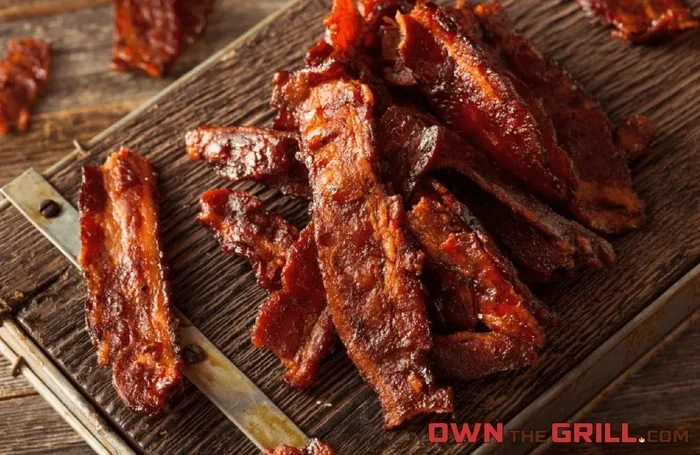
The bacon is done when it is dry to the touch, slightly bendable, and has a rich, deep brown color. It should not be brittle or crumbly. That is the difference between crispy jerky and over-dried jerky. Remove the strips and let them cool completely on a wire rack before storing.
Quick Tips for Oven-Baked Bacon Jerky
- Rotate your baking sheet halfway through for even drying.
- If your oven runs hot, place a thermometer inside to monitor the actual temperature.
- Use a fan to help circulate air if your oven does not have a convection setting.
- For extra crispy bacon jerky, increase the baking time by 30 to 60 minutes.
- Keep a close eye on the bacon during the last hour to prevent burning.
Tips for Achieving the Perfect Texture
Texture is everything when it comes to bacon jerky. Nobody wants a batch that is either too tough to chew or too soft and flabby. Here are some expert tips to help you nail the ideal texture every single time.
Understanding the Dryness Spectrum
Bacon jerky can range from slightly chewy to fully crispy. The texture you prefer is a matter of personal taste, but understanding how heat and time affect the drying process helps you control the outcome. A shorter bake at a slightly higher temperature produces a chewier jerky. A longer bake at a lower temperature creates a crispier result.
If you are new to making jerky, aim for the middle ground. You want the bacon to be dry enough that it does not feel greasy or soft, but still pliable enough to bend without snapping. This is the sweet spot that most jerky lovers prefer.
The Role of Fat in Texture
Fat plays a dual role in bacon jerky. On one hand, it adds flavor and keeps the jerky from drying out too much. On the other hand, too much residual fat can make the jerky feel greasy and reduce its shelf life. After marinating, you can gently pat the strips with a paper towel to remove any excess surface oil before baking.
Choosing a bacon that is not overly fatty also helps. Look for bacon with a good meat-to-fat ratio, typically around 70/30 or 80/20. This gives you enough fat for flavor without overwhelming the texture of the final product.
Why Parchment Paper and Wire Racks Matter
Do not skip the wire rack. It is one of the most important tools for making great bacon jerky. A wire rack elevates the bacon above the baking sheet, allowing hot air to circulate freely around every piece. This is what creates that signature even, crispy texture that separates homemade jerky from store-bought.
Parchment paper prevents the bacon from sticking to the rack and makes cleanup a breeze. It also helps catch any drips, keeping your oven clean. Together, these two simple tools make a huge difference in the quality of your finished jerky.
Common Mistakes to Avoid When Making Bacon Jerky
Even with a great recipe, certain mistakes can ruin your batch. Learning what to avoid saves you time, ingredients, and frustration. Here are the most common pitfalls people encounter when making homemade bacon jerky.
Overcrowding the Baking Sheet
This is the number one mistake beginners make. When bacon strips are crammed too close together, moisture gets trapped between them. The result is uneven drying, with some pieces overcooked and others still soft. Always give each strip plenty of space. If you need to use multiple baking sheets, do it.
Setting the Oven Too Hot
It can be tempting to increase the oven temperature to speed up the process. Resist that urge. High heat cooks the bacon rather than drying it, which leads to a greasy, under-dried interior with a burnt exterior. Patience is the key to great jerky. Keep the temperature low and let the oven do the work over several hours.
Skipping the Curing Salt
While curing salt is optional, skipping it entirely can pose a food safety risk, especially when drying meat at low temperatures for extended periods. Curing salt, also known as pink salt or Prague powder, helps prevent the growth of harmful bacteria like Clostridium botulinum. Using a small amount is a simple precaution that keeps your jerky safe to eat.
Not Letting the Bacon Cool Properly
After baking, the bacon still contains residual moisture. Placing warm jerky into an airtight container traps that moisture and can lead to mold growth. Always let the jerky cool completely at room temperature before storing. This can take one to two hours, but it is an essential step for longevity and food safety.
Storing and Serving Your Homemade Bacon Jerky
Once your bacon jerky is fully cooled, it is time to store it properly. A sealed container or airtight zip-lock bag works perfectly. Store it in a cool, dark place away from direct sunlight. When stored correctly, homemade bacon jerky stays fresh for up to two weeks at room temperature.
For longer storage, you can freeze the jerky. Place individual portions in freezer-safe bags and remove as much air as possible. Frozen bacon jerky can last for up to three months without any significant loss of flavor or texture. Simply thaw at room temperature when you are ready to enjoy it.
Bacon jerky is incredibly versatile when it comes to serving. It makes a great addition to lunch boxes, hiking snack packs, and party appetizer trays. You can also crumble it over salads, soups, or baked potatoes for an extra burst of savory flavor. Some people even use it as a pizza topping, and it works wonderfully.
Comparison: Oven Method vs. Dehydrator Method
While this guide focuses on the oven method, it is worth comparing it to using a food dehydrator. Both approaches produce excellent bacon jerky, but they have some notable differences:
| Feature | Oven Method | Dehydrator Method |
|---|---|---|
| Equipment Needed | Oven, wire rack, parchment paper | Food dehydrator |
| Cost | No extra equipment needed | Dehydrator costs $40 to $200 |
| Temperature Control | Manual, less precise | Built-in, very precise |
| Batch Size | Limited by oven size | Larger batches possible |
| Drying Time | 2 to 4 hours | 4 to 6 hours |
| Ease of Use | Simple and accessible | Requires appliance investment |
For most home cooks, the oven method is the best starting point. It requires no additional purchases and delivers fantastic results. If you find yourself making jerky regularly, a dehydrator becomes a worthwhile investment. But for now, your oven is all you need to make outstanding bacon jerky.
Flavor Variations to Try
Once you have mastered the basic recipe, it is time to get creative. Snack recipes like bacon jerky are incredibly fun to customize. Here are some flavor variations worth trying:
- Sweet and Spicy: Add cayenne pepper, brown sugar, and a dash of hot sauce to the marinade for a kick.
- Maple Pecan: Increase the maple syrup and sprinkle chopped pecans on top before baking for a sweet, nutty twist.
- BBQ Bacon Jerky: Mix in your favorite BBQ sauce with the marinade for a smoky, tangy flavor profile.
- Asian-Inspired: Use soy sauce, ginger, and sesame oil in place of the traditional seasonings for an umami-rich alternative.
- Herb and Garlic: Add fresh rosemary, thyme, and extra garlic powder for a rustic, aromatic jerky.
Experimenting with different flavors is one of the most enjoyable parts of making bacon jerky at home. Each batch can be a new adventure, and you can tailor the seasoning to match your mood or the occasion.
Expert Insights on Making Bacon Jerky
Food safety experts consistently recommend using curing salt when drying meat at low temperatures. The reason is simple: low-temperature drying creates the perfect environment for bacteria to thrive if proper precautions are not taken. A small amount of curing salt eliminates this risk without affecting the flavor of your jerky.
Professional chefs also emphasize the importance of uniform slicing. When all your bacon strips are the same thickness, they dry at the same rate, which means every piece comes out perfectly consistent. A meat slicer is ideal for this, but a sharp knife works just as well if you take your time.
Another pro tip from experienced jerky makers is to let the marinated bacon come to room temperature before placing it in the oven. Cold bacon straight from the fridge can cause uneven drying because the outside heats up faster than the inside. Letting it sit for 20 to 30 minutes before baking ensures a more uniform result.
Why Bacon Jerky Makes the Perfect Snack
Beyond the satisfying process of making it, bacon jerky is an incredibly practical snack. It is portable, does not require refrigeration, and is packed with protein. Whether you are heading to work, hitting the trails, or just need something to munch on during a movie night, bacon jerky fits the bill perfectly.
It is also a great option for people following low-carb or ketogenic diets. Bacon jerky is essentially pure fat and protein with zero carbohydrates, making it an ideal snack for those watching their carb intake. Unlike many processed snacks, homemade bacon jerky contains no artificial preservatives or fillers, just real food ingredients you can trust.
The satisfying crunch and deep, savory flavor make it incredibly addictive in the best way possible. Once you start making your own, it is hard to go back to store-bought versions. The taste difference is remarkable, and the pride of creating something delicious in your own kitchen is an added bonus.
Conclusion
Making perfect crispy bacon jerky in your oven is one of the most rewarding kitchen projects you can take on. It is simple, affordable, and produces results that taste far better than anything you can buy at the store. From selecting the right bacon to mastering the bake time and temperature, every step is within your control.
Follow the steps outlined in this guide, avoid the common mistakes, and feel free to experiment with different flavors. Before long, you will have a steady supply of delicious, homemade bacon jerky that satisfies your cravings and impresses everyone around you. Grab a pack of bacon, preheat your oven, and get started today. Your taste buds will thank you.
Frequently Asked Questions
Can I use any type of bacon to make jerky?
Thick-cut bacon works best for making jerky because it holds its shape during the drying process. Thin-sliced bacon can become too brittle and crumble easily. Smoked bacon adds extra flavor, but unsmoked bacon works well too if you plan to add your own seasonings. Avoid bacon with excessive sugar coatings, as they can burn at the low baking temperatures required for jerky.
How long does homemade bacon jerky last?
When stored in an airtight container at room temperature, homemade bacon jerky stays fresh for up to two weeks. You can extend its shelf life by storing it in the refrigerator, where it lasts for up to one month. For even longer storage, freeze individual portions in zip-lock bags, and they will keep for up to three months without losing flavor or texture.
Do I need curing salt to make bacon jerky?
Curing salt is optional but highly recommended for food safety. Since bacon jerky is dried at low temperatures over several hours, there is a risk of bacterial growth if proper precautions are not taken. Curing salt, also known as pink salt, helps prevent the growth of harmful bacteria without significantly affecting the taste of your jerky. Use it in small amounts as directed on the package.
What temperature should I set my oven to for bacon jerky?
The ideal oven temperature for making bacon jerky is between 200°F and 250°F. This low heat allows the bacon to dry slowly and evenly without cooking or burning. If your oven does not go below 250°F, that is perfectly fine. Just keep a close eye on the bacon and rotate the baking sheet halfway through for even results.
Can I make bacon jerky without liquid smoke?
Absolutely. Liquid smoke is optional and used mainly to add a smoky flavor. If you skip it, your jerky will still taste delicious, especially if you are using smoked bacon to begin with. You can also substitute liquid smoke with a small amount of smoked paprika for a similar effect. The seasoning is entirely customizable to your preferences.
Is bacon jerky a healthy snack?
Homemade bacon jerky can be a healthier alternative to many processed snacks because you control the ingredients. It is high in protein and free from artificial preservatives, colors, and fillers. However, it is also high in sodium and fat, so it is best enjoyed in moderation as part of a balanced diet. It is an excellent snack for active lifestyles, hiking trips, and post-workout fuel.
=== CONCLUSION ===
Making crispy bacon jerky in your oven is a simple, rewarding process that anyone can master. With just a few basic ingredients, some bacon, and a little patience, you can create a delicious, protein-rich snack that rivals anything store-bought. The key is to keep the oven temperature low, dry the bacon thoroughly before baking, and give it enough time to dehydrate properly. Follow the steps in this guide, experiment with flavors, and soon you will be making batch after batch of perfect bacon jerky. Your kitchen, your rules, your delicious snack.