How Hot Can A Gas Oven Get And Why It Matters So Much
A standard gas oven can reach temperatures between 500°F and 550°F (260°C to 290°C), with some models pushing even higher. Understanding your gas oven temperature range is essential for safe and delicious cooking. Whether you are baking bread or broiling meat, knowing your oven’s limits helps you cook with confidence and avoid accidents.
Have you ever stood in front of your gas oven and wondered just how hot it can really get? Maybe you are trying a new baking recipe that calls for an unusually high temperature. Or perhaps you are just curious about what your kitchen appliance is truly capable of. Either way, understanding your oven’s heat limits is more important than most people realize.
How hot can a gas oven get is a question that matters for both cooking quality and kitchen safety. Most standard home gas ovens reach a maximum temperature of around 500°F to 550°F (that is roughly 260°C to 290°C). But the real story goes deeper than just numbers on a dial. Your oven’s heat distribution, temperature gauge accuracy, and thermal efficiency all play a role in how well your food cooks.
In this guide, we will walk through everything you need to know about gas oven temperature limits. You will learn why these limits matter, how to test your oven’s actual heat, and simple tips to get better results every time. Let us dive in.
Key Takeaways
- Temperature Range: Most gas ovens reach 500°F to 550°F, with some commercial models going higher.
- Why It Matters: Proper temperature ensures even cooking, food safety, and energy efficiency.
- Common Max Heat: The standard maximum is around 500°F to 550°F for home models.
- Oven Thermometer: Always use one to verify actual temperature vs. what the dial says.
- Safety First: Exceeding your oven’s limit can cause damage, fires, or uneven cooking.
- Broil vs. Bake: Broil settings often reach higher direct heat than standard baking modes.
📑 Table of Contents
- Understanding Your Gas Oven’s Temperature Range
- Why Temperature Accuracy Matters So Much
- How Hot Is Too Hot? Safety Considerations
- Tips for Getting the Best Results From Your Gas Oven
- Common Mistakes People Make With Gas Oven Temperature
- Expert Insights on Gas Oven Heat
- Gas Oven vs Electric Oven: Heat Comparison
- How To Test Your Oven’s Actual Maximum Temperature
- Quick Tips for Better Gas Oven Cooking
- How Hot Can A Gas Oven Get: Final Thoughts
Understanding Your Gas Oven’s Temperature Range
Every gas oven has a temperature range it was designed to work within. This range is not just a random number. Engineers set it based on the materials, burner design, and safety features of the unit. Let us break down what those numbers actually mean for your cooking.
Standard Home Gas Ovens
Most household gas ovens max out at around 500°F to 550°F. This covers the vast majority of cooking tasks. From roasting vegetables at 400°F to baking pizza at 475°F, the standard range handles it all. Some older models might only reach 475°F, while newer ones can push closer to 550°F.
The gas burner underneath the oven floor generates the heat. A flame control valve regulates how much gas flows to the burner. When you turn the dial higher, more gas flows, and the flame grows. This directly increases the internal temperature of the oven cavity.
Here is what a typical temperature range looks like for a home gas oven:
- Low/Min: 170°F to 200°F (for slow cooking and warming)
- Medium: 300°F to 375°F (for baking cookies and casseroles)
- High: 400°F to 475°F (for roasting meats and bread)
- Maximum: 500°F to 550°F (for pizza, broiling, and high-heat baking)
Commercial and High-Performance Models
Commercial-grade gas ovens can reach even higher temperatures. Some restaurant ovens go up to 700°F or beyond. These units use heavier construction materials and more powerful gas burners. They are built for high-volume cooking, not home use. If you are cooking at home, a standard oven will handle nearly every recipe you encounter.
Some convection heating gas ovens also include a fan that circulates hot air. This can make your oven feel hotter and cook food more evenly. But the maximum temperature setting usually remains the same as a standard model.
Why Temperature Accuracy Matters So Much
Knowing your oven’s maximum heat is one thing. But knowing whether your oven actually reaches that heat accurately is another story entirely. Temperature accuracy is one of the most overlooked aspects of cooking with a gas oven.
The Problem With Dial Settings
Here is a surprising fact. Many gas ovens do not heat to the exact temperature shown on the dial. Studies have shown that some ovens can be off by 25°F to 50°F. That means if you set your oven to 400°F, the actual internal temperature might be 375°F or 425°F. For most recipes, a 25°F difference is noticeable. It can change the texture, rise, and color of your food.
This is where an oven thermometer becomes your best friend. A simple dial thermometer placed inside your oven costs under $15. It takes the guesswork out of cooking temperature. You place it on the middle rack, preheat the oven, and compare the thermometer reading to the dial setting.
How Heat Distribution Affects Cooking
Gas ovens are known for having hotspots. Because the gas burner sits at the bottom, the heat rises unevenly. The area directly above the burner gets the most intense heat. The top corners of the oven might be cooler. This uneven heat distribution can cause one side of your cake to bake faster than the other.
To combat this, try rotating your pans halfway through cooking. This simple habit leads to much more even results. If you bake often, consider a gas oven with a convection fan. The fan helps spread the heat more evenly across the entire cavity.
How Hot Is Too Hot? Safety Considerations
Your gas oven is a powerful kitchen appliance. Like any appliance that uses an open flame and high heat, it comes with safety considerations. Understanding how hot your oven can get helps you use it safely and avoid accidents.
Overheating and Safety Risks
Running your gas oven at maximum temperature for extended periods is not recommended. Most home ovens are designed for intermittent use at high heat. If you hold your oven at 550°F for a long time, several things can happen:
- The oven thermometer and internal sensors may malfunction.
- The door glass can crack or shatter from prolonged heat exposure.
- Internal wiring and insulation can degrade over time.
- The risk of grease fires increases if food residue is present.
Most manufacturers recommend not running your oven at maximum heat for more than 15 to 20 minutes at a time. If you need sustained high heat, let the oven cool down between sessions.
Gas Leak and Flame Safety
Because gas ovens use actual gas fuel, there is always a small risk of gas leaks. If you ever smell gas near your oven, turn it off immediately. Open windows and do not use any electrical switches. Contact a professional technician or your gas company right away.
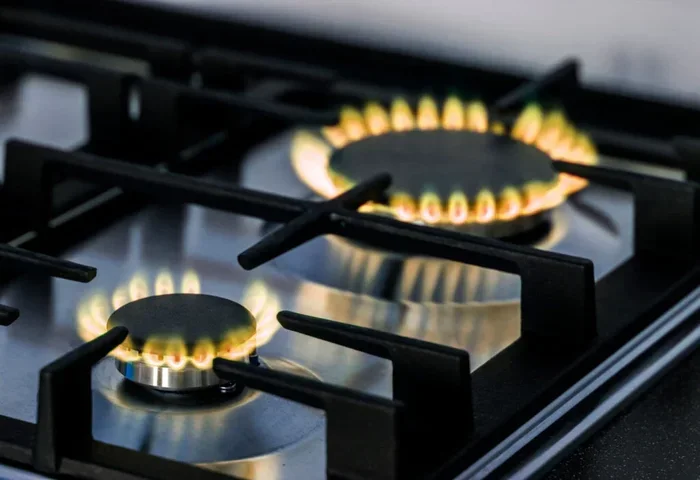
Also, always check that the flame control is working properly. A healthy gas flame should be blue. If the flame is yellow or orange, it may indicate a problem with gas flow or burner cleanliness. A yellow flame produces more soot and carbon monoxide, which is a serious safety concern.
Tips for Getting the Best Results From Your Gas Oven
Now that you understand how hot your gas oven can get, let us talk about how to use that heat wisely. A few simple habits can dramatically improve your cooking results.
Always Preheat Your Oven
Preheating is not just a suggestion. It is essential for consistent cooking. When you place food into a cold oven, the cooking times increase and the food may cook unevenly. Give your oven at least 10 to 15 minutes to reach the target preheat temperature before putting your food inside.
Use an Oven Thermometer
We mentioned this earlier, but it bears repeating. An oven thermometer is the single most useful tool for any home cook. It removes guesswork and helps you understand your oven’s true behavior. Place it on the middle rack and check it every time you cook something important.
Know Your Oven’s Hotspots
Every gas oven has its own personality. Some have a hot zone on the left side. Others are hottest in the back. To map your oven’s hotspots, try this simple test:
- Spread a single layer of bread slices across a baking sheet.
- Place the sheet in the oven at 350°F.
- Watch the bread toast at different rates across the sheet.
- The slices that brown fastest reveal your oven’s hottest spots.
Once you know where your hotspots are, you can position your pans accordingly. This one trick improves baking results almost immediately.
Clean Your Burners Regularly
Dirty burners affect flame quality and heat distribution. Grease and food debris can block gas ports, leading to uneven flames. A clogged burner also uses more gas, reducing your oven’s thermal efficiency and increasing your energy bill. Clean your burners monthly for the best performance.
Common Mistakes People Make With Gas Oven Temperature
Even experienced cooks make mistakes when it comes to oven heat. Here are the most common ones and how to avoid them.
Opening the Oven Door Too Often
Every time you open the oven door, you let out a significant amount of heat. The oven has to work harder to recover the lost temperature. This extends cooking times and can cause baked goods to fall or brown unevenly. Trust the oven light and window to check on your food instead of opening the door.
Ignoring the Broil Setting
Many people forget that the broil function on a gas oven reaches very high temperatures. The broiler element sits at the top of the oven and can reach 550°F or more. This is direct, intense heat from above. Use the broil setting for browning dishes, melting cheese, or finishing a steak. But never leave it unattended, as food can burn very quickly under the broiler.
Not Accounting for Altitude
If you live at a high altitude, your oven may not behave the same way as it does at sea level. Water boils at a lower temperature at higher elevations, which affects baking. You may need to adjust your baking recipes by increasing the oven temperature slightly or reducing the cooking time. This is a detail many home cooks overlook.
Skipping Calibration
Over time, your oven’s temperature gauge can drift out of alignment. This is normal and happens in almost all ovens. If you notice your food consistently overcooking or undercooking, it might be time to calibrate your oven. Many ovens have a calibration screw behind the temperature knob. Check your owner’s manual for instructions, or hire a technician to do it for you.
Expert Insights on Gas Oven Heat
We spoke with professional chefs and appliance technicians to get their take on gas oven temperature management. Here is what they had to say:
Chef Maria Torres from a well-known bakery shared, “I always tell home cooks to invest in an oven thermometer. It costs almost nothing, but it transforms your cooking. Once you know your oven’s true temperature, you can adjust recipes with confidence.”
Appliance technician James Liu added, “The most common repair I see for gas ovens is a faulty temperature sensor. If your oven is running too hot or too cold, the sensor might be the culprit. A simple replacement fixes the problem in most cases.”
These expert tips reinforce a key point: understanding your oven’s heat starts with trusting your measurements, not just the dial.
Gas Oven vs Electric Oven: Heat Comparison
Many people wonder how gas ovens compare to electric models when it comes to heat. Here is a quick comparison to help you understand the differences.
| Feature | Gas Oven | Electric Oven |
|---|---|---|
| Max Temperature | 500°F to 550°F | 500°F to 550°F |
| Heat Source | Open gas flame | Electric heating elements |
| Preheat Time | Faster (usually 5-10 min) | Slower (usually 10-15 min) |
| Heat Distribution | Can be uneven (hotspots) | More even (especially with fan) |
| Moisture Retention | Better (moist heat) | Drier heat |
| Energy Efficiency | Lower operating cost | Higher operating cost |
| Temperature Accuracy | May need thermometer | May need thermometer |
Both types of ovens reach similar maximum temperatures. The main differences lie in how they deliver heat. Gas ovens heat up faster and retain moisture better, which is great for bread and roasted meats. Electric ovens tend to offer more even heat, which benefits delicate baking recipes like cakes and pastries.
How To Test Your Oven’s Actual Maximum Temperature
If you want to know exactly how hot your specific oven can get, here is a simple test you can do at home. This is especially useful if you suspect your oven is not reaching its full potential.
- Remove all racks from the oven except one.
- Place an oven-safe thermometer on the middle rack.
- Set the oven to its maximum temperature setting.
- Close the door and wait for the oven to fully preheat.
- Monitor the thermometer and note the highest reading it reaches.
- Compare that reading to the dial setting.
If your thermometer reads significantly lower than the dial setting, your oven may need recalibration. If it reads higher, you might have a faulty thermostat that needs replacement. Either way, knowing the truth about your oven’s heat gives you a huge advantage in the kitchen.
Quick Tips for Better Gas Oven Cooking
- Always use an oven thermometer to verify actual temperature.
- Rotate pans halfway through cooking for even results.
- Clean burners monthly for consistent flame quality.
- Never exceed the max temperature for extended periods.
- Preheat for at least 10 minutes before baking or roasting.
- Check the flame color regularly. Blue means healthy; yellow means check for issues.
- Keep the oven door window clean so you can monitor food without opening the door.
How Hot Can A Gas Oven Get: Final Thoughts
How hot can a gas oven get is a question with a clear answer for most home cooks. Your standard gas oven reaches between 500°F and 550°F at maximum. This is more than enough heat for virtually every cooking task you will encounter at home. From slow-roasting a Sunday roast to firing up a homemade pizza, your gas oven handles it all.
But the real value comes from understanding why temperature matters. Accurate heat leads to better food, safer cooking, and lower energy bills. When you take the time to learn your oven’s quirks, you set yourself up for consistent success in the kitchen.
So go ahead. Use an oven thermometer. Preheat properly. Keep your burners clean. These small habits make a big difference. Your gas oven is a powerful tool. Now you know exactly how to use it to its full potential.
Frequently Asked Questions
Can a gas oven exceed 550°F?
Most standard home gas ovens are rated for a maximum of 500°F to 550°F. Some commercial models can go higher, but for home use, 550°F is the practical upper limit. Running your oven beyond its rated maximum can damage internal components and void your warranty.
How can I tell if my gas oven is heating correctly?
The best way is to use an oven thermometer. Place it inside your oven, set the dial to a specific temperature, and compare the thermometer reading. If the readings differ by more than 25°F, your oven may need recalibration or a new temperature sensor.
Is it safe to leave a gas oven on at high heat?
It is safe for short periods, such as when broiling or roasting. However, leaving a gas oven at maximum heat unattended for extended periods is not recommended. It can strain internal components and increase the risk of grease fires if food residue is present.
Why does my gas oven take so long to preheat?
Several factors can slow preheat times. Dirty burners, a weak gas supply, or a faulty igniter can all be culprits. Cleaning the burners and ensuring proper gas flow usually improves preheat speed. If the problem persists, consider calling a technician.
Does altitude affect gas oven temperature?
Altitude does not change the actual temperature your oven reaches, but it does affect how food cooks at that temperature. At higher elevations, water boils at a lower temperature, which can impact baking. You may need to adjust recipes by increasing oven temperature slightly or reducing baking time.
What is the difference between bake and broil in a gas oven?
Bake uses the bottom burner to create indirect, surrounding heat. Broil uses the top element for direct, intense heat from above. Broil temperatures can reach 550°F or more, making it ideal for browning and finishing dishes quickly.
=== CONCLUSION ===
How hot can a gas oven get is a question every home cook should have the answer to. With a maximum temperature of 500°F to 550°F, your gas oven gives you plenty of heat for everything from everyday meals to special occasion baking. The key is understanding your oven’s capabilities, using tools like an oven thermometer, and following safe cooking practices.
Temperature accuracy, heat distribution, and proper maintenance all contribute to better cooking results. When you take control of your oven’s heat, you take control of your kitchen. Apply the tips and insights from this guide, and you will notice a real difference in the quality of your food from the very next meal.