How To Cook Ribeye Chops In The Oven For Beginners
Learning how to cook ribeye chops in the oven is simpler than most people think. This beginner-friendly guide covers everything from selecting the perfect beef ribeye to achieving the ideal ribeye doneness every single time. You will discover easy ribeye seasoning tips, the right oven temperature for ribeye, and essential resting meat techniques that lock in flavor.
Cooking ribeye chops in the oven might feel intimidating at first. There are so many variables to think about. Temperature. Timing. Seasoning. But here is the truth: how to cook ribeye chops in the oven is one of the most straightforward cooking skills you can learn.
The oven does most of the work for you. Unlike stovetop cooking where you need to flip and monitor constantly, oven-baked ribeye gives you consistent, hands-off results. Once you understand the basics, you will never go back to overcooked, dry beef again.
This guide is designed for beginners who want clear, actionable steps. No fancy culinary degree required. Just simple instructions, helpful tips, and plenty of practical advice. By the end, you will feel confident enough to cook ribeye chops like a pro.
Key Takeaways
- Start with quality beef: Choose thick-cut ribeye chops with a visible fat cap for the best flavor and texture.
- Pat dry before seasoning: Use a kitchen towel to remove moisture so your ribeye seasoning adheres properly and creates a great sear.
- Use a meat thermometer: This is the single most important tool for hitting the perfect ribeye temperature without guesswork.
- Rest your meat: Always let ribeye chops rest for at least 5-7 minutes after cooking to keep them juicy.
- Preheat your oven: A properly preheated oven ensures even oven-baked ribeye results from edge to center.
- Sear before baking: A hot pan sear adds flavor and texture that oven heat alone cannot achieve.
📑 Table of Contents
- Why Oven-Cooked Ribeye Chops Are A Game Changer
- What You Will Need To Get Started
- Step-By-Step Guide To Cooking Ribeye Chops In The Oven
- Perfect Ribeye Doneness And Internal Temperatures
- Seasoning Ideas And Flavor Combinations
- Common Mistakes To Avoid When Cooking Ribeye Chops
- Quick Tips For Perfect Ribeye Chops Every Time
- Conclusion
Why Oven-Cooked Ribeye Chops Are A Game Changer
The Beauty Of Oven-Baked Ribeye
There is a reason why so many home cooks love oven-baked ribeye. The oven surrounds the meat with gentle, even heat. This means every part of the chop cooks at a consistent rate. You get a beautiful pink center without having to hover over a hot pan.
When you cook ribeye in the oven, the fat renders slowly. This adds incredible flavor to the meat. The ribeye fat cap melts and bastes the chop from within. The result is a juicy ribeye that tastes rich and satisfying.
Oven cooking also gives you flexibility. You can sear first and then bake. Or you can bake at a low temperature and finish with a quick sear. Both methods work beautifully. Once you learn how to cook ribeye chops in the oven, you can experiment and find your favorite approach.
Who This Guide Is For
This guide is perfect for anyone who has never cooked beef chops in the oven before. Maybe you have tried before and ended up with tough, gray meat. Or perhaps you have never even turned on your oven for a steak. Either way, you are in the right place.
Even experienced cooks sometimes overthink oven-baked ribeye. This guide strips away the confusion. You will learn exactly what to do, when to do it, and why each step matters. No unnecessary jargon. No complicated techniques. Just real, practical knowledge you can use tonight.
What You Will Need To Get Started
Essential Equipment
Before you start cooking ribeye, make sure you have the right tools. You do not need anything expensive. A few basic items will get the job done perfectly.
- An oven-safe pan or skillet: A cast iron skillet is ideal for searing ribeye. It holds heat beautifully and creates an even crust. If you do not have cast iron, any oven-safe pan works well.
- A meat thermometer: This is the most important tool for perfect ribeye doneness. A digital instant-read thermometer takes the guesswork out of ribeye temperature checks.
- A kitchen towel: You will use this to pat your beef ribeye dry before seasoning. Dry meat sears better.
- Tongs: These help you flip the chop safely without piercing the meat.
- A cutting board: For resting and serving your ribeye chops.
Choosing The Right Ribeye Chops
The quality of your beef chops matters more than you might think. Look for thick-cut ribeye that is at least one inch thick. Thicker chops are more forgiving during cooking. They give you a wider window of perfect ribeye doneness.
Choose ribeye steak with a visible layer of fat running along the edge. This ribeye fat cap melts during cooking and adds incredible flavor. Avoid chops that look pale or have excess liquid in the packaging.
If you can, buy from a trusted butcher or a reputable grocery store. Fresh, quality beef ribeye makes a noticeable difference in taste and texture. When in doubt, look for marbling throughout the meat. Those white streaks of fat are what make juicy ribeye so delicious.
Step-By-Step Guide To Cooking Ribeye Chops In The Oven
Preparing Your Ribeye Chops
Start by taking your ribeye chops out of the refrigerator about 30 minutes before cooking. Letting them come closer to room temperature helps them cook more evenly. This is one of those small steps that makes a big difference in your oven-baked ribeye results.
Pat each chop dry with a kitchen towel. Remove any excess moisture from the surface. Dry meat is the secret to a great sear. If the surface is wet, the chop will steam instead of searing. And steaming will not give you that beautiful golden crust you are looking for.
Next, season generously. A simple ribeye seasoning of salt and pepper works wonderfully. Apply the salt at least 15 minutes before cooking. This draws out a little moisture, which then gets reabsorbed. The result is a seasoned chop with a better texture.
Setting The Oven Temperature For Ribeye
Preheat your oven to 400 degrees Fahrenheit. This is the sweet spot for how to cook ribeye chops in the oven. At this temperature, the outside gets a nice sear while the inside cooks evenly.
If you prefer a more gradual cook, you can start at 375 degrees. This lower temperature gives you more control. It is especially helpful for thick-cut ribeye that is over two inches thick. The slower cook prevents the outside from burning before the center is done.
Whatever temperature you choose, make sure your oven is fully preheated before the beef ribeye goes in. A hot oven from the start is essential for even cooking ribeye. Placing cold meat in a cold oven leads to uneven results.
The Cooking Process
Here is where the magic happens. Place your oven-safe pan on the stove over medium-high heat. Add a small amount of oil with a high smoke point. Olive oil works, but avocado oil is even better for high-heat cooking.
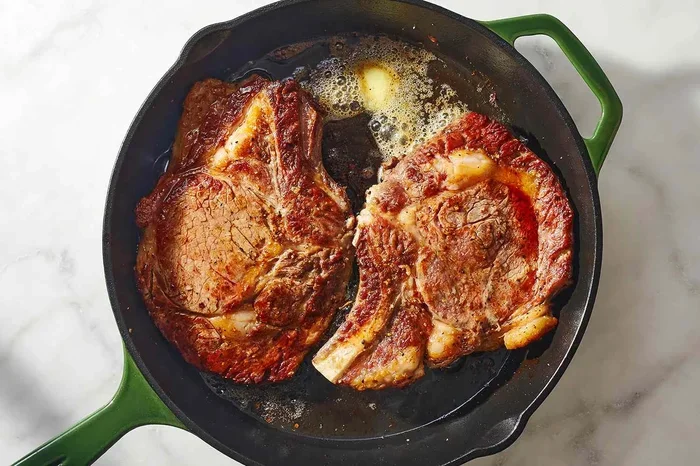
Once the oil is hot and shimmering, place your ribeye chops in the pan. You should hear a satisfying sizzle. Let them sear for about two to three minutes on each side. This creates a flavorful crust that locks in juices.
After searing, transfer the pan directly into the preheated oven. Bake for the following times based on thickness:
- One-inch thick chops: About 8 to 10 minutes total
- One-and-a-half-inch thick chops: About 10 to 14 minutes total
- Two-inch thick chops: About 14 to 18 minutes total
These times are approximate. The actual ribeye temperature will vary based on your oven and the starting temperature of the meat. This is exactly why a meat thermometer is so important.
Resting And Serving
Once your ribeye chops reach the target temperature, remove them from the oven. Transfer them to a cutting board and let them rest for at least five to seven minutes. This step is non-negotiable.
During resting, the juices inside the meat redistribute. If you cut into a ribeye steak immediately, those juices run out onto the board instead of staying in the meat. Resting ensures every bite is juicy and tender.
After resting, serve your oven-baked ribeye immediately. Pair it with roasted vegetables, mashed potatoes, or a simple side salad. A good ribeye chop does not need much to shine. Let the quality of the beef speak for itself.
Perfect Ribeye Doneness And Internal Temperatures
Understanding Ribeye Doneness Levels
Ribeye doneness is all about internal temperature. Different people prefer their beef chops at different levels. Here is a simple guide to help you hit exactly what you like:
- Rare: 120 to 125 degrees Fahrenheit. A very red, cool center. Best for those who love a raw, beefy flavor.
- Medium Rare: 130 to 135 degrees Fahrenheit. A warm, pink center with a red core. This is the most popular choice for ribeye steak.
- Medium: 140 to 145 degrees Fahrenheit. A slightly pink center that is warm throughout. A great middle ground.
- Medium Well: 150 to 155 degrees Fahrenheit. Just a hint of pink. For those who prefer less redness.
- Well Done: 160 degrees and above. Very little or no pink. Not generally recommended for ribeye chops as the meat can become dry.
Using A Meat Thermometer
A meat thermometer is the single best investment you can make for cooking ribeye chops. Insert it into the thickest part of the chop, away from the bone if there is one. Do not touch the bone with the thermometer tip, as it gives a false reading.
Check the temperature toward the end of cooking. Ribeye temperature will continue to rise a few degrees after you remove the chop from the oven. This is called carryover cooking. Pull the meat off a few degrees before your target temperature to account for this.
For example, if you want a medium-rare ribeye, pull it out at 125 to 128 degrees. By the time you finish resting it, the temperature will climb to the perfect 130 to 135 degrees. This small tip makes a huge difference in your results.
Seasoning Ideas And Flavor Combinations
Simple Classic Seasoning
Sometimes less is more. A generous coating of kosher salt and freshly cracked black pepper is all you need for a beautiful ribeye chop. The quality of the beef speaks for itself. This classic approach lets the natural flavor of the beef ribeye take center stage.
Add a clove or two of minced garlic to the pan during the last minute of searing. The aroma is incredible. You can also add a knob of butter and fresh thyme sprigs to the pan during the final minutes of oven cooking. Basting the ribeye steak with this flavored butter adds richness and depth.
Bold Flavor Variations
If you want to get creative with your ribeye seasoning, here are some easy ideas:
- Garlic Herb: Mix minced garlic, rosemary, thyme, and olive oil. Rub it on the chop an hour before cooking.
- Smoky Spice: Add smoked paprika, cumin, and a pinch of cayenne pepper for a warm, smoky kick.
- Asian-Inspired: Use soy sauce, sesame oil, ginger, and a touch of brown sugar for an umami-rich flavor profile.
- Coffee Crust: Combine finely ground coffee, brown sugar, chili powder, and salt for a bold, complex crust on your thick-cut ribeye.
Experiment with different combinations. Cooking ribeye is forgiving. Most seasoning blends work wonderfully with this cut of beef. Just remember to keep the salt level balanced. Too little salt and the flavor falls flat. Too much and it overpowers the natural taste of the juicy ribeye.
Common Mistakes To Avoid When Cooking Ribeye Chops
Skipping The Rest Period
This is the most common mistake home cooks make. They take the ribeye chops out of the oven and immediately cut into them. All those beautiful juices escape onto the cutting board. The result is dry, less flavorful meat.
Always let your resting meat sit for at least five to seven minutes. Use this time to prepare your sides or make a quick pan sauce. The wait is worth it. A properly rested ribeye steak is noticeably more tender and juicy.
Wrong Oven Temperature
Too high a temperature burns the outside before the inside is cooked. Too low and the meat takes forever and loses moisture. The 400-degree approach strikes the right balance for most ribeye chops.
Also, avoid opening the oven door too frequently. Every time you open it, heat escapes and cooking time increases. Trust your meat thermometer and check only when needed. This simple habit leads to much more consistent oven-baked ribeye results.
Not Drying The Meat Before Cooking
Moisture is the enemy of a good sear. If your beef chops are wet on the surface, they will steam instead of brown. Always pat them dry with a kitchen towel before seasoning and placing them in the pan.
This one small step separates good searing ribeye from great searing ribeye. It takes just a few seconds and makes a noticeable difference in the final texture and color of the crust.
Quick Tips For Perfect Ribeye Chops Every Time
Here are some bonus tips to keep in your back pocket whenever you cook ribeye in the oven:
- Use a kitchen towel to dry the meat thoroughly before seasoning.
- Let ribeye chops sit at room temperature for 30 minutes before cooking.
- Always preheat your oven and your pan before adding the meat.
- Use a meat thermometer to check ribeye doneness accurately.
- Rest your beef ribeye for at least five minutes after cooking.
- Slice against the grain when serving for the most tender bite.
- Save the pan drippings for making a quick pan sauce.
Conclusion
How to cook ribeye chops in the oven is a skill that anyone can master with a little practice. The process is straightforward, forgiving, and incredibly rewarding. From selecting the right thick-cut ribeye to nailing the perfect ribeye temperature, every step is within your control.
Remember to pat your meat dry, season generously, sear for flavor, and always let your ribeye chops rest before serving. These simple habits transform ordinary beef chops into extraordinary meals. Your family and guests will not believe you made such a delicious ribeye steak in your own oven.
Start with the basic method outlined in this guide. Once you feel confident, experiment with different seasonings and temperatures. The beauty of oven-baked ribeye is that there is no single right way. There is only the way that works best for you. So go ahead, fire up that oven, and cook some amazing ribeye chops tonight.
Frequently Asked Questions
What Is The Best Oven Temperature For Cooking Ribeye Chops?
Preheat your oven to 400 degrees Fahrenheit for the best results. This temperature creates a great balance between a caramelized crust and a perfectly cooked center. If you prefer a slower, more even cook, 375 degrees works well for thicker cuts.
How Long Should I Cook Ribeye Chops In The Oven?
Cooking time depends on the thickness of your ribeye chops and your desired level of ribeye doneness. A one-inch thick chop typically takes 8 to 10 minutes, while thicker cuts may need 14 to 18 minutes. Always use a meat thermometer for accuracy.
Should I Sear Ribeye Chops Before Putting Them In The Oven?
Yes, searing adds flavor and texture that oven heat alone cannot achieve. Sear each side for two to three minutes in a hot, oiled pan before transferring to the oven. This creates a beautiful golden crust on your beef ribeye.
How Do I Know When My Ribeye Chops Are Done?
The most reliable way is to use a meat thermometer. For medium-rare, aim for an internal temperature of 130 to 135 degrees Fahrenheit. Remember that the temperature will rise a few degrees during the resting period.
Can I Cook Frozen Ribeye Chops In The Oven?
It is best to thaw your ribeye chops before cooking for even results. If you cook from frozen, add extra time and use a meat thermometer to check doneness. The outside may overcook before the center thaws evenly.
What Is The Best Way To Rest Ribeye Chops After Cooking?
Transfer your ribeye chops to a cutting board and loosely tent them with aluminum foil. Let them rest for at least five to seven minutes. This allows the juices to redistribute throughout the meat, making every bite more juicy and tender.