How To Dry Bread Cubes For Homemade Stuffing In Oven
Drying bread cubes in the oven is the simplest way to make perfect homemade stuffing that tastes far better than store-bought mixes. You just need stale bread, a little oil or butter, and your favorite herbs. This guide shows you exactly how to dry bread cubes for stuffing in oven with easy, foolproof steps every time.
There is something magical about homemade stuffing. It is the kind of side dish that makes the whole house smell amazing and brings everyone to the table with excitement. But here is the secret most people miss — the real magic starts with how you dry your bread cubes. Store-bought stuffing mix can work in a pinch, but once you learn how to dry bread cubes for stuffing in oven, you will never go back.
Making homemade stuffing from scratch is easier than you think. You do not need fancy equipment or hard-to-find ingredients. All you need is a loaf of bread, some basic seasonings, and your oven. This guide walks you through every step so your bread stuffing turns out perfectly crispy, full of flavor, and absolutely delicious every single time.
Key Takeaways
- Oven drying is the fastest and most reliable method for making bread cubes that are crispy on the outside and tender inside.
- Use day-old or stale bread for the best results — fresh bread holds too much moisture and won’t crisp properly.
- Cut cubes to the right size (about 3/4 inch) to ensure even drying and the perfect texture for stuffing.
- Seasoning the cubes before drying adds deep flavor that soaks into your finished stuffing.
- A low oven temperature around 300°F works best — too high and the cubes burn before drying through.
- Stirring halfway through ensures all sides dry evenly and nothing gets soggy.
- Homemade dried bread cubes store well and can be prepped ahead of time for stress-free holiday cooking.
📑 Table of Contents
- Why Drying Bread Cubes in the Oven Beats Every Other Method
- Choosing the Right Bread for Your Stuffing
- How To Cut Bread Cubes for Stuffing
- Step-by-Step: How To Dry Bread Cubes For Stuffing In Oven
- Common Mistakes to Avoid When Drying Bread Cubes
- Expert Tips for Perfect Homemade Stuffing Every Time
- How To Store Dried Bread Cubes
- Frequently Asked Questions
- Final Thoughts
Why Drying Bread Cubes in the Oven Beats Every Other Method
You might be wondering why oven drying is the go-to method. There are other ways to dry bread cubes, like leaving them out overnight or using a dehydrator. But the oven gives you the most control and the best results in the shortest time. Let us break down why this method works so well.
Speed and Convenience
Air-drying bread cubes on the counter takes hours — sometimes overnight. A dehydrator works well but not everyone owns one. With an oven, you can go from stale bread to perfectly dried cubes in about 30 to 45 minutes. That is a huge time saver, especially when you are cooking a big meal and the clock is ticking.
Consistent Results Every Time
One of the biggest problems with air-drying is uneven results. Some cubes dry out too much while others stay soft and gummy. When you dry bread cubes for stuffing in oven, the heat surrounds every piece evenly. You get a uniform texture that holds together beautifully when mixed with your broth and seasonings.
Better Flavor Development
Oven drying does something special to bread cubes that other methods cannot. The gentle heat toasts the edges just enough to create a subtle nutty flavor. This adds a whole new depth to your turkey stuffing or dressing that plain dried bread simply cannot match.
Choosing the Right Bread for Your Stuffing
The bread you pick matters more than you might think. Not all loaves are created equal when it comes to making stuffing. Here is what to look for and what to avoid.
The Best Bread Types
Most people agree that white sandwich bread works great for beginners. It cuts easily, dries evenly, and soaks up broth beautifully. But you have plenty of other great options too:
- French baguette — gives your stuffing a rustic, chewy texture
- Sourdough — adds a tangy flavor that pairs wonderfully with savory meats
- Cornbread — a Southern classic that makes stuffing feel completely different
- Whole wheat — a healthier option with a nuttier taste
- Italian bread — light and airy, perfect for absorbing flavors
Bread to Avoid
Some breads just do not work well for stuffing. Avoid very dense breads like pumpernickel or rye — they do not absorb broth properly. Also stay away from breads with lots of seeds or nuts unless you specifically want that texture in your final dish. And do not use fresh, soft bread straight from the bakery. It has too much moisture and will turn mushy instead of crispy.
Fresh vs Stale Bread
Here is a common question — can you use fresh bread? Technically yes, but you will need to dry it longer and the results may not be as consistent. Stale bread is the ideal starting point because it has already lost much of its moisture. If your bread is fresh, just leave it out uncovered for a few hours before cubing. The surface will firm up and make the oven drying process much smoother.
How To Cut Bread Cubes for Stuffing
Getting the right cube size is one of the most overlooked steps in making stuffing. Too small and they turn into crumbs. Too big and they do not dry evenly. Here is how to get it right.
The Ideal Cube Size
Cut your bread into cubes that are about 3/4 inch to 1 inch on each side. This size dries perfectly in the oven and holds its shape when mixed with wet ingredients. Use a sharp knife and a sturdy cutting board. A serrated bread knife works especially well on crusty loaves.
Tips for Even Cubing
- Slice the bread into even slabs first, then cut those into squares
- Use a ruler or measuring tape if you want perfectly uniform pieces
- Do not press too hard when cutting — you want clean edges, not crushed bread
- Work with one slice at a time for the most control
How Much Bread Do You Need?
A general rule is one standard loaf (about 12 to 16 slices) for every 6 to 8 servings of stuffing. If you are cooking for a larger crowd, simply double or triple the amount. It is always better to have a little extra than to run short.
Step-by-Step: How To Dry Bread Cubes For Stuffing In Oven
This is the core of the whole process. Follow these steps carefully and you will have perfect dried bread cubes every time. The process is simple but paying attention to the details makes all the difference.
Step 1: Preheat Your Oven
Set your oven to 300°F (150°C). This is a low temperature that allows the bread to dry out slowly without burning. If you set the temperature too high, the outside will brown and harden while the inside stays moist and gummy. Patience is key here.
Step 2: Spread the Cubes on a Baking Sheet
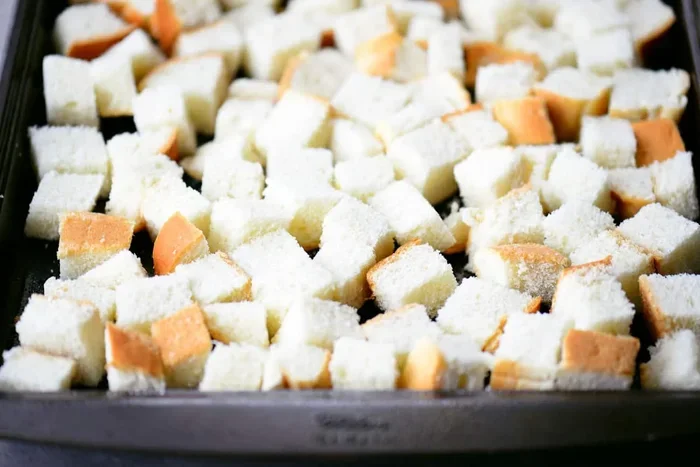
Line a large baking sheet with parchment paper or a silicone mat. Spread the bread cubes in a single layer with space between each piece. Do not crowd them. If you pile them up, the bottom cubes will steam instead of dry, and you will end up with soggy pieces.
Step 3: Add Oil or Butter (Optional but Recommended)
Toss the cubes lightly with a tablespoon or two of melted butter or olive oil. This does two things. First, it helps the cubes dry more evenly. Second, it adds a subtle richness that makes your finished stuffing taste more homemade. You can also skip this step if you prefer a lighter, more neutral flavor.
Step 4: Season the Cubes
This is where you can get creative. Sprinkle your favorite herbs and spices over the cubes and toss gently to coat. Some great combinations include:
- Sage, thyme, and rosemary for a classic herb blend
- Poultry seasoning with a pinch of garlic powder
- Smoked paprika and onion powder for a deeper, savory flavor
- Everything bagel seasoning for a fun, modern twist
Keep the seasoning light at this stage. The cubes will absorb more flavor when they soak up the broth later. If you season too heavily now, the final stuffing can taste overpowering.
Step 5: Dry in the Oven
Place the baking sheet on the middle rack of your oven. Set a timer for 15 minutes. When the timer goes off, open the oven and use tongs or a spatula to flip and stir the cubes. This ensures all sides get equal exposure to the heat.
Return the tray to the oven and dry for another 10 to 15 minutes. Total drying time is usually around 30 to 45 minutes depending on your oven and the size of your cubes.
Step 6: Check for Doneness
The cubes are done when they feel firm and dry to the touch. They should be slightly crispy on the outside but still soft enough to absorb broth. Pick up a cube and squeeze it gently. If it feels squishy or damp in the center, give it another 5 to 10 minutes.
You can also tap two cubes together. If they sound hollow, they are ready. If they sound dull and dense, they need more time.
Step 7: Cool and Store
Remove the tray from the oven and let the cubes cool completely on the pan. This usually takes about 20 to 30 minutes. Once cooled, you can use them right away in your stuffing recipe or store them for later. Store dried bread cubes in an airtight container at room temperature for up to one week.
Common Mistakes to Avoid When Drying Bread Cubes
Even though this process is straightforward, there are a few mistakes that can ruin your results. Here is what to watch out for.
Using the Wrong Oven Temperature
The biggest mistake people make is setting the oven too high. Some recipes suggest 350°F or even 375°F, but these temperatures toast the outside of the cubes before the inside has a chance to dry. Stick with 300°F for the best results. Low and slow wins the race here.
Overcrowding the Pan
It might be tempting to fit all the cubes on one sheet to save time. Resist that urge. Overcrowding traps steam and creates uneven drying. If you have a lot of bread, use two baking sheets and rotate them halfway through.
Skipping the Stirring Step
If you set the timer and walk away, the bottom cubes will dry faster than the top ones. Stirring halfway through is a small step that makes a huge difference in the final texture.
Not Letting Cubes Cool Before Using
Warm cubes will release moisture into your stuffing mixture, making it soggy. Always let them cool completely before combining with your broth, vegetables, and seasonings.
Forgetting to Taste Test
Before you commit all your dried cubes to the stuffing, taste one. It should be lightly seasoned and pleasantly crisp. If it tastes bland, you can toss the cubes with a little more seasoning before mixing them into the full batch.
Expert Tips for Perfect Homemade Stuffing Every Time
Once you have mastered the drying process, these expert tips will take your stuffing to the next level.
Make Ahead and Freeze
One of the best things about dried bread cubes is that you can prepare them well in advance. Dry a big batch, let them cool, and freeze them in a zip-lock bag. On the day you need them, just pull them out and they are ready to use. They keep in the freezer for up to three months.
Use Homemade Broth for Soaking
The broth you use to moisten your stuffing makes a huge difference. Homemade chicken or turkey broth adds a richness that store-bought simply cannot match. If you do not have homemade broth, look for low-sodium store-bought options and add a splash of extra seasoning.
Add Vegetables After Drying
Sauté your onions, celery, and other vegetables separately before mixing them with the dried cubes. This prevents the vegetables from releasing moisture into the bread and making it soggy. The vegetables should be soft and lightly caramelized for the best flavor.
Let the Stuffing Rest
Once you combine all your ingredients and bake the stuffing, let it rest for 10 to 15 minutes before serving. This allows the cubes to absorb the remaining liquid and gives the flavors time to meld together beautifully.
Experiment with Different Flavors
Do not be afraid to get creative with your seasoning. Some delicious combinations to try include maple and sage for a Thanksgiving twist, chili powder and cumin for a Southwestern style, or parmesan and garlic for an Italian-inspired version.
How To Store Dried Bread Cubes
If you have leftover dried cubes or want to prep ahead, proper storage is simple.
- Room temperature: Store in an airtight container for up to 7 days
- Refrigerator: Keeps for up to 2 weeks in a sealed container
- Freezer: Use a freezer bag and they will last up to 3 months
When you are ready to use frozen cubes, spread them on a baking sheet and let them thaw at room temperature for about 30 minutes. You can also toss them directly into your stuffing mixture — they will absorb the broth as they bake.
Frequently Asked Questions
Can I use fresh bread instead of stale bread for drying?
Yes, you can use fresh bread, but you will need to dry the cubes for a longer time — closer to 45 to 60 minutes. Fresh bread contains more moisture, so it takes more time in the oven to reach the right texture. For the best results, leave fresh bread out uncovered for a few hours before cubing and drying.
What is the difference between stuffing and dressing?
The terms are often used interchangeably, but there is a simple distinction. Stuffing is cooked inside the turkey, while dressing is cooked separately in a baking dish outside the bird. The bread cubes and drying process are the same for both — the only difference is how they are cooked.
Can I use a convection oven to dry bread cubes?
Absolutely. A convection oven works great for drying bread cubes because the fan circulates hot air around the food evenly. You may need to reduce the temperature by about 25°F and check the cubes a few minutes earlier since convection ovens tend to dry things faster.
How do I know if my bread cubes are fully dried?
Fully dried bread cubes should feel firm and dry on the outside with a slightly hollow sound when tapped together. They should not feel squishy or soft in the center. If you squeeze a cube and it feels damp, it needs more time in the oven.
Can I add too much seasoning to the bread cubes before drying?
Yes, it is possible. Since the cubes will absorb more liquid and flavors from the broth later, a light hand with seasoning during the drying stage is best. You can always adjust the final seasoning after everything is combined in your stuffing mixture.
Can I use leftover dried bread cubes in other recipes?
Definitely. Dried bread cubes are incredibly versatile. Use them to make bread pudding, add them to soups and stews for extra body, or toss them with olive oil and garlic for a simple crouton topping on salads. They are a handy kitchen staple to have on hand.
Final Thoughts
Learning how to dry bread cubes for stuffing in oven is one of those simple kitchen skills that makes a big difference. It takes just a few minutes of active prep time and delivers results that store-bought mixes simply cannot match. Your homemade stuffing will taste fresher, richer, and more personalized to your family’s taste.
The beauty of this method is how easy it is to customize. Pick your favorite bread, choose your herbs, and adjust the seasoning to suit your mood. Whether you are preparing a classic Thanksgiving turkey stuffing or a creative side dish for a weeknight dinner, oven-dried bread cubes are the foundation of something truly special.
So next time you are planning a roast or a holiday meal, skip the boxed mix. Spend a little time drying your own cubes and taste the difference. Once you start making your own, you will wonder why you ever settled for anything else. Your stuffing — and everyone at the table — will thank you for it.