How to Boil Eggs in the Microwave Without Making a Mess
Want to know how to boil egg in microwave without the hassle? This guide shows you simple, mess-free methods for perfect hard boiled eggs and soft boiled eggs every time. You will learn the right water ratios, cooking times, and pro tips to avoid explosions and peeling headaches. Whether you need a quick easy breakfast or a protein packed snack, this method saves time and energy.
Key Takeaways
- Microwave boiling is fast: You can cook perfect eggs in under 10 minutes, saving time compared to stovetop methods.
- No mess is possible: Using the right bowl, water amount, and covering technique prevents splatters and messes.
- Precision matters: Timing and water ratios are the keys to getting the right egg yolk consistency every time.
- Peeling becomes easier: The microwave method creates a natural steam pocket that helps the egg shell come off cleanly.
- Safe and simple: Following a few basic safety rules ensures your microwave cooking experience is smooth and risk-free.
- Versatile results: You can make hard boiled eggs, soft boiled eggs, and even poached eggs in the microwave.
📑 Table of Contents
- How to Boil Egg in Microwave Without Making a Mess
- Why Microwave Egg Cooking Works So Well
- What You Need to Boil Eggs in the Microwave
- Step by Step Guide to Boiling Eggs in the Microwave
- How to Get the Perfect Egg Yolk Every Time
- Common Mistakes When Boiling Eggs in the Microwave
- Comparing Microwave Boiled Eggs to Stovetop Boiled Eggs
- Creative Ways to Use Your Microwave Boiled Eggs
- Safety Tips for Boiling Eggs in the Microwave
- Frequently Asked Questions
- Conclusion
How to Boil Egg in Microwave Without Making a Mess
Have you ever stared at a stovetop pot full of water, waiting for it to boil? It takes forever. And then, you have to drain the hot water, run cold water over the egg shell, and hope for the best when you peel it. What if I told you there is a faster, cleaner way?
Boil egg in microwave techniques have become a kitchen game changer. You skip the waiting. You skip the mess. And you get perfectly cooked eggs in minutes. This guide walks you through every step, from preparation to peeling, so you never have to deal with a stovetop mess again.
The microwave method works because it uses steam to cook the egg evenly. You add water to a bowl, drop in your egg, cover it, and let the microwave do the work. It is one of the best microwave hacks for busy mornings, quick snacks, and meal prep sessions. Whether you want hard boiled eggs for a salad or soft boiled eggs for toast, this method delivers.
Let us dive into the details. By the end of this guide, you will never go back to boiling water on the stove again.
Why Microwave Egg Cooking Works So Well
Cooking eggs in microwave is not just a shortcut. It is actually a smart technique. The microwave heats water molecules quickly, creating steam inside the bowl. This steam surrounds the egg and cooks it gently. The result? A perfectly set egg white and a creamy egg yolk every single time.
Here are some reasons why microwave cooking for eggs wins:
- Speed: A stovetop pot can take 15 to 20 minutes. Microwave eggs take 5 to 10 minutes.
- Less cleanup: One bowl and a lid. That is it. No pots, no colanders, no mess.
- Consistent results: Once you nail the timing, you get the same perfect result every time.
- Energy efficient: The microwave uses less electricity than heating a full pot of water.
- Easy to control: You can adjust the time in 30-second increments for your preferred doneness.
Many people worry about microwave eggs exploding. That fear is valid if you do not follow the right steps. But with the method below, you will learn exactly how to prevent that. The key is always adding enough water and covering the bowl properly.
Understanding Steam and Egg Cooking
When you heat water in the microwave, it turns into steam. This steam is what cooks the egg. The sealed environment inside the bowl traps the steam, creating a mini pressure cooker effect. This is why steam eggs in the microwave come out so smooth and evenly cooked.
The egg white sets at around 144°F (62°C), while the egg yolk thickens between 144°F and 158°F (62°C to 70°C). By controlling the water amount and cooking time, you control how much steam builds up. This directly affects the texture of your finished egg.
What You Need to Boil Eggs in the Microwave
Before you start, gather these simple items. You probably already have them in your kitchen.
Essential Equipment
- Microwave safe bowl: Use a glass or ceramic bowl. Never use plastic that is not labeled microwave safe. The bowl should be deep enough to cover the egg with at least one inch of water.
- A lid or microwave safe plate: This traps steam and prevents splatters. A microwave-safe lid works best, but a deep plate turned upside down also works.
- A slotted spoon: This helps you remove the hot egg safely from the water.
- Cold water and ice: You need this for the ice bath that stops the cooking process.
Ingredients
- Fresh eggs: Room temperature eggs cook more evenly than cold eggs straight from the fridge.
- Water: Regular tap water is fine. You need enough to fully submerge the egg.
- Optional additions: A pinch of salt or a splash of vinegar can help with peeling. Some people add a teaspoon of baking soda for easier shell removal.
Quick Tips for Equipment
Always check your bowl for a microwave safe label. Not all glass bowls are microwave safe. Some ceramics have metallic glazes that can cause sparks. When in doubt, use a plain glass measuring cup or a dedicated microwave egg cooker. These small tools are inexpensive and make microwave recipes even easier.
Step by Step Guide to Boiling Eggs in the Microwave
Now for the fun part. Follow these steps closely, and you will have perfect boiled eggs in microwave every time. I have broken this down into simple stages so it is impossible to mess up.
Step 1: Prepare the Bowl and Water
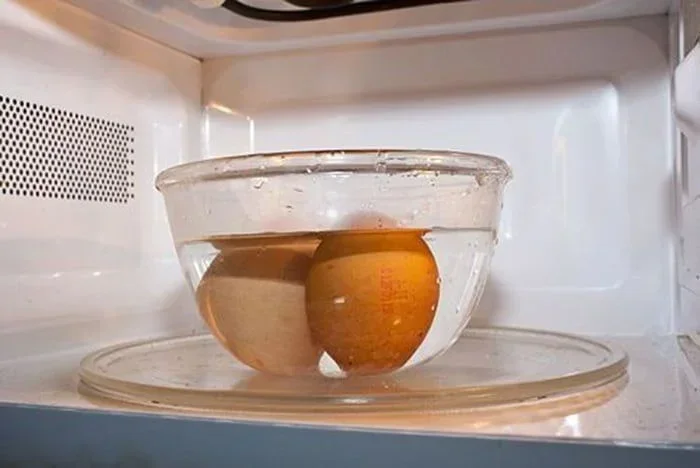
Place your egg in the empty microwave safe bowl. Fill the bowl with warm water until the egg is covered by at least one to two inches. The water temperature does not need to be boiling. Warm tap water works perfectly.
Quick tip: Use about one cup of water for one egg. For two to three eggs, use one and a half to two cups of water. The water helps distribute heat evenly and prevents the egg from cracking.
Step 2: Cover the Bowl
Place the lid or microwave safe plate over the bowl. Leave a small gap for steam to escape. This prevents pressure from building up too much. A tight seal can cause the water to boil over, which creates a mess. A slightly vented cover gives you the best of both worlds.
Expert insight: Professional chefs who teach microwave cooking tips always emphasize the importance of venting. A small gap or a slightly cracked lid prevents pressure buildup and keeps everything safe.
Step 3: Microwave on High
Cook the egg on high power. For hard boiled eggs, microwave for 4 minutes. For soft boiled eggs with a runny egg yolk, cook for 2.5 to 3 minutes. These times work for room temperature eggs. If your eggs are cold from the refrigerator, add 30 seconds.
Important: Do not walk away from the microwave while the eggs cook. Stay nearby. This is a safety best practice when cooking eggs in the microwave.
Step 4: Let the Egg Rest
When the timer beeps, do not immediately remove the lid. Let the bowl sit in the microwave for an additional 2 to 3 minutes. The residual heat continues to cook the egg gently. This resting step is crucial for getting the right texture.
For hard boiled eggs, a 5-minute rest works well. For soft boiled eggs, 2 minutes is perfect. The egg yolk will be jammy and delicious if you keep the time on the shorter side.
Step 5: Transfer to an Ice Bath
Carefully remove the bowl from the microwave. Use oven mitts because the bowl will be hot. Use a slotted spoon to transfer the egg directly into a bowl of ice water. Let it sit for at least 5 minutes. This ice bath stops the cooking and makes the egg shell easier to peel.
Common mistake: Skipping the ice bath. Without it, the egg continues cooking inside the shell. The egg white becomes rubbery and the egg yolk turns greenish gray. Do not skip this step!
Step 6: Peel and Enjoy
Gently tap the egg on a hard surface to crack the shell all over. Roll it between your hands to loosen the shell. Start peeling from the wide end, where the air pocket is. The shell should come off in large, clean pieces.
Pro tip: Peeling under running water helps. The water gets under the membrane between the shell and the egg white, making the process smoother and faster.
How to Get the Perfect Egg Yolk Every Time
The egg yolk is the star of the show. Some people like it fully set and firm. Others prefer a creamy, slightly jammy center. The difference comes down to one thing: cooking time.
Timing Guide for Different Results
Here is a simple breakdown of microwave times based on your preference:
- Very soft boiled (runny yolk): 2.5 minutes of cooking, 2 minutes rest. The egg white is set but the egg yolk is completely liquid. Perfect for dipping toast.
- Soft boiled (jammy yolk): 3 minutes of cooking, 3 minutes rest. The egg yolk is thick and creamy but not fully set. Great for salads.
- Medium boiled (slightly firm yolk): 4 minutes of cooking, 4 minutes rest. The egg yolk is mostly set with a slightly soft center.
- Hard boiled (fully set yolk): 4.5 to 5 minutes of cooking, 5 minutes rest. The egg yolk is completely firm and pale yellow. Ideal for meal prep.
These times assume room temperature eggs and a 1000 to 1200 watt microwave. If your microwave has lower wattage, add 30 seconds to each time. Higher wattage microwaves may need 15 seconds less.
Why Your Egg Yolk Might Turn Green
A greenish ring around the egg yolk is harmless but not appetizing. It happens when the egg is overcooked. The iron in the egg yolk reacts with the sulfur in the egg white when exposed to too much heat. The ice bath prevents this. So does keeping your cooking time precise. Always follow the times above and you will avoid this issue entirely.
Common Mistakes When Boiling Eggs in the Microwave
Even simple tasks have pitfalls. Here are the most common mistakes people make when they try to boil egg in microwave and how to avoid them.
Mistake 1: Not Adding Enough Water
This is the number one cause of microwave egg explosions. Without enough water, the steam has nowhere to go. Pressure builds up inside the egg until it bursts. Always cover the egg with at least one inch of water. More water equals more safety margin.
Mistake 2: Using a Bowl That Is Too Small
A cramped bowl traps steam and limits heat distribution. The egg may cook unevenly, with some parts overcooked and others undercooked. Use a bowl that gives the egg room to move around. The water should have space to circulate freely.
Mistake 3: Skipping the Rest Time
The resting period after microwaving is not optional. It allows the heat to distribute evenly through the egg. Skipping it often results in an undercooked egg yolk center or an overcooked outer layer. Be patient and let the bowl sit for a few minutes.
Mistake 4: Forgetting the Ice Bath
The ice bath does two things. It stops the cooking process immediately. It also creates a temperature difference that pulls the shell away from the egg white. Without it, peeling becomes a frustrating task. Do not skip this step if you want clean, easy peeling.
Mistake 5: Cooking Too Many Eggs at Once
Microwaves cook unevenly when overloaded. Stick to two or three eggs at a time for best results. If you need more, cook them in batches. This ensures each microwave egg gets the right amount of steam and heat.
Comparing Microwave Boiled Eggs to Stovetop Boiled Eggs
How do microwave boiled eggs compare to the traditional stovetop method? Let us break it down side by side.
| Factor | Microwave Method | Stovetop Method |
|---|---|---|
| Time | 5 to 10 minutes total | 15 to 20 minutes total |
| Cleanup | One bowl and a spoon | Pot, colander, and sometimes a stove mess |
| Consistency | Very consistent with precise timing | Can vary based on stove and pot size |
| Peeling Ease | Easier due to steam cooking | Can be tricky depending on egg freshness |
| Energy Use | Low, heats only the water needed | Higher, heats a full pot of water |
| Learning Curve | Simple, just follow the times | Requires monitoring and timing |
As you can see, the microwave method wins in almost every category. It is faster, cleaner, and easier to control. The only situation where stovetop might be better is when you are cooking a very large batch. But for everyday microwave recipes and quick egg preparation, the microwave is the clear winner.
Creative Ways to Use Your Microwave Boiled Eggs
Once you master the basic technique, you can get creative. Boiled eggs in microwave are incredibly versatile. Here are some ideas to inspire you.
Quick Breakfast Ideas
- Egg and avocado toast: Slice a soft boiled egg over toasted bread with mashed avocado and a sprinkle of salt.
- Egg muffin cups: Chop hard boiled eggs and mix them into a muffin tin with cheese and vegetables. Bake for a grab-and-go breakfast.
- Egg salad sandwich: Mash hard boiled eggs with mayo, mustard, and paprika. Serve between two slices of buttered bread.
Healthy Snack Options
- Salt and pepper eggs: A simple hard boiled egg with a dash of salt and chili flakes makes a great protein packed snack.
- Pickled eggs: Place peeled hard boiled eggs in a jar with vinegar, sugar, and spices. Refrigerate for 24 hours. They make a great addition to charcuterie boards.
- Egg and cheese bites: Halve a soft boiled egg and pair it with a piece of cheese for a quick, satisfying snack.
Meal Prep Tips
Microwave eggs are perfect for meal prep. Cook a batch of hard boiled eggs on Sunday morning. Store them in the fridge with the shells on. They keep for up to 7 days. Peel them just before eating for the best texture. This is a huge time saver for busy weekdays.
You can also prep microwave egg ingredients in advance. Pre-measure the water and salt into small containers. When it is time to cook, you simply add the egg and pop it in the microwave. This makes the entire process even faster.
Safety Tips for Boiling Eggs in the Microwave
Safety always comes first. Microwave cooking is generally safe, but eggs need special attention because of the pressure buildup inside the shell.
- Always puncture the egg: Use a pin or thumbtack to poke a tiny hole in the wide end of the egg before cooking. This releases steam and prevents pressure from building up inside the shell.
- Never microwave an egg in its shell without water: This is the fastest way to create a mess. The egg will explode, and you will have a serious cleaning job.
- Use oven mitts: The bowl will be very hot. Always protect your hands when handling it.
- Let the egg cool: Do not bite into a freshly cooked microwave egg right away. The egg yolk can be extremely hot in the center. Let it cool for a few minutes.
- Store properly: Keep cooked eggs in the refrigerator within two hours of cooking. Do not leave them at room temperature for extended periods.
Following these simple safety rules ensures your microwave egg experience is always positive. Once you get into the habit, these steps become second nature.
Frequently Asked Questions
Can you really boil an egg in the microwave?
Yes, absolutely. You can boil egg in microwave by placing it in a bowl of water and cooking it on high. The steam from the water cooks the egg just like boiling on the stovetop. The key is using enough water and covering the bowl properly. Follow the times in this guide, and you will get perfect results every time.
Why do eggs explode in the microwave?
Eggs explode when steam pressure builds up inside the shell with no way to escape. This happens when there is not enough water or when the egg is cooked without a hole pierced in the shell. Always add sufficient water and poke a small hole in the wide end of the egg before microwaving. This simple step prevents explosions completely.
How long does it take to microwave a boiled egg?
It takes about 4 minutes to make a hard boiled egg in the microwave and 2.5 to 3 minutes for a soft boiled egg. Add 2 to 3 minutes of resting time after cooking. Total time from start to finish is usually under 10 minutes. This makes it much faster than the stovetop method.
Is it safe to eat eggs boiled in the microwave?
Yes, microwave boiled eggs are completely safe to eat. They are cooked to the same temperature as stovetop eggs. The texture and taste are often even better because the steam cooking method produces a smoother egg white and creamier egg yolk. Just make sure to let the egg cool before eating.
Can you make poached eggs in the microwave?
Yes, you can make poached eggs in the microwave. Crack an egg into a small bowl of water, cover it, and microwave for about 1 to 2 minutes. The white will set around the yolk. This is one of the easiest microwave hacks for a quick, protein packed breakfast. Many people prefer microwave poached eggs because they are simpler than stovetop poaching.
How do you peel microwave boiled eggs easily?
The ice bath method works best. After cooking, immediately transfer the egg to a bowl of ice water for at least 5 minutes. Then tap the egg gently on a hard surface to crack the shell all over. Roll it between your hands and peel starting from the wide end. The steam cooking method naturally separates the shell from the egg white, making peeling much easier than with stovetop eggs.
Conclusion
Learning how to boil egg in microwave is one of the easiest kitchen skills you can pick up. It saves time, reduces mess, and delivers consistent, delicious results. From hard boiled eggs for meal prep to soft boiled eggs for a quick breakfast, the microwave method has you covered.
Remember the key steps: use a microwave safe bowl, add plenty of water, cover the bowl with a vent, follow the timing guide, and always use an ice bath. Avoid the common mistakes, stay safe, and experiment with different cooking times to find your perfect egg yolk consistency.
Once you try this method, you will wonder how you ever lived without it. It is fast, clean, and incredibly easy. Give it a try tomorrow morning and see the difference for yourself. Your mornings just got a whole lot simpler.