How To Open Bake Sourdough In The Oven With Confidence
Opening your oven to bake sourdough at the right moment is the key to a perfect loaf with a crispy crust and airy crumb. This guide walks you through every step, from preheating to pulling out a golden, bakery-quality sourdough. You will learn the science behind oven spring, the ideal temperatures, and common mistakes to avoid.
There is something deeply satisfying about pulling a perfect loaf of sourdough out of the oven. The crust is golden and crackly, the shape is tall and proud, and the inside is light and airy. But getting to that moment takes more than just mixing flour and water and hoping for the best. One of the most important skills you will learn as a sourdough baker is knowing exactly when and how to open the oven door during the bake.
Many beginners make the mistake of opening the oven too early, too often, or without understanding how heat and steam work together. This can lead to flat loaves, pale crusts, and disappointing results. In this guide, we will walk you through everything you need to know about how to open bake sourdough in the oven with total confidence. Whether you are a complete beginner or someone who has been baking for a while but wants to improve your results, this article has you covered.
We will break down the science behind baking sourdough, share step-by-step instructions, highlight common mistakes, and give you practical tips that you can use right away. By the end, you will understand why timing matters so much and how small changes can make a huge difference in your final loaf.
Key Takeaways
- Wait for the right moment: Opening the oven too early can collapse your sourdough loaf and ruin the crust.
- Use a Dutch oven or baking steel: These tools trap steam and help your sourdough achieve maximum oven spring.
- Bake at high heat first, then reduce: Starting at 450-500°F gives you a great rise, while lowering the temperature finishes the bake evenly.
- Score your dough properly: Scoring controls how the sourdough expands and gives it that classic artisan look.
- Cool completely before slicing: Cutting into hot sourdough ruins the crumb structure and texture.
- Watch for visual cues: Color, sound, and internal temperature tell you when your sourdough is done.
- Practice makes perfect: Every bake teaches you something new about your oven and your dough.
📑 Table of Contents
- Why Opening the Oven Door Matters When Baking Sourdough
- The Best Oven Setup for Baking Sourdough
- How to Open Bake Sourdough in the Oven Step by Step
- Common Mistakes People Make When Opening the Oven
- Tips for Perfect Sourdough Crust Every Time
- Troubleshooting: What to Do When Things Go Wrong
- Expert Insights From Experienced Sourdough Bakers
- Key Takeaways
- Frequently Asked Questions
- Conclusion
Why Opening the Oven Door Matters When Baking Sourdough
Understanding why the oven door matters is the first step toward better sourdough. When you place your loaf inside a hot oven, several things happen at once. The heat causes the dough to rise rapidly, a process bakers call oven spring. The moisture inside the dough turns to steam, which keeps the crust soft and pliable so the loaf can expand freely. Meanwhile, the sugars and proteins in the dough begin to caramelize and brown, creating that beautiful golden crust and rich flavor.
When you open the oven door, you release all of that trapped steam. The temperature drops suddenly, sometimes by 50 degrees or more. If you do this too early, before the structure of the bread has set, your loaf can collapse. The crust may become soggy, and the rise you worked so hard for can be lost in seconds.
The Science Behind Oven Spring
Oven spring is the rapid rise that happens in the first 10 to 15 minutes of baking. During this time, the yeast in your sourdough starter is still active, producing gas. At the same time, the heat causes the gases already trapped in the dough to expand. The gluten structure stretches and holds the shape as the loaf grows.
Steam plays a critical role here. It keeps the outer surface of the dough moist and flexible, which allows the interior to keep expanding without the crust cracking or breaking apart. This is why many sourdough bakers use a Dutch oven or a cloche lid. These tools trap moisture and create a mini steam chamber around the loaf.
Once the crust has set and the structure has firmed up, opening the door becomes much safer. The key is knowing when that moment arrives. For most sourdough loaves, this happens about 20 to 25 minutes into the bake.
When Is It Safe to Open the Oven?
As a general rule, you should keep the oven door closed for at least the first 20 minutes of baking. After that, you can carefully open it to check on the loaf, rotate it for even browning, or release excess steam. The exact timing depends on a few factors:
- Size of the loaf: Larger loaves need more time before the structure sets.
- Oven type: Conventional ovens retain heat better than convection ovens, which circulate air and can cool the interior faster when the door opens.
- Dutch oven vs. baking stone: A Dutch oven holds steam longer, giving you a wider window before opening the door matters.
- Dough hydration: Higher hydration doughs are more delicate during the early bake phase.
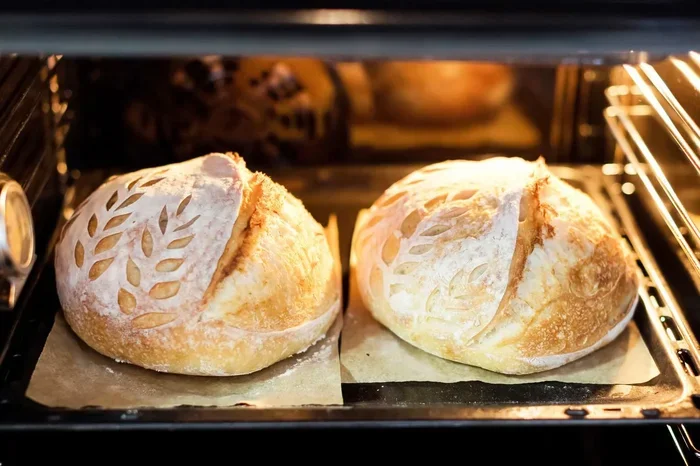
The best way to know when your sourdough is ready for the door to open is by looking at the crust. It should be a deep golden brown and feel firm to the touch. The loaf should have risen well above the rim of your Dutch oven or baking vessel.
The Best Oven Setup for Baking Sourdough
Before you even think about opening the oven, you need to set it up correctly. A good setup makes the whole process smoother and gives you better results with less stress.
Preheating Your Oven and Dutch Oven
Preheating is essential for sourdough baking. You want your oven and your Dutch oven to be screaming hot before the dough goes in. Most sourdough recipes call for preheating to 450-500°F for at least 30 to 45 minutes.
Here is a simple preheating routine you can follow:
- Place your Dutch oven with its lid inside the oven.
- Set the oven to 450-500°F.
- Let it preheat for at least 30 minutes. Longer is better.
- Carefully remove the Dutch oven, place your shaped dough inside, and put the lid back on.
- Return the pot to the oven and start your timer.
Using a baking stone or baking steel on a lower rack can also help. These tools store heat and deliver it evenly to the bottom of your loaf, which improves crust quality and bottom browning.
Temperature Settings for Perfect Sourdough
Most sourdough bakers use a two-stage temperature approach. The first stage is high heat, which drives oven spring and creates a strong crust. The second stage is a lower temperature, which cooks the inside of the bread evenly without burning the outside.
Here is a typical temperature schedule:
- First 20 minutes: 450-500°F with the lid on. This is when the magic happens. The high heat and trapped steam create maximum oven spring.
- Minutes 20-35: Remove the lid and reduce heat to 425-450°F. Now the crust begins to brown and the bread finishes cooking through.
- Last 5-10 minutes: You can open the door to check color, rotate the loaf, or release steam.
Every oven is different, so you may need to adjust these temperatures slightly. An oven thermometer is one of the best investments you can make as a sourdough baker. Many ovens run hotter or cooler than their dial suggests.
How to Open Bake Sourdough in the Oven Step by Step
Now let us get into the specific process of how to open bake sourdough in the oven. This is where the art meets the science, and getting it right makes all the difference.
Timing the Bake
Timing is everything when baking sourdough. You need to track two separate phases: the covered bake and the uncovered bake.
During the covered phase, keep the oven door closed. Do not peek. Every time you open the door, you lose heat and steam, which slows down oven spring. Set a timer for 20 minutes and trust the process. If you are using a baking stone without a Dutch oven, the covered phase still applies if you have added steam with a tray of boiling water or spray bottles.
After 20 minutes, check the loaf. The crust should be a rich golden brown. The loaf should have risen noticeably and feel firm on top. At this point, you can remove the lid or open the Dutch oven to let the steam escape and allow the crust to continue browning.
How to Open the Door Without Ruining the Crust
When you do open the oven door later in the bake, there is a right way and a wrong way to do it. Here is how to do it properly:
- Open the door slowly: Do not yank it open. A quick motion releases a rush of cold air that can shock the dough and cause the crust to crack unevenly.
- Crack the door open first: Open it just a few inches and let the steam escape gradually. This prevents moisture from condensing on the crust.
- Use an oven mitt: Always protect your hands. The pot and the oven surfaces are extremely hot.
- Rotate the loaf if needed: Ovens have hot spots. Rotating the loaf 180 degrees ensures even browning on all sides.
- Close the door gently: Slamming the door can cause vibrations that affect the crumb structure of the bread.
If you are in the last 5 to 10 minutes of baking, you can open the door more freely to check the color. A well-baked sourdough should be a deep mahogany brown on top and sides. If it looks pale, give it a few more minutes.
Using the Internal Temperature Test
One of the most reliable ways to know if your sourdough is done is by checking its internal temperature. Use an instant-read thermometer and insert it into the center of the loaf. The target temperature is 205-210°F for a fully baked sourdough.
If the temperature is below 200°F, the bread needs more time. If it is above 210°F, the loaf may be slightly overdone, but this is still perfectly fine to eat. The internal temperature test takes the guesswork out of baking and is especially helpful when you are new to sourdough.
Common Mistakes People Make When Opening the Oven
Even experienced bakers sometimes make mistakes when it comes to opening the oven during a sourdough bake. Here are the most common errors and how to avoid them.
Opening Too Early
This is the number one mistake sourdough bakers make. Opening the oven before the first 20 minutes are up can collapse your loaf entirely. The structure is not yet set, and the sudden loss of steam and heat causes the bread to deflate. It is tempting to peek, but resist the urge. Trust the timer and trust the process.
Opening the Door Too Often
Even after the first 20 minutes, opening the door repeatedly is not a good idea. Every time you open it, you lose heat and moisture. Try to limit yourself to one or two checks after removing the lid. If you need to monitor the bake more closely, consider using the oven light to look through the door glass instead.
Not Using Enough Steam
Steam in the early stages of baking is what gives sourdough its signature crispy yet chewy crust. Without enough steam, the crust sets too early, which restricts oven spring and leaves you with a dense, flat loaf. If you are not using a Dutch oven, you can add steam by placing a pan of boiling water on the bottom rack of the oven or by spritzing the walls of the oven with water right after loading the dough.
Forgetting to Score the Dough
Scoring is the process of cutting shallow slashes into the surface of the dough before baking. It is not just decorative. Scoring gives the sourdough a controlled place to expand during the bake. Without scoring, the bread may burst unpredictably, which affects its shape and texture.
Use a sharp blade, such as a razor blade or a dedicated bread lame, and make confident cuts about a quarter inch deep. The slashes should be at a 30- to 45-degree angle for the best visual effect and expansion pattern.
Tips for Perfect Sourdough Crust Every Time
The crust is what sets great sourdough apart from ordinary bread. Here are some tips to help you achieve a professional-quality crust every time you bake.
Steam and Its Role in Crust Development
Steam keeps the surface of the dough moist during the early stages of baking. This allows the starches on the surface to gelatinize, which creates a glossy, crispy crust. As the bake progresses and the moisture evaporates, the crust begins to caramelize and develop flavor.
There are several ways to introduce steam into your oven:
- Dutch oven method: The dough’s own moisture creates steam inside the sealed pot. This is the easiest and most effective method.
- Preheated cast iron with ice: Place a tray of ice cubes on the bottom of the oven when you load the dough.
- Spray bottle: Mist the inside of the oven with water right after loading the loaf. Be careful not to spray the oven light or heating elements.
After the first 20 minutes, you want the steam to escape. This is when you remove the lid or open the Dutch oven. The escaping steam allows the crust to dry out and brown properly.
Scoring Techniques for Better Expansion
Scoring is both functional and beautiful. The depth, angle, and pattern of your cuts influence how the sourdough expands in the oven. A single, confident slash about half an inch deep will create a beautiful ear, which is the raised flap of crust that forms along the cut.
For a more traditional look, try a cross pattern or a square grid. Each style creates a different expansion pattern and gives your loaf a unique, artisan appearance. Practice makes perfect, so do not worry if your first few scores are not picture-perfect.
Cooling Is Part of the Bake
One tip that many beginners overlook is the importance of cooling. Once you pull your sourdough out of the oven, place it on a wire rack and let it cool for at least one hour before slicing. Cutting into a hot loaf releases steam from the crumb, which makes the inside gummy and dense.
Patience during the cooling phase pays off with a better texture and a more enjoyable eating experience. The crust will also continue to crisp up as the bread cools, which is a nice bonus.
Troubleshooting: What to Do When Things Go Wrong
Not every sourdough bake will be perfect, and that is completely normal. Here are some common problems and what you can do to fix them.
Flat Sourdough Loaf
A flat loaf usually means the oven spring was weak or the dough collapsed during baking. This can happen if you opened the oven too early, if the dough was over-proofed, or if the oven temperature was too low. To fix this, make sure your starter is active and strong, proof the dough just until it has risen (not beyond), and keep the oven door closed during the critical first 20 minutes.
Pale or Dark Crust Issues
If your crust is too pale, the bake may not be long enough or the temperature too low. Try increasing the oven temperature by 10-15 degrees in the next bake. If the crust is too dark, reduce the temperature slightly or cover the loaf with foil during the last 10 minutes to prevent burning.
Dense or Gummy Crumb
A dense crumb usually means the bread was underbaked. Use the internal temperature test and aim for 205-210°F. Also check that your oven is actually reaching the temperature you set. An oven thermometer can reveal surprising discrepancies.
Expert Insights From Experienced Sourdough Bakers
Experienced bakers will tell you that the first few bakes are all about learning your oven. Every oven has its own personality, hot spots, and quirks. Here are some insights from seasoned sourdough bakers that can help you improve faster.
Invest in a good thermometer. An oven thermometer costs just a few dollars and can transform your baking results. Many ovens run 25 degrees hotter or cooler than the dial says, and this makes a huge difference in how your sourdough bakes.
Keep a baking journal. Write down the temperature, timing, hydration level, and results of each bake. Over time, you will start to see patterns and understand what works best in your specific oven.
Do not fear failure. Even professional bakers have bad loaves. Every imperfect bake teaches you something. The more you bake, the more intuitive the process becomes.
Use your senses. Look at the color, listen for the hollow sound when you tap the bottom, and smell the bread. These cues are just as important as timers and thermometers.
Key Takeaways
- Patience is everything: Keep the oven door closed for the first 20 minutes to protect oven spring and crust development.
- Open slowly and carefully: When you do open the door, do it gently and gradually to avoid temperature shocks.
- Use the right tools: A Dutch oven, baking stone, oven thermometer, and instant-read thermometer all make a big difference.
- Check internal temperature: 205-210°F is the target for a fully baked sourdough loaf.
- Cool before slicing: Let the loaf rest for at least one hour on a wire rack before cutting into it.
- Learn from every bake: Keep notes, adjust your approach, and enjoy the process of continuous improvement.
Frequently Asked Questions
Can I open the oven door during the first 10 minutes of baking sourdough?
It is best not to open the oven door during the first 10 to 20 minutes of baking. This is when oven spring happens, and opening the door can cause the loaf to collapse. The sudden loss of heat and steam weakens the structure of the bread before the crust has had a chance to set.
How do I know when sourdough is fully baked?
The best way to check is by using an instant-read thermometer. Insert it into the center of the loaf. The internal temperature should be between 205 and 210 degrees Fahrenheit. You can also tap the bottom of the loaf. A hollow sound means the bread is done.
Should I use a Dutch oven or a baking stone for sourdough?
Both work well, but a Dutch oven is the easiest option for beginners. It traps moisture and creates steam naturally, which gives you excellent oven spring and a beautiful crust. A baking stone works well too, especially if you add steam with a separate tray of boiling water.
Why is my sourdough crust not crispy?
A soft crust usually means there was not enough steam in the early bake or the bread was not baked long enough. Make sure you are baking at a high enough temperature for the first 20 minutes and that you remove the lid or open the Dutch oven at the right time to let the crust dry out and brown.
How long should I let sourdough cool before cutting?
Let your sourdough cool for at least one hour before slicing. Cutting into hot bread releases steam from the crumb, which makes the inside gummy and dense. Patience at this stage really does make a difference in the final texture.
Can I open the oven multiple times after removing the lid?
Try to limit oven openings after removing the lid to one or two times. Each time you open the door, you lose heat and moisture, which can affect browning and baking time. If you need to check on the loaf, use the oven light first before opening the door.
Conclusion
Learning how to open bake sourdough in the oven is one of the most rewarding skills you can develop as a home baker. It combines science, timing, and a little bit of intuition. Once you understand the role that heat and steam play in the baking process, you will start to see dramatic improvements in your loaves.
Remember to keep the oven door closed during the first 20 minutes, open it slowly and gently when you do check the bread, and use tools like a Dutch oven, baking stone, and instant-read thermometer to take the guesswork out of the process. Pay attention to the visual cues, trust your senses, and do not be afraid to experiment.
Every sourdough bake is a learning experience. Some loaves will be perfect, and some will need a little more work. That is all part of the journey. The more you practice, the more confident you will become, and the better your results will be. So preheat that oven, score your dough with care, and open that door at just the right moment. Your perfect sourdough loaf is waiting for you.