Will Parchment Paper Catch On Fire In The Oven Safely
Will parchment paper catch on fire in the oven? The short answer is no, not under normal cooking conditions. Parchment paper is designed to handle heat up to about 420 to 450 degrees Fahrenheit, depending on the brand. However, it can burn if it touches the heating elements or exceeds its temperature limit. This guide covers everything you need to know about parchment paper safety, including burn points, proper usage, and how it compares to wax paper.
Have you ever placed parchment paper in the oven and then walked away wondering, will parchment paper catch on fire in the oven? It is a question many home bakers and cooks ask. The good news is that parchment paper is specifically designed for oven use. It is one of the most trusted tools in kitchens around the world. But like any kitchen tool, it has limits. Understanding those limits keeps your food safe and your kitchen accident-free.
Parchment paper is a lightweight, heat-resistant paper used for baking, roasting, and cooking. It is coated with silicone, which gives it non-stick and heat-resistant properties. Most brands say it is safe up to about 420 to 450 degrees Fahrenheit. That covers the vast majority of home cooking tasks. But what happens when you push the temperature higher? Can parchment paper burn in the oven? Yes, it can. But under normal cooking conditions, it is very unlikely to catch fire. Let us dig deeper into how this works.
Key Takeaways
- Parchment paper is oven-safe: It is designed to handle moderate oven temperatures, typically up to 420 to 450 degrees Fahrenheit.
- It will not ignite easily: Parchment paper has a high ignition point and usually chars before it catches fire.
- Avoid direct contact with heating elements: Placing parchment paper too close to the top or bottom heating elements can cause it to burn.
- Wax paper is different: Wax paper is not oven-safe and will melt or ignite at much lower temperatures.
- Check the manufacturer’s guidelines: Always check the packaging for the recommended temperature limit.
- Reusing parchment paper is generally safe: As long as it is not already charred or torn.
- Silicone baking mats are a great alternative: They offer even higher heat resistance and can be reused many times.
📑 Table of Contents
- What Is Parchment Paper and Why Do People Use It?
- Will Parchment Paper Catch On Fire In The Oven?
- Parchment Paper vs. Wax Paper: Key Differences
- How to Use Parchment Paper Safely In The Oven
- What Happens When Parchment Paper Gets Too Hot?
- Expert Tips for Getting the Most Out of Parchment Paper
- Final Thoughts on Parchment Paper Safety
What Is Parchment Paper and Why Do People Use It?
Parchment paper is a type of baking paper that has been treated to make it grease-resistant and heat-resistant. People use it for many reasons in the kitchen. It lines baking sheets, cake pans, and loaf pans. It prevents food from sticking. It makes cleanup a breeze. And it helps food cook more evenly by creating a barrier between the food and the baking surface.
You will find parchment paper in almost every home baker’s kitchen. It comes in bleached and unbleached versions. The bleached version is white and has been chemically treated. The unbleached version is brown and more natural. Both work the same way in the oven. The key difference is personal preference and whether you want to avoid chemical treatments.
How Parchment Paper Is Made
Parchment paper starts as regular paper. It goes through a process called parchmentizing. During this process, the paper is treated with sulfuric acid or zinc chloride. This treatment changes the structure of the paper fibers. It makes the paper more dense and more resistant to heat and grease. After this treatment, the paper is often coated with silicone on one or both sides. This silicone coating is what gives parchment paper its non-stick quality and its ability to handle high temperatures.
Common Uses in the Kitchen
People use parchment paper for a wide range of cooking tasks. Here are some of the most common uses:
- Lining cookie sheets for even baking
- Wrapping fish or meat for en papillote cooking
- Lining cake pans to prevent sticking
- Creating a non-stick surface for candy or chocolate work
- Covering countertops during messy food prep
- Separating layers of frozen food
With so many uses, it is no wonder that parchment paper safety is such an important topic. When used correctly, it is a very safe and convenient kitchen tool.
Will Parchment Paper Catch On Fire In The Oven?
This is the big question, and the answer is reassuring. Under normal oven temperatures, parchment paper will not catch on fire. Most parchment paper is rated for temperatures up to 420 to 450 degrees Fahrenheit. At these temperatures, the paper may brown or curl at the edges, but it will not ignite. The silicone coating and the treated paper fibers give it a high thermal resistance.
However, there are situations where parchment paper can burn or catch fire. If the paper touches the top or bottom heating elements, it can scorch or ignite. If you set your oven to a temperature above the paper’s rated limit, it can char and potentially catch fire. So while the answer to will parchment paper catch on fire in the oven is generally no, it is not a hard no. There are conditions where it can happen.
The Science Behind Paper and Heat
To understand why parchment paper behaves the way it does in the oven, it helps to know a little about how paper reacts to heat. Regular paper ignites at around 451 degrees Fahrenheit. This is the famous paper ignition point. Parchment paper is treated and coated, which raises its ignition point. The silicone coating acts as a barrier. It slows down the rate at which heat transfers to the paper fibers. This means parchment paper can withstand higher temperatures before it reaches its ignition point.
But parchment paper is not fireproof. It is oven-safe within a specific temperature range. Once the temperature exceeds that range, the paper starts to break down. It will first brown, then char, and finally, if the heat continues, it can ignite. The key is staying within the recommended temperature range.
What Temperature Does Parchment Paper Burn?
Most parchment paper brands recommend a maximum temperature of 420 to 450 degrees Fahrenheit. Some premium brands claim to handle up to 480 degrees Fahrenheit. Beyond these temperatures, the paper begins to degrade. At around 450 degrees Fahrenheit, you may notice the edges of the paper turning brown or curling up. At higher temperatures, the paper can blacken, smoke, and eventually catch fire.
The smoke point of parchment paper is also worth knowing. When parchment paper overheats, it can release smoke before it actually catches fire. This is a warning sign. If you see smoke coming from your parchment paper, remove it from the oven immediately and lower the temperature.
Parchment Paper vs. Wax Paper: Key Differences
Many people confuse parchment paper with wax paper. They look similar, but they are very different. Understanding the difference is important for kitchen safety.
Wax paper is coated with a thin layer of wax, usually paraffin or soybean wax. This wax coating makes the paper moisture-resistant and non-stick. However, wax paper is not heat-resistant. The wax melts at low temperatures, and the paper can catch fire in a hot oven. Never put wax paper in the oven.
Parchment paper, on the other hand, is coated with silicone. Silicone can handle much higher temperatures than wax. This is why parchment paper is oven-safe and wax paper is not.
Here is a quick comparison:
- Parchment paper: Silicone coated, oven-safe up to 420 to 450 degrees Fahrenheit, non-stick, grease-resistant
- Wax paper: Wax coated, not oven-safe, moisture-resistant, not heat-resistant, can melt or ignite in the oven
If you are ever unsure which one you have, check the packaging. It will clearly state whether the paper is oven-safe. Using the wrong type of paper in the oven is one of the most common parchment paper mistakes people make.
How to Use Parchment Paper Safely In The Oven
Using parchment paper in the oven is simple and straightforward. But following a few safety guidelines ensures you get the best results and avoid any accidents.
Best Practices for Oven Use
Here are some tried-and-true tips for using parchment paper safely in the oven:
- Check the temperature rating: Always check the packaging for the maximum temperature. Do not exceed it.
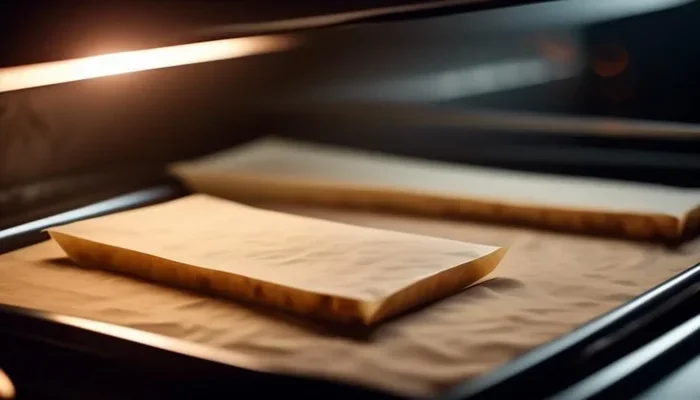
- Trim the paper to fit: Cut the parchment paper so it fits inside your pan or baking sheet. Avoid letting it hang over the edges where it could touch the oven heating elements.
- Do not let it touch the heating elements: Keep the parchment paper away from the top and bottom heating elements. Direct contact with these elements can cause the paper to ignite.
- Use it on the middle rack: The middle rack is the safest position. It keeps the paper away from the top and bottom heat sources.
- Do not reuse paper that is already charred: If the parchment paper is already brown or blackened, discard it and use a fresh sheet.
- Avoid broiler settings: The broiler uses direct, intense heat from the top element. This can easily ignite parchment paper. Do not use parchment paper under the broiler.
- Use parchment paper for its intended purpose: It is designed for baking and cooking at moderate temperatures. Do not use it for tasks that involve extreme heat.
Common Mistakes to Avoid
Even experienced cooks can make mistakes with parchment paper. Here are some common errors to watch out for:
- Using parchment paper above its temperature limit: This is the most common mistake. Always stay within the recommended temperature range.
- Letting the paper overlap the edges of the pan: Overhanging parchment can touch the oven walls or heating elements.
- Confusing parchment paper with wax paper: This can lead to a dangerous oven fire. Always double-check before using.
- Leaving the oven unattended for long periods: Even though parchment paper is safe at normal temperatures, it is best to keep an eye on your food.
- Crumpling the paper tightly: Tightly crumpled parchment paper can create hot spots that cause uneven browning or burning.
What Happens When Parchment Paper Gets Too Hot?
Even when you follow all the safety guidelines, sometimes things go wrong. Maybe you set the oven too high, or maybe the paper shifted during cooking. So what happens when parchment paper gets too hot?
Signs Your Parchment Paper Is Overheating
There are several signs that your parchment paper is getting too hot. Watch for these warning signals:
- The edges of the paper start turning brown or darkening
- The paper begins to curl or lift off the pan
- You see smoke coming from the paper
- The paper develops a burnt or scorched smell
- The paper turns black in spots
If you notice any of these signs, remove the parchment paper from the oven carefully. Use oven mitts to avoid burns. Let the paper cool before disposing of it.
Can You Still Use Slightly Burned Parchment?
If the parchment paper is only slightly browned at the edges, it is still safe to use. The browning is a normal part of the paper’s reaction to heat. However, if the paper is blackened, charred, or has holes in it, it is best to discard it. Charred paper can affect the taste of your food. It can also be a fire hazard if left in the oven.
In most cases, slightly browned parchment paper will still do its job. It will still prevent sticking and make cleanup easier. But when in doubt, throw it out and use a fresh sheet.
Expert Tips for Getting the Most Out of Parchment Paper
Getting the most out of your parchment paper is easy when you know a few pro tips. These tips will help you bake better and stay safe.
Tip 1: Cut sheets slightly larger than your pan. This ensures full coverage and prevents food from touching the pan directly.
Tip 2: Use parchment paper for sticky foods. Caramel, candy, and chocolate are much easier to handle when placed on parchment paper. They will not stick and are easy to remove.
Tip 3: Reuse parchment paper when possible. If the paper is not heavily soiled or charred, you can reuse it for another batch. This saves money and reduces waste.
Tip 4: Consider a silicone baking mat as an alternative. Silicone baking mats are reusable and can handle higher temperatures than parchment paper. They are a great long-term investment for frequent bakers.
Tip 5: Store parchment paper properly. Keep it in a cool, dry place. Moisture can weaken the paper and reduce its effectiveness. A simple roll or fold in a kitchen drawer works perfectly.
These tips apply whether you are a beginner or a seasoned baker. They help you use oven-safe parchment more effectively and with greater confidence.
Final Thoughts on Parchment Paper Safety
So, will parchment paper catch on fire in the oven? Under normal conditions, no. Parchment paper is a safe, reliable, and incredibly useful kitchen tool. It is designed to handle the heat of your home oven with ease. As long as you stay within the recommended temperature range and follow basic safety guidelines, you have nothing to worry about.
The key takeaways are simple. Always check the temperature rating on the packaging. Never let the paper touch the heating elements. Do not use parchment paper under the broiler. And never confuse parchment paper with wax paper. These simple steps will keep your kitchen safe and your baking results excellent.
Parchment paper has earned its place as a kitchen staple for good reason. It makes baking easier, cleanup faster, and results more consistent. Use it wisely, and it will serve you well for many meals to come.
Remember, the answer to will parchment paper catch on fire in the oven comes down to how you use it. Treat it with respect, stay within its limits, and it will be one of the safest and most helpful tools in your kitchen.
Frequently Asked Questions
Can parchment paper start a fire in the oven?
It is very unlikely under normal cooking conditions. Parchment paper is designed to handle temperatures up to 420 to 450 degrees Fahrenheit. It will usually char or brown before it catches fire. However, if the paper touches a heating element or exceeds its temperature limit, it can ignite. Always follow the manufacturer’s guidelines to stay safe.
What is the maximum temperature for parchment paper?
Most parchment paper brands are rated for temperatures up to 420 to 450 degrees Fahrenheit. Some premium brands can handle up to 480 degrees Fahrenheit. Always check the packaging for the specific temperature limit of your parchment paper. Going above this limit can cause the paper to burn or catch fire.
Is it safe to use parchment paper at 450 degrees?
Yes, for most parchment paper brands, 450 degrees Fahrenheit is within the safe range. However, some brands have a lower limit, so always check the packaging. At 450 degrees, you may notice the edges of the paper browning or curling, which is normal and not a safety concern.
Can you put parchment paper under the broiler?
No, you should never use parchment paper under the broiler. The broiler uses direct, intense heat from the top element. This can easily cause the parchment paper to ignite. If you need to broil food, use a metal baking sheet without parchment paper.
What is the difference between parchment paper and wax paper?
Parchment paper is coated with silicone and is oven-safe up to high temperatures. Wax paper is coated with wax and is not heat-resistant. Wax paper will melt or catch fire in the oven. Never use wax paper in place of parchment paper for baking or cooking.
Can you reuse parchment paper after baking?
Yes, you can reuse parchment paper as long as it is not heavily soiled, charred, or torn. If the paper is still in good condition, it will work just as well for another batch. Simply slide it off the pan, wipe it clean if needed, and use it again. Discard any paper that is blackened or damaged.
=== CONCLUSION ===
Will parchment paper catch on fire in the oven? The answer is clear. Under normal baking and roasting conditions, parchment paper is completely safe. It is designed to handle the heat of your home oven without catching fire. The key is to use it within its recommended temperature range, keep it away from heating elements, and never confuse it with wax paper.
By following the tips and guidelines in this article, you can bake with confidence. Parchment paper is a versatile, convenient, and safe kitchen tool when used correctly. It prevents sticking, promotes even cooking, and makes cleanup a snap. So go ahead, line your baking sheets, and enjoy the ease that parchment paper brings to your kitchen. Just remember to respect its temperature limits, and it will serve you well every time.