How Long To Cook Frittata In Oven For Perfect Results
Cooking a frittata in the oven is simple once you know the right time and temperature. Most frittatas bake perfectly between 25 and 35 minutes at 375°F. The exact frittata bake time depends on your pan size, ingredients, and how thick the mixture is. This guide gives you everything you need for oven-baked frittata success every time.
A frittata is one of the most satisfying dishes you can pull from your oven. It is hearty, flavorful, and incredibly easy to customize. Whether you are cooking for one or feeding a crowd, this Italian egg bake never lets you down.
If you have been searching for the perfect frittata recipe with clear timing instructions, you have come to the right place. Many home cooks wonder about the exact frittata cooking time and temperature. The good news is that once you understand the basics, baking a frittata becomes second nature.
In this guide, we will walk through everything you need to know. From oven temperature to pan selection, we cover it all. You will learn how to tell when your frittata is done and avoid the most common mistakes. By the end, you will feel confident enough to make a perfect frittata every single time.
Key Takeaways
- Standard Bake Time: Most frittatas take 25 to 35 minutes at 375°F to cook through evenly.
- Pan Size Matters: A deeper pan needs more time, while a wider pan cooks faster.
- Check Doneness: Use a knife or toothpick test to confirm the center is fully set.
- Rest Before Slicing: Let the frittata cool for 5 to 10 minutes for cleaner cuts.
- Oven Temperature Is Key: 375°F is the sweet spot for a golden crust and creamy interior.
- Leftovers Reheat Well: Store baked frittata in the fridge and reheat in the oven or microwave.
- Customize Freely: Add vegetables, meats, and cheeses to suit your taste and dietary needs.
📑 Table of Contents
What Is a Frittata and Why Oven Baking Works
A frittata is essentially a thick Italian egg dish. Think of it as a cross between an omelet and a quiche. Unlike a quiche, a frittata usually does not have a crust. Instead, it relies on the eggs themselves to hold everything together.
Cooking frittata in the oven offers several advantages over the stovetop method. First, it gives you an even cook from edge to center. Second, you get a beautiful golden top without needing to flip the pan. Third, it frees up your stovetop for other dishes while the frittata bakes.
The oven also provides consistent heat. This is especially helpful when you are adding heavier ingredients like potatoes, sausage, or cheese. Those dense additions need steady warmth to cook through properly. A gentle oven bake ensures everything sets together nicely.
How Long To Cook Frittata In Oven: The Complete Guide
The short answer to how long to cook frittata in oven is between 25 and 35 minutes. But the full answer depends on a few key factors. Let us break them down so you can nail the timing every time.
Standard Frittata Bake Time
For a standard 9-inch or 10-inch frittata, plan on 25 to 30 minutes at 375°F. This works for most frittata recipes with a mix of vegetables, cheese, and eggs. The top should be golden brown and the center should feel firm when you gently shake the pan.
If you are making a thicker frittata in a deeper pan, add 5 to 10 extra minutes. A deeper mixture takes longer for the heat to reach the center. Always check for frittata doneness before pulling it out.
Factors That Affect Frittata Bake Time
Several things can change your bake frittata time:
- Pan Depth: A deeper pan means a thicker frittata, which needs more time in the oven.
- Ingredient Density: Heavy ingredients like potatoes or raw vegetables add moisture and require longer cooking.
- Oven Accuracy: Every oven is slightly different. An oven thermometer can help you verify the actual temperature inside.
- Room Temperature Ingredients: Cold eggs and dairy take longer to cook through. Let your ingredients sit at room temperature for about 15 minutes before mixing.
- Preheat Status: Always preheat oven frittata recipes in a fully heated oven. Putting the pan in a cold oven changes the timing significantly.
Quick Tips for Perfect Timing
- Set a timer for 20 minutes and start checking early.
- Use a toothpick or knife inserted in the center to test doneness.
- If the top is browning too fast, loosely cover it with foil.
- Remember that the frittata continues to cook slightly after you remove it from the oven.
How Long Do Chicken Kebabs Take In The Oven
While we are on the topic of oven cooking times, it is worth noting that different dishes vary widely. For example, how long do chicken kebabs take in the oven depends on the size of the pieces and the temperature. Chicken kebabs typically need 20 to 25 minutes at 400°F. This is a good reminder that each dish has its own unique timing profile, and a frittata is no exception.
Best Oven Temperature for a Perfect Frittata
Getting the oven temperature for frittata right is just as important as the timing. The wrong temperature can leave you with a soggy bottom or a dry, overcooked center.
Why 375°F Is the Sweet Spot
Most frittata cooking tips from experienced cooks point to 375°F as the ideal temperature. Here is why this temperature works so well:
- It heats the eggs gently, preventing them from becoming rubbery.
- It allows the cheese to melt evenly without burning.
- It creates a beautiful golden crust on top without over-browning the edges.
- It gives enough time for denser ingredients like potatoes to cook through.
If you prefer a slightly crispier top, you can bump the temperature up to 400°F for the last 5 minutes. Just keep a close eye on it to prevent burning.
Adjusting Temperature for Different Pan Sizes
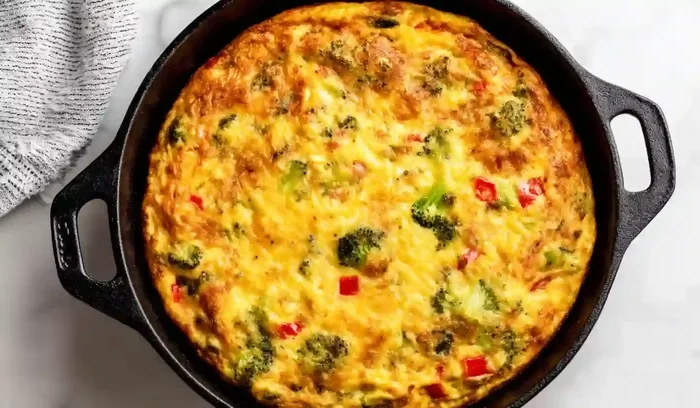
The pan you use also matters. A cast iron skillet is a popular choice for cast iron frittata recipes. Cast iron retains heat well, so you may want to lower the temperature by 10 to 15 degrees. A standard nonstick or aluminum pan works great at 375°F.
For a glass baking dish, you might need to reduce the temperature slightly as well. Glass heats up slower than metal, so it can cause the edges to overcook if the temperature is too high.
| Pan Type | Recommended Temperature | Approximate Bake Time |
|---|---|---|
| 9-inch nonstick skillet | 375°F | 25 to 30 minutes |
| 10-inch cast iron skillet | 365°F | 28 to 35 minutes |
| Glass baking dish (9×13) | 365°F | 30 to 35 minutes |
| Ceramic pie dish | 375°F | 28 to 33 minutes |
These times are guidelines. Always use the toothpick or knife test to confirm your frittata internal temperature is safe. The USDA recommends eggs reach an internal temperature of 160°F.
Step-by-Step: How to Bake a Frittata
Now that you know the time and temperature, let us walk through the actual process. Baking a frittata in oven is straightforward, but a few details make a big difference.
Preparing Your Ingredients
Start by gathering your ingredients. A basic frittata needs eggs, milk or cream, cheese, and your choice of fillings. Common frittata ingredients include:
- 6 to 8 large eggs
- 1/4 cup of milk or cream
- 1 cup of shredded cheese (cheddar, mozzarella, or feta all work well)
- 1 to 2 cups of chopped vegetables (bell peppers, onions, spinach, mushrooms)
- Salt, pepper, and herbs like basil or chives
Pre-cook any vegetables that release a lot of moisture, such as zucchini or mushrooms. This prevents a soggy frittata. If you are using raw potatoes, parboil or microwave them first so they cook through in the oven.
Pouring and Baking
Preheat your oven to 375°F while you prepare the egg mixture. Whisk the eggs, milk, salt, and pepper together in a large bowl. Pour the mixture into your prepared pan over the fillings. Make sure everything is spread evenly.
Place the pan in the center rack of the oven. Set a timer for 20 minutes. At this point, you can start checking for frittata doneness. The edges should be set and the top should look mostly cooked but still slightly jiggly in the very center.
Checking for Doneness
Knowing how to tell when frittata is done is a crucial skill. Here is what to look for:
- The top should be set and lightly golden.
- The edges should pull away slightly from the pan.
- A knife inserted in the center should come out clean.
- The frittata should have a slight jiggle in the very middle, but no liquid egg should remain.
Remember that the frittata continues to cook after you remove it from the oven. This is called carryover cooking. Pulling it out when the center is just slightly jiggly will give you a perfectly creamy result.
If you are ever unsure, you can always give it a few more minutes. It is much better to slightly undercook than to overbake. You can always put it back in for a few more minutes if needed.
Common Mistakes That Affect Frittata Cooking Time
Even experienced cooks can make mistakes when baking a frittata. Knowing what to avoid saves time and prevents disappointing results.
Skipping the Preheat
This is one of the most common errors. Putting your frittata into a cold oven throws off the entire cooking timeline. The eggs start to cook slowly and unevenly. Always make sure your oven reaches 375°F before the pan goes in.
Overfilling the Pan
It is tempting to load up the pan with ingredients. But too many fillings make the frittata too thick. A thick frittata needs significantly more time to cook through. Keep your fillings to about one-third to one-half of the total volume.
Opening the Oven Door Too Often
Every time you open the oven door, the temperature drops. This can extend your frittata bake time and lead to an uneven cook. Trust the timer and resist the urge to peek too frequently.
Using the Wrong Pan
A pan that is too small will overflow. A pan that is too large will spread the egg mixture too thin, changing the cook time entirely. Stick to a 9-inch or 10-inch pan for the best results.
Not Letting It Rest
Cutting into a frittata right out of the oven is tempting. But letting it rest for 5 to 10 minutes allows the center to fully set. This makes frittata slicing much easier and cleaner.
Expert Insight
Professional chefs often recommend letting a baked frittata rest for at least 10 minutes before cutting. This simple step transforms a messy slice into a clean, restaurant-quality portion. It also allows the flavors to settle and the texture to become firmer.
Storing, Reheating, and Serving Your Frittata
One of the best things about frittata is that it works beautifully as leftovers. Understanding how to store and reheat it properly keeps it tasting great for days.
How to Store Leftover Frittata
Let the frittata cool completely before storing. Place it in an airtight container and refrigerate for up to 4 days. You can also freeze a frittata for up to 3 months. Wrap it tightly in plastic wrap and then in foil to prevent freezer burn.
How to Reheat Frittata
Reheating in the oven is the best method for maintaining texture. Wrap a slice in foil and place it in a 350°F oven for 10 to 15 minutes. You can also reheat individual slices in the microwave for 30 to 60 seconds, though the texture may be slightly softer.
For those who enjoy frittata leftovers, cold frittata slices make a fantastic lunch or snack. The flavors actually deepen overnight as the ingredients meld together.
Frittata Serving Suggestions
Frittata is incredibly versatile when it comes to serving. Here are some ideas:
- Slice it and serve alongside a fresh green salad for a light lunch.
- Cut it into small pieces for a breakfast or brunch buffet.
- Pair it with crusty bread and a drizzle of hot sauce.
- Serve it as a side dish with roasted vegetables and grains.
- Use it as a filling in a sandwich or wrap for a quick meal on the go.
Compared to dishes like how long to cook oysters in oven, which require precise timing for delicate seafood, a frittata is much more forgiving. This makes it a perfect dish for beginners who are building confidence in the kitchen.
Similarly, if you enjoy oven-roasted snacks, the principles of even heat distribution apply to how long to roast pumpkin seeds in oven as well. Both dishes benefit from a preheated oven and a watchful eye during the final minutes of cooking.
Creative Frittata Variations to Try
Once you master the basic frittata recipe, the fun begins with variations. Here are some ideas to keep your meals exciting:
Mediterranean Frittata
Use sun-dried tomatoes, Kalamata olives, feta cheese, and fresh spinach. Add oregano and a squeeze of lemon for a bright, Mediterranean flavor profile.
Smoky Sausage and Pepper Frittata
Brown some Italian sausage with bell peppers and onions. Mix them into the egg custard with shredded mozzarella for a hearty breakfast option.
Veggie-Loaded Frittata
This is a great way to use up leftover vegetables. Broccoli, zucchini, cherry tomatoes, and caramelized onions all work wonderfully. Add a sprinkle of parmesan for extra flavor.
Herb and Goat Cheese Frittata
Fold in fresh herbs like dill, chives, and parsley. Swirl in creamy goat cheese for an elegant, restaurant-worthy dish.
Each variation follows the same basic frittata oven temperature and timing guidelines. The cooking time may shift slightly depending on the moisture content of your fillings, but the 375°F and 25-to-35-minute range works for nearly every version.
Conclusion
Making a frittata in the oven is one of the easiest and most rewarding things you can do in the kitchen. The key is understanding how long to cook frittata in oven, which generally falls between 25 and 35 minutes at 375°F. From pan selection to ingredient prep, every small detail contributes to the final result.
Remember to always preheat your oven, check for doneness with a simple knife test, and let the frittata rest before slicing. Avoid common mistakes like overfilling the pan or skipping the preheat. And do not be afraid to experiment with different frittata ingredients and flavor combinations.
With the tips and guidelines in this article, you are now equipped to make a perfect frittata every time. Whether you are cooking for a quiet weeknight dinner or hosting a weekend brunch, this versatile dish never disappoints. So preheat that oven, gather your favorite fillings, and enjoy the process of creating something truly delicious.
Frequently Asked Questions
Can I cook a frittata at 400°F instead of 375°F?
Yes, you can cook a frittata at 400°F, but you should reduce the baking time slightly. A higher temperature will brown the top faster, so start checking at the 20-minute mark. Keep an eye on the frittata to prevent the edges from over-browning while the center is still undercooked.
How do I know if my frittata is done inside?
The best way to check is to insert a thin knife or toothpick into the center of the frittata. If it comes out clean with no wet egg clinging to it, the frittata is done. The center should have a slight jiggle but no liquid egg remaining. The internal temperature should reach 160°F for food safety.
Can I use a cast iron skillet to bake a frittata?
Absolutely. A cast iron skillet is one of the best pans for frittata because it retains heat evenly. You may want to lower the oven temperature by 10 to 15 degrees since cast iron holds heat so well. A cast iron frittata develops a beautiful golden crust that is hard to beat.
How long can I store leftover frittata?
Leftover frittata keeps well in the refrigerator for up to 4 days when stored in an airtight container. You can also freeze it for up to 3 months. Reheat in the oven at 350°F for the best texture. Cold frittata slices also make a great grab-and-go lunch the next day.
Why is my frittata soggy in the middle?
A soggy middle usually means the frittata was undercooked or the fillings released too much moisture. Make sure to pre-cook watery vegetables like zucchini and mushrooms before adding them to the egg mixture. Also, check that your oven is fully preheated before baking, and give the frittata enough time to set in the center.
What is the difference between a frittata and an omelet?
The main difference is the cooking method and thickness. A frittata is baked in the oven and is typically thicker, while an omelet is cooked on the stovetop and folded. A frittata also usually includes more fillings mixed into the eggs rather than just a filling inside a folded egg layer. Both are delicious and easy to customize.