How To Get Pizza Off Peel Into Oven Without Sticking
Getting pizza off the peel and into the oven without sticking is easier than you think. With the right technique, a well-prepared peel, and a few simple tricks, you can launch your pizza perfectly every time. This guide covers everything you need to know about getting pizza off peel into the oven smoothly and confidently.
There is nothing quite like pulling a perfectly baked pizza out of a hot oven. But before you get to that satisfying moment, you have to face one of the trickiest parts of homemade pizza: getting pizza off peel into oven without it sticking to the surface.
If you have ever tried to slide a pizza off a wooden peel and watched it cling for dear life, you know how frustrating that can be. The dough sticks, the toppings shift, and suddenly your beautiful creation is falling apart. But here is the good news: getting pizza off the peel smoothly is a skill anyone can learn with a little practice.
In this guide, we will walk you through everything you need to know. From preparing your peel and dusting it correctly to mastering the launch technique, you will find practical tips that work every time. Whether you use a home oven, a pizza stone, or a wood-fired setup, these methods will help you transfer your pizza with total confidence.
Key Takeaways
- Dust your peel properly: Use flour or cornmeal to prevent the dough from sticking during transfer.
- Use the right peel angle: A quick, confident jerking motion helps the pizza slide off cleanly.
- Preheat your peel: A room-temperature or slightly warmed peel works better than a cold one.
- Shape your dough on the peel: This saves time and reduces the risk of sticking during transfer.
- Avoid too many toppings: Heavy pizzas are harder to launch and more likely to stick.
- Know your oven type: Different ovens require different launch techniques for best results.
- Keep a backup plan: Parchment paper can save you when nothing else works.
📑 Table of Contents
Why Pizza Sticks to the Peel
Understanding why your pizza clings to the peel is the first step toward fixing the problem. When dough sticks, it is usually because of a combination of moisture, surface tension, and poor preparation. Let us break down the main reasons this happens.
The Science Behind Dough Sticking
Wet dough naturally adheres to surfaces. When your pizza dough has too much moisture, it creates a bond with the peel. This is especially true if the peel surface is rough or if the dough sits too long before sliding into the oven. The longer the dough sits, the more it sticks.
Another factor is the type of flour or dusting agent you use. Some flours absorb moisture better than others. If your dusting layer is too thin or the wrong type, the dough has nothing to glide on. This is why pizza peel technique matters so much. The right preparation makes all the difference between a clean launch and a sticky disaster.
Common Culprits That Cause Sticking
Several things can cause your pizza to stick. Here are the most common ones:
- Too much moisture in the dough. Wet dough grips the peel surface tightly.
- Not enough dusting flour or cornmeal. A thin layer does not create enough separation.
- A warped or rough peel surface. Uneven surfaces catch the dough and prevent sliding.
- Cold dough on a cold peel. Temperature differences cause the dough to seize up and stick.
- Overloaded toppings. Heavy pizzas have more weight pressing down, increasing contact with the peel.
- Waiting too long before launching. The dough absorbs moisture from the toppings over time.
Once you know what causes sticking, you can take steps to prevent it. The next section covers exactly how to prepare your peel the right way.
Preparing Your Pizza Peel the Right Way
A well-prepared peel is your best friend when it comes to getting pizza off peel into the oven. Taking a few extra minutes before you shape your dough can save you from a lot of frustration later.
Choose the Right Type of Peel
Not all peels are created equal. There are two main types: wooden peels and metal peels. Wooden peels are traditional and gentle on dough. They do not conduct heat, which means your dough is less likely to stick during shaping. Metal peels, on the other hand, are thinner and lighter. They are great for sliding pizza into a hot oven but can be trickier for shaping.
For the best results, many pizza makers use both. They shape the dough on a wooden peel and then transfer it to a metal peel for launching. If you only have one, a wooden peel is usually the safer choice for beginners.
Dusting Techniques That Really Work
Dusting is the most important step in preventing sticking. You want a generous but even layer of your chosen dusting agent across the entire surface of the peel. Here is how to do it right:
- Start with a clean, dry peel.
- Spread a thin layer of flour dusting or cornmeal across the surface.
- Tap the peel gently to spread the dust evenly.
- Add a second light layer if needed.
- Place your shaped dough on the peel and give it a gentle shake to confirm it slides.
The key is to make sure the dough can move freely before you even think about launching it. If it does not slide on the peel at room temperature, it will not slide into the oven either.
When to Use Cornmeal vs Flour
Both cornmeal and flour work well, but they have different properties. Cornmeal creates a slightly coarser barrier that allows the dough to glide more easily. It also adds a nice crispy texture to the bottom of the crust. Flour is finer and works well for thinner doughs. Some pizza makers use a mix of both for the best of both worlds.
Semolina flour is another excellent option. It is coarser than regular flour and absorbs moisture well. Many professional pizzerias use semolina because it creates a reliable non-stick surface without affecting the flavor of the pizza.
The Best Technique to Launch Pizza Into the Oven
Now that your peel is ready, it is time to learn how to actually get the pizza into the oven. The launch is the moment where everything comes together or falls apart. Let us walk through the proper technique step by step.
Step-by-Step Pizza Launch Guide
Follow these steps for a smooth and successful pizza launch:
- Position the peel near the oven opening. Make sure it is stable and level.
- Give the peel a quick shake. This confirms the pizza is not stuck before you start moving.
- Move the peel forward with a quick, confident jerk. The motion should be short and sharp, not slow and dragging.
- Lift the front of the peel slightly as you pull it back. This helps the pizza slide off and onto the hot surface below.
- Pull the peel away quickly and smoothly. Do not hesitate or drag it sideways.
The whole motion should take about one to two seconds. Think of it like a quick flick. The faster and more confident you are, the better the result.
Body Positioning and Hand Motion
Your body position matters more than you might think. Stand facing the oven with your feet shoulder-width apart. Hold the peel with both hands, keeping it level. As you jerk the peel forward, use a quick wrist motion rather than moving your whole arm.
The pizza peel angle is also important. You want the front of the peel to be slightly lower than the back. This creates a gentle slope that helps the pizza slide forward and off the peel naturally. A flat or tilted-up peel will cause the pizza to stop or slide backward.
How to Check If the Pizza Is Ready to Slide
Before you attempt the launch, do a quick check. Shake the peel gently side to side. If the pizza moves freely, it is ready. If it resists, add a little more dusting flour or cornmeal to the edges. You can also gently lift one side of the pizza to see if it sticks. If it does, slide a thin spatula or bench scraper underneath to loosen it before launching.
Another helpful tip is to let the pizza sit on the peel for no more than 30 seconds before launching. The longer it sits, the more likely it is to stick, especially if the dough is wet or the toppings are heavy.
Common Mistakes That Cause Sticking
Even experienced pizza makers make mistakes from time to time. Knowing what to avoid can save you a lot of trouble. Here are the most common errors people make when trying to get pizza off peel into the oven.
Using Too Much Flour
You might think more flour equals less sticking, but that is not always true. Too much flour on the bottom of the pizza can burn in a hot oven. It can also make the crust taste bitter and change the texture of your crust. A light, even layer is all you need.
If you find yourself using a lot of flour, your dough might be too wet. Try reducing the water in your dough recipe slightly, or let the shaped dough rest for a few minutes so excess moisture can absorb into the flour.
Shaping Dough Directly on a Cold Surface
Cold dough is stiff and sticky. If you shape your pizza dough on a cold peel, it will not slide easily. Always bring your dough to room temperature before shaping. Let it sit out for about 15 to 20 minutes after taking it from the fridge. This makes the dough more pliable and much easier to work with.
Waiting Too Long Before Launching
Once your pizza is shaped and topped, do not wait. The toppings release moisture over time, and that moisture makes the dough stick. Work quickly. Have your peel ready, your oven preheated, and your launch plan in place before you start adding toppings.
Using a Wet or Dirty Peel
A damp peel is a sticking peel. Make sure your peel is completely dry before you place the dough on it. Also, remove any old flour or debris from previous uses. A clean, dry surface gives your pizza the best chance of sliding smoothly.
Tips for Different Types of Pizza Ovens
Not all pizza ovens are the same, and the type of oven you use can affect how you launch your pizza. Here are some tips for the most common setups.
Home Ovens with Pizza Stones
Most home cooks use a standard oven with a pizza stone or baking steel. Preheat your stone at the highest temperature your oven allows for at least 30 to 45 minutes. A hot stone helps the bottom of the pizza set quickly, which reduces sticking.
When using a pizza stone, position the peel as close to the stone as possible before launching. The less distance the pizza has to fall, the less likely it is to droop or tear. A quick, confident launch onto a preheated stone gives you the best results.
Outdoor Pizza Ovens
Outdoor pizza ovens, especially wood-fired ones, reach much higher temperatures than home ovens. This means the pizza cooks faster and the bottom sets almost instantly. The high heat actually helps prevent sticking because the dough does not have time to bond to the peel.
However, outdoor ovens also require faster launches. You have less time to work with because the pizza cooks in 60 to 90 seconds. Practice your launch motion before you add the pizza to the oven. Speed and confidence are key here.
Baking Steel vs Pizza Stone
A baking steel conducts heat better than a pizza stone and transfers that heat to the dough more quickly. This means the bottom of the pizza sets faster, which reduces the chance of sticking after launch. If you are serious about homemade pizza, a baking steel is a great investment.
With a baking steel, you can be even more aggressive with your launch. The quick heat transfer means the pizza releases from the peel almost immediately upon contact. Just make sure your steel is fully preheated before you attempt the transfer.
Troubleshooting: What To Do When Pizza Sticks
Even with the best preparation, pizza can sometimes stick. Do not panic. Here is what to do when things go wrong.
The Parchment Paper Trick
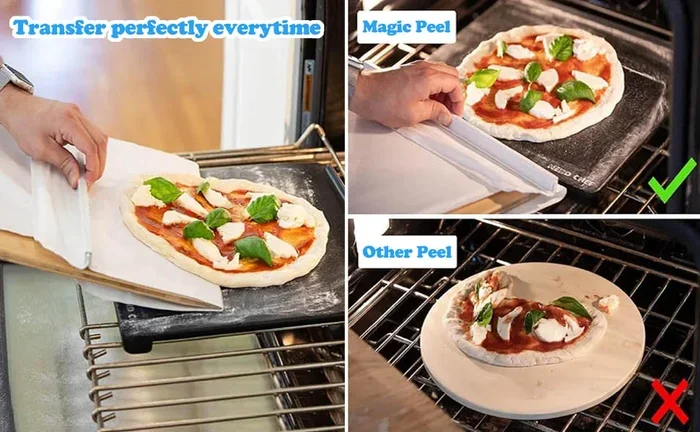
If you are struggling with a particularly sticky dough, try using parchment paper. Place a sheet of parchment on the peel, add your dough and toppings, and slide the whole thing into the oven. The parchment will burn off in the oven, so you do not need to worry about it affecting the flavor.
This is a great backup method, especially for beginners. It takes the pressure off and gives you more time to get the pizza positioned correctly. Many pizzerias use this technique for delicate or heavily topped pizzas.
How to Rescue a Stuck Pizza
If your pizza sticks to the peel during launch, do not try to pull it off. That will tear the dough and ruin the shape. Instead, try these steps:
- Gently shake the peel side to side to see if the pizza loosens.
- Use a thin spatula or bench scraper to slide under the stuck area.
- Add a little more flour or cornmeal under the stuck spot.
- If all else fails, use the peel as a cutting board and transfer the pizza to the oven with a spatula.
Remember, a torn pizza still tastes great. Do not let a sticking incident ruin your appetite.
When to Start Over
Sometimes the best option is to start over. If the pizza is badly stuck and tearing, it is better to shape a new one than to try to salvage a damaged pizza. Keep extra dough on hand so you can quickly try again. With practice, sticking incidents will become rare.
Final Thoughts on Getting Pizza Off the Peel
Getting pizza off peel into oven without sticking is a skill that improves with practice. The more you do it, the more natural it will feel. Start with simple, lightly topped pizzas and work your way up to heavier loads as you get comfortable with the technique.
Remember the key points: prepare your peel properly, dust it generously, use a quick and confident launch motion, and know your oven. With these tips, you will be launching pizzas like a pro in no time. The satisfaction of watching your pizza slide perfectly onto a hot stone or steel is worth every bit of practice.
So go ahead, dust off that peel, and give it another try. Your next pizza night is going to be a hit.
Frequently Asked Questions
Why does my pizza keep sticking to the peel?
Sticking usually happens because of insufficient dusting, too much moisture in the dough, or a cold peel. Make sure you use enough flour or cornmeal, bring your dough to room temperature, and dust the peel generously before placing the dough on it.
Can I use parchment paper on a pizza peel?
Yes, parchment paper is a great backup option if your dough keeps sticking. Place the parchment on the peel, add your dough and toppings, and slide the whole thing into the oven. The parchment will burn off safely in a hot oven.
What is the best flour to use on a pizza peel?
Semolina flour is one of the best choices because it is coarse, absorbs moisture well, and creates a reliable non-stick surface. Regular all-purpose flour and cornmeal also work well. Many pizza makers use a combination of semolina and cornmeal for the best results.
How long should I preheat my pizza stone before launching pizza?
Preheat your pizza stone or baking steel for at least 30 to 45 minutes at the highest temperature your oven allows. A fully preheated stone helps the pizza bottom set quickly, which reduces the chance of sticking after the launch.
Should I use a wooden or metal pizza peel for launching?
Wooden peels are gentler on dough and better for shaping, while metal peels are thinner and ideal for launching into a hot oven. Many pizza makers use both: a wooden peel for shaping and a metal peel for the final transfer into the oven.
What should I do if my pizza tears when I try to launch it?
If the pizza tears, do not try to patch it in the oven. Use a spatula to gently transfer what you have onto the pizza stone or steel. A torn pizza will still bake beautifully and taste delicious. Next time, try using more dusting flour or let the dough rest a bit longer before shaping.