How Long Does Eggplant Take To Cook In Oven Perfectly
How long does eggplant take to cook in oven? The answer depends on the cut and method, but most eggplant dishes bake in 25 to 45 minutes at 400°F. This guide covers every cooking scenario so you can achieve perfectly tender, golden eggplant whether you roast whole halves, cubes, or slices. You will learn exact times, temperatures, and pro tips that guarantee great results.
Eggplant is one of those vegetables that can feel intimidating to cook. It looks a little strange. It absorbs oil like a sponge. And when you throw it in the oven, it is hard to know exactly when it will be done.
So how long does eggplant take to cook in oven? The honest answer is it depends. A whole eggplant takes longer than sliced rounds. Cubed pieces roast faster than thick planks. And the temperature you choose changes everything.
In this guide, we will walk through every scenario. You will learn exact cook times, the best temperatures, and simple tricks that take your oven-baked eggplant from average to amazing. Whether you are making eggplant parmesan, a simple roasted side dish, or a hearty vegetable lasagna, this article has you covered.
Let us get into it. By the end, you will never second-guess your eggplant cooking time again.
Key Takeaways
- Standard roast time: Most eggplant cooks in 25 to 45 minutes at 400°F depending on the cut size.
- Smaller pieces cook faster: Cubed eggplant takes about 20 to 25 minutes while large halves need 35 to 45 minutes.
- Temperature matters: 400°F to 425°F is the sweet spot for getting eggplant golden brown and creamy inside.
- Salt and prep beforehand: Salting eggplant for 30 minutes removes bitterness and improves texture significantly.
- Oil helps crisping: A light coating of oil promotes even browning and prevents drying out.
- Check for doneness: Fork-tender flesh and golden edges are the best signs your eggplant is ready.
- Rest before serving: Letting eggplant sit for 5 minutes after baking helps it hold its shape better.
📑 Table of Contents
- Why Oven-Baked Eggplant Is So Good
- How Long Does Eggplant Take To Cook In Oven: By Cut Type
- Best Oven Temperature for Eggplant
- How to Prep Eggplant for the Oven
- Signs Your Eggplant Is Done
- Common Mistakes to Avoid
- Quick Tips for Perfect Eggplant Every Time
- How Long Does Eggplant Take To Cook In Oven: Comparison Chart
- Eggplant Recipes to Try With Your New Knowledge
- Expert Insights on Baking Eggplant
- How to Store and Reheat Baked Eggplant
- Conclusion
Why Oven-Baked Eggplant Is So Good
Before we dive into timing, it helps to understand why baking is such a great method for eggplant. Roasting in the oven brings out a natural sweetness that boiling or steaming simply cannot match. The dry heat caramelizes the edges and creates a creamy, almost meaty texture inside.
Many people avoid cooking eggplant because they had a bad experience with a bitter or mushy result. But the truth is, when you get the eggplant oven temperature and timing right, the results are incredible. Baked eggplant turns golden, develops a slight crisp on the outside, and melts in your mouth on the inside.
It is also incredibly versatile. You can toss it with olive oil and herbs for a simple side. Layer it into a baked pasta. Or use it as a base for sandwiches and dips. Once you master the basics, the possibilities are endless.
How Long Does Eggplant Take To Cook In Oven: By Cut Type
This is the section most people want to see. Here is the breakdown of eggplant cook time based on how you cut it. All times assume a standard 400°F oven and a medium-sized eggplant.
Whole Eggplant Halves
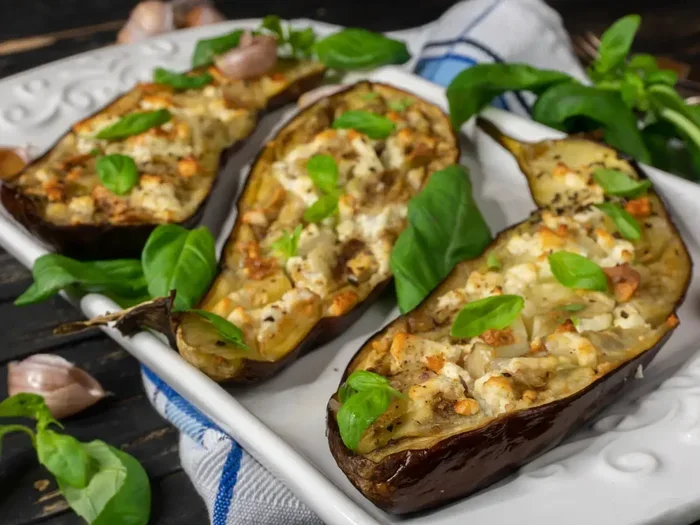
Cutting the eggplant in half lengthwise is one of the most popular methods. You get a nice flat surface that crisps up beautifully. Whole eggplant halves typically take 35 to 45 minutes at 400°F.
The skin holds everything together during baking. You can score the flesh lightly and drizzle olive oil inside. Season with salt, pepper, garlic powder, or your favorite spices. The eggplant is done when a fork slides in easily and the edges are deeply golden.
Sliced Rounds or Planks
Thick slices about half an inch work great for layering dishes like eggplant parmesan or rollatini. Sliced eggplant usually takes 25 to 35 minutes at 400°F.
Thinner slices, around a quarter inch, will cook faster, closer to 20 to 25 minutes. The key is to flip them halfway through for even browning. Thicker cuts need more time because the center takes longer to heat through.
Cubed or Diced Eggplant
Small cubes are perfect for roasting alongside other vegetables or tossing into grain bowls. Diced eggplant cooks the fastest of all cuts, typically in 20 to 25 minutes at 400°F.
Because the pieces are small and have more surface area exposed, they brown quickly. Spread them in a single layer on the baking sheet. Do not overcrowd the pan or the pieces will steam instead of roast.
Stuffed Eggplant
Whole small eggplants or halved medium eggplants stuffed with a filling need more time. Stuffed eggplant usually requires 40 to 50 minutes at 375°F to 400°F.
The filling adds moisture which slows down the baking process slightly. Make sure the filling is heated through and the eggplant flesh is tender all the way to the center.
Best Oven Temperature for Eggplant
Temperature plays a huge role in your results. Too low and the eggplant steams and turns mushy. Too high and the outside burns before the inside cooks through.
The Sweet Spot: 400°F to 425°F
Most eggplant oven recipes call for temperatures between 400°F and 425°F. This range is hot enough to caramelize the natural sugars in the eggplant without drying it out completely. You get a beautiful golden-brown exterior and a soft, creamy interior.
At 400°F, expect slightly longer cook times. At 425°F, things move faster but you need to watch the eggplant more closely to prevent burning.
Lower Temperature Option: 375°F
If you are doing a stuffed eggplant or a dish with a lot of toppings, 375°F works well. The lower heat allows everything to cook evenly without the edges getting too dark. Just add 5 to 10 extra minutes to your eggplant baking time.
High-Heat Roasting: 450°F
For quick roasted cubes or slices, some cooks crank the heat to 450°F. This produces a faster sear and deeper browning. The trade-off is you need to flip pieces more often and stay nearby. This method works best for small, uniform cuts.
How to Prep Eggplant for the Oven
Proper prep makes a massive difference in your results. Taking a few extra minutes before baking saves you from disappointing texture and flavor.
Salting and Sweating
Eggplant can be naturally bitter, especially older or larger specimens. Salting draws out excess moisture and reduces bitterness. Here is how to do it:
- Slice or cube your eggplant as needed.
- Arrange the pieces on a wire rack or paper towel-lined tray.
- Sprinkle generously with kosher salt.
- Let it sit for 30 to 60 minutes.
- Rinse lightly and pat completely dry before baking.
This step is not always mandatory with younger, smaller eggplants, but it is a game-changer for larger ones. The result is less spongy texture and better flavor in your roasted eggplant.
Oiling the Eggplant
Eggplant acts like a sponge and absorbs oil readily. This is actually a good thing when you want crispy, golden results. A light, even coating of olive oil helps the surface brown and prevents the flesh from drying out.
Use a spray bottle or toss the pieces gently in a bowl with oil. You want a thin, even layer, not a puddle. Too much oil leads to soggy eggplant, which nobody wants.
Seasoning Tips
Basic seasoning works wonders on baked eggplant. Start with salt and black pepper. Then add garlic powder, smoked paprika, or Italian herbs. For a more adventurous flavor, try cumin, coriander, or a squeeze of lemon juice after baking.
Fresh herbs like basil, oregano, or thyme added during the last 10 minutes of baking stay vibrant and aromatic. Dried herbs can go on at the start since they need more time to release their oils.
Signs Your Eggplant Is Done
Timing gives you a general idea, but the best way to know is to check the eggplant visually and by touch. Here is what to look for:
- Golden brown edges: The surface should have deep caramelized spots, not pale or white patches.
- Fork-tender flesh: A fork or knife should slide in with very little resistance.
- Shrunken appearance: The eggplant pieces will look smaller and slightly collapsed when fully cooked.
- Creamy interior: If you cut into a piece, the inside should be soft and creamy, not hard or chalky.
- Bubbling edges: If you have seasoned the eggplant with oil or sauce, you will see light bubbling around the edges.
If you are unsure, err on the side of a few more minutes. Undercooked eggplant has an unpleasant, slightly rubbery texture. Overcooked eggplant gets mushy, but most people find overcooked easier to fix than undercooked.
Common Mistakes to Avoid
Even experienced cooks make mistakes with eggplant. Here are the most common ones and how to avoid them.
Skipping the Prep Step
Many people skip salting or drying the eggplant. This leads to a spongy, waterlogged result. The moisture inside the eggplant creates steam in the oven, which prevents browning. Take the extra 10 minutes to prep properly.
Overcrowding the Pan
When eggplant pieces are too close together, they steam instead of roast. You end up with soft, pale pieces instead of crispy, golden ones. Spread everything out with space between each piece. Use two baking sheets if you need to.
Using Too Much Oil
Eggplant absorbs oil, but that does not mean you should drench it. Excess oil makes the dish greasy and heavy. A light coating is all you need for great oven-roasted eggplant.
Not Flipping the Pieces
If you only bake eggplant on one side, you get uneven browning. Flip pieces halfway through the cook time for a uniform golden color on all sides. This is especially important for slices and cubes.
Ignoring the Size of the Eggplant
A small Italian eggplant cooks differently than a large globe eggplant. Adjust your timing based on the size and density of the vegetable you are working with. Smaller eggplants generally cook faster and have fewer seeds and less bitterness.
Quick Tips for Perfect Eggplant Every Time
- Choose firm, heavy eggplants with smooth, shiny skin. Avoid any with soft spots or wrinkled skin.
- Preheat your oven fully before putting the eggplant in. A hot oven from the start ensures even cooking.
- Use parchment paper or a silicone baking mat to prevent sticking without excess oil.
- Let the eggplant rest for 5 minutes after removing it from the oven. This helps it firm up slightly.
- Pair eggplant with acidic ingredients like tomatoes or lemon juice to brighten the flavor.
- Save leftover roasted eggplant for sandwiches, salads, or blending into baba ghanoush.
- Experiment with different spices each time to keep the dish exciting and fresh.
How Long Does Eggplant Take To Cook In Oven: Comparison Chart
Here is a quick reference chart for common eggplant preparations. These times are based on a 400°F oven and a medium-sized eggplant.
| Eggplant Cut | Temperature | Cook Time | Best For |
|---|---|---|---|
| Whole Halves | 400°F | 35-45 min | Roasted halves, stuffed eggplant |
| Thick Slices (1/2 inch) | 400°F | 25-35 min | Eggplant parmesan, rollatini |
| Thin Slices (1/4 inch) | 400°F | 20-25 min | Chips, crispy rounds |
| Cubed (1-inch pieces) | 400°F | 20-25 min | Roasted veggie bowls, stews |
| Stuffed Whole | 375°F | 40-50 min | Stuffed eggplant boats |
| Small Eggplant Whole | 400°F | 40-50 min | Whole roasted baby eggplant |
Keep in mind these are approximate times. Your actual results may vary based on oven accuracy, eggplant size, and how much oil or topping you use. Always check for doneness using the fork-tender test described above.
Eggplant Recipes to Try With Your New Knowledge
Now that you know exactly how long to bake your eggplant, here are some ideas for putting that knowledge to use.
Classic Roasted Eggplant: Simply halve an eggplant, drizzle with olive oil, season with salt and garlic, and roast for 35 minutes. Serve as a side dish or chop it up and toss it into a salad.
Eggplant Parmesan: Slice eggplant into rounds, bread them, bake at 400°F for 25 minutes, then layer with sauce and cheese and bake for another 15 minutes. Total time is about 45 minutes.
Mediterranean Roasted Eggplant: Cube eggplant and toss with cherry tomatoes, red onion, olives, and herbs. Roast at 425°F for 25 minutes. Serve over couscous or crusty bread.
Eggplant Stir-Fry Bake: Cut eggplant into strips, toss with soy sauce and sesame oil, and bake at 400°F for 20 minutes. A quick and easy side that pairs well with rice.
Each of these recipes relies on knowing the right eggplant cooking time and temperature. Now that you have that knowledge, you can adapt any recipe to your oven and preferences.
Expert Insights on Baking Eggplant
Professional chefs and food scientists agree on a few key principles for perfect baked eggplant. First, moisture control is everything. Eggplant is about 92% water, and that water needs to leave the vegetable during cooking for the best texture.
Second, do not be afraid of the oil. A properly oiled eggplant roasts beautifully. The oil conducts heat to the surface and promotes Maillard reaction, which is what creates that appealing golden-brown color and rich flavor.
Third, let the eggplant come to room temperature before baking. Cold eggplant from the fridge takes longer to cook through and heats unevenly. Taking it out 15 to 20 minutes before it goes in the oven makes a noticeable difference.
Finally, trust your senses. The timer is a guide, not a rule. Look at the color, feel the firmness, and use the fork test. With a little practice, you will know exactly when your oven-baked eggplant is perfect without ever checking a clock.
How to Store and Reheat Baked Eggplant
If you have leftovers, you will want to store them properly. Baked eggplant keeps well in an airtight container in the refrigerator for 3 to 5 days. The texture may soften slightly after the first day, but it still tastes great.
To reheat, place the eggplant in a 350°F oven for 10 to 15 minutes. This restores some of the crispness lost during storage. Avoid microwaving if you want to maintain the texture, as microwaves make eggplant rubbery and soggy.
You can also freeze baked eggplant for up to 3 months. Wrap it tightly in foil or place it in a freezer-safe bag. Thaw overnight in the fridge before reheating.
Conclusion
So, how long does eggplant take to cook in oven? The answer is anywhere from 20 to 50 minutes depending on the cut, size, and temperature you use. The good news is that once you understand the basics, it becomes second nature.
Remember that 400°F is your go-to temperature for most preparations. Small cubes need 20 to 25 minutes. Thick slices take 25 to 35 minutes. Whole halves and stuffed eggplant need 35 to 50 minutes. And always check for that fork-tender, golden-brown finish.
Proper prep makes all the difference too. Salt it, dry it, oil it, and season it. Avoid the common mistakes of overcrowding the pan or using too much oil. And trust your senses to tell you when it is done.
With this knowledge in hand, you are ready to make perfectly baked eggplant every single time. Try one of the recipes above, experiment with your own flavors, and enjoy the rich, creamy, golden goodness that only oven-roasted eggplant can deliver. Your kitchen skills just leveled up.
Frequently Asked Questions
Can you eat eggplant if it is slightly undercooked?
Technically yes, but undercooked eggplant has a rubbery, unpleasant texture and can taste bitter. It is much better to cook it a few extra minutes than to serve it underdone. Keep baking until a fork slides in easily.
Do you need to peel eggplant before baking it?
No, peeling is not necessary for most recipes. The skin holds the eggplant together during baking and contains valuable nutrients. You can peel it if you prefer a softer texture, but leaving the skin on is perfectly fine and adds structure.
Can you roast eggplant at 350°F instead of 400°F?
Yes, you can roast eggplant at 350°F, but it will take longer, usually 45 to 60 minutes. The lower temperature means less browning and a softer result. 400°F is recommended for the best balance of crispy edges and creamy center.
How do you know if eggplant is bitter before cooking?
Larger, older eggplants tend to be more bitter. Look for signs like a dull skin, soft spots, or seeds that are very dark and large. Smaller, younger eggplants like Italian or Asian varieties are usually less bitter and more tender.
Is it better to roast eggplant with or without skin?
Roasting with the skin on is generally better because the skin protects the flesh, holds its shape, and adds fiber and nutrients. The skin also crisps up nicely at high temperatures. Remove the skin only if the recipe specifically calls for it or if the skin is very tough.
Can you bake eggplant ahead of time?
Yes, baking eggplant ahead of time is a great meal prep strategy. Roasted eggplant keeps in the fridge for 3 to 5 days and reheats well. You can also freeze it for longer storage. Pre-baked eggplant saves time when making dishes like eggplant parmesan or lasagna during busy weekdays.