Can I Make Shish Kabobs In The Oven Made Easy Today
Can I Make Shish Kabobs In The Oven? Yes, and it’s easier than you think! This guide shows you how to create juicy, flavorful kebabs without a grill. You’ll learn the best meats, veggies, and marinades for oven-baked kabobs. We’ll cover simple steps and pro tips to get perfectly caramelized skewers every time. Discover why oven shish kabobs are a quick, family-friendly dinner solution.
Ever wondered if you can Can I Make Shish Kabobs In The Oven? The answer is a resounding yes! You don’t need a backyard grill or sunny weather to enjoy these juicy skewers. The oven method gives you tender meat and roasted vegetables with a lovely caramelized edge. It’s one of the easiest ways to prepare a Mediterranean dish for your family.
Making shish kabobs in oven is simple and forgiving. You just thread ingredients onto skewers and let the heat do the work. This approach works great for weeknights when you want a quick, healthy dinner. Oven kabobs also let you control the cooking environment, so nothing burns or dries out. I’ll guide you through every step, from picking the right meat to nailing the perfect bake time.
This article covers everything you need to know. You’ll find step-by-step instructions, meat and veggie choices, marinade ideas, and pro tips. Whether you’re a beginner or a seasoned cook, you’ll pick up new tricks. Let’s dive in and make your next dinner a hit with these easy oven-baked kebabs.
Key Takeaways
- Oven kabobs are easy: You can make shish kabobs in the oven with minimal effort and no grill needed.
- Perfectly cooked meat: Learn how to choose the right cuts and marinate for juicy, tender skewers.
- Veggie kabobs shine: Discover the best vegetables that roast beautifully alongside your meat.
- Quick prep and cleanup: Use foil and baking sheets for a fast, mess-free cooking experience.
- Flavorful marinades: Try our 30-minute and overnight marinade ideas to boost taste.
- Family-friendly meal: Oven shish kabobs are a hit with kids and adults alike.
📑 Table of Contents
Why Oven Shish Kabobs Are a Game-Changer
No Grill? No Problem.
Grilling is fun, but it’s not always practical. Maybe you live in an apartment with no outdoor space. Or perhaps the weather is too cold or rainy. The oven solves all these issues. You can make shish kabobs in the oven any day of the year. The results are just as delicious as outdoor grilled skewers.
Oven kabobs also give you more control. You can monitor the temperature precisely. This means no flare-ups or uneven cooking. The dry heat of the oven slowly caramelizes the sugars in the meat and veggies. You get a nice brown crust without burning. It’s a gentle, even cooking method that works beautifully for skewers.
Quick Tip: Line your baking sheet with aluminum foil for easy cleanup. The foil catches any drips and prevents sticking. You can also use a wire rack set over a sheet pan for even airflow.
Oven Kabobs vs. Grill Kabobs
| Feature | Oven Kabobs | Grill Kabobs |
|---|---|---|
| Convenience | Ready in minutes, no preheating | Requires charcoal or gas setup |
| Weather | Works indoors, year-round | Depends on outdoor conditions |
| Control | Precise temperature control | Flare-ups can burn food |
| Cleanup | One baking sheet or foil | Grates and drip pans to clean |
| Flavor | Roasted, caramelized edges | Smoky char from flames |
This table shows why oven kabobs win for everyday cooking. You get consistent results without the hassle. It’s the best method for busy weeknights. Indoor grilling has never been easier.
Key Takeaway: Oven kabobs offer the best balance of convenience and flavor for indoor cooking. They fit seamlessly into any weekly meal plan.
How to Make Shish Kabobs in the Oven: Step-by-Step
Prep the Meat and Veggies
Start by choosing your protein. Chicken breast, beef sirloin, lamb shoulder, or shrimp all work well for meat skewers. Cut the meat into bite-sized cubes, about 1 to 1.5 inches. This size ensures even cooking. If using chicken, you can leave the skin on for extra crispiness. Pat the pieces dry with a paper towel before marinating.
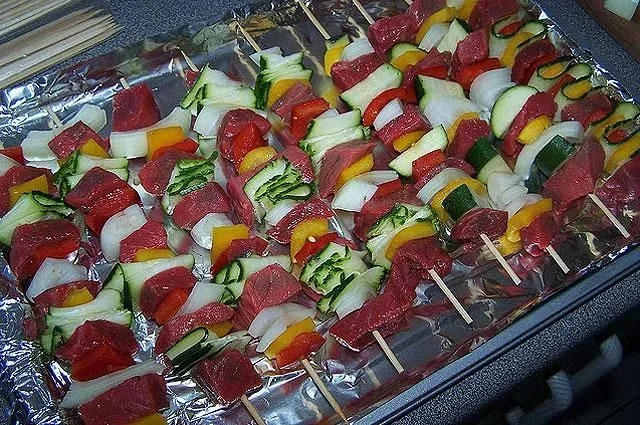
For the vegetables, pick firm options that hold their shape. Bell peppers, onions, zucchini, mushrooms, and cherry tomatoes are excellent. Cut them into chunks that match the size of the meat. This way, everything finishes cooking at the same time. Vegetable kabobs are just as important as the protein, so don’t skip them.
Expert Insight: Soak wooden skewers in water for at least 30 minutes before threading. This prevents them from burning in the oven. Metal skewers don’t need soaking and conduct heat evenly. If you’re using bamboo skewers, double-soak them for an hour for best results.
Assembly and Baking
Thread the meat and veggies onto skewers, alternating pieces. Leave a small gap between each item so the heat circulates. This promotes even cooking and helps the edges caramelize. Don’t pack the skewers too tightly; air needs to flow around each piece. Using two skewers per kabob makes flipping easier and stops the food from spinning.
Place the skewers on a prepared baking sheet. Leave space between them so hot air can reach all sides. Preheat your oven to 400°F (200°C). This high heat is key for getting a nice sear on the outside while keeping the inside juicy. The oven temperature of 400°F is the sweet spot for oven-baked kebabs.
Bake for 10 to 15 minutes, depending on the meat. Chicken needs about 12 to 15 minutes. Beef can be 10 to 12 minutes for medium-rare. Shrimp cooks in just 8 to 10 minutes. Flip the skewers halfway through for even browning. Use a meat thermometer to check doneness. Chicken should reach 165°F internally, beef 135°F for medium-rare.
Common Mistake: Not preheating the oven. Always preheat to 400°F before putting the skewers in. A cold oven leads to uneven cooking and longer bake times. Nobody wants soggy juicy kabobs.
Quick Tip: For extra crispy edges, broil the kabobs for the last 2 minutes. Watch them closely to prevent burning. A few seconds under the broiler adds a beautiful char.
Once done, let the skewers rest for 3 to 5 minutes. This helps the juices redistribute. Serve with rice, flatbread, or a fresh salad for a complete meal.
Key Takeaway: Small details like spacing and resting make the biggest difference in your oven kabobs.
Choosing the Best Meat for Oven Kabobs
Chicken, Beef, or Lamb?
Each meat brings a different flavor and texture to oven kabobs. Chicken is lean and cooks quickly. It absorbs marinades well, making it a crowd-pleaser. Beef offers a richer taste and can be cooked to your preferred doneness. Lamb has a distinct, savory flavor that pairs beautifully with Mediterranean herbs.
For the best results, choose cuts that are slightly fatty. Fat keeps the meat moist during oven baking. Avoid very lean cuts like chicken breast without skin, as they can dry out. Look for well-marbled beef or lamb shoulder. These cuts stay juicy even at high heat. Pork tenderloin is another excellent option. It stays tender and can be sliced into thin strips for faster cooking.
Expert Insight: For beef kabobs, try a mix of sirloin and a fattier cut like short rib. The fat melts during baking and keeps every bite succulent. This trick works wonders for meat skewers.
Don’t forget seafood. Shrimp kabobs are a quick and elegant option. Fish like salmon or firm white fish also works well. For vegetarians, halloumi cheese, tofu, and thick slices of eggplant make fantastic skewers.
Tips for Juicy Results
- Cube size matters: Keep pieces uniform so they cook evenly.
- Don’t skip the marinade: Even a quick 20-minute soak adds flavor and moisture.
- Use a meat thermometer: Check internal temps to avoid overcooking. Chicken should reach 165°F, beef 135°F for medium-rare.
- Rest before serving: Let the meat sit for a few minutes after baking. This keeps the juices locked in.
- Slice against the grain: For beef, cut perpendicular to the muscle fibers for maximum tenderness.
These simple steps ensure your meat skewers come out tender and flavorful every time.
Vegetable Kabobs for Perfect Flavor
Best Veggies for Skewers
Vegetables add color, nutrients, and texture to your oven kabobs. Not all veggies roast the same way, so choose wisely. Bell peppers (red, yellow, green) hold their shape and sweeten when roasted. Onions, especially red or yellow, become caramelized and jammy.
Zucchini and yellow squash are great because they cook quickly. Mushrooms soak up marinades and develop a rich, earthy flavor. Cherry tomatoes burst slightly and add a pop of sweetness. Asparagus spears make elegant skewers and roast to a tender-crisp perfection. Eggplant slices become creamy and melt-in-your-mouth when baked.
Quick Tip: Toss veggies in a little olive oil and salt before threading. This helps them brown and prevents them from sticking to the skewers. For sweet potato cubes, par-boil them for 5 minutes first so they cook through in the oven.
Avoid watery veggies like cucumbers or celery, as they’ll make the skewers soggy. Pineapple chunks add a lovely sweetness that pairs well with savory meats.
How to Prevent Soggy Veggies
The biggest enemy of vegetable kabobs is trapped steam. To avoid this, cut veggies into similar-sized pieces. This ensures they cook at the same rate. Also, don’t overload the skewer. Leave breathing room between each piece.
If you’re using a baking sheet, elevate the skewers on a wire rack. This allows air to flow underneath and moisture to escape. You can also roast veggies separately and combine them with the meat at the end. This keeps everything perfectly crisp and prevents the veggies from steaming in their own juices.
With the right veggies, your oven kabobs will have a beautiful mix of textures. Each bite will be balanced and satisfying.
Key Takeaway: Choosing the right vegetables and giving them space on the skewer is the secret to non-soggy kabobs.
Marinades That Make Oven Kabobs Juicy
Quick 30-Minute Marinade
A good marinade transforms plain ingredients into a flavor-packed meal. You don’t need hours of soaking for great results. A 30-minute marinade works wonders for chicken and beef.
Try this simple mix: 3 tablespoons olive oil, 2 tablespoons lemon juice, 2 minced garlic cloves, 1 teaspoon dried oregano, and salt and pepper to taste. Whisk everything together and pour over your cubed meat. Toss to coat evenly. Let it sit for at least 30 minutes while you prep the veggies.
This Mediterranean-style marinade adds brightness and depth. The acid from the lemon tenderizes the meat slightly, while the oil keeps it moist during baking. For a spicy kick, add a pinch of chili flakes or a teaspoon of smoked paprika.
Overnight Marinade Ideas
If you have more time, an overnight marinade takes flavor to the next level. Yogurt-based marinades are fantastic for oven kabobs. The lactic acid in yogurt gently breaks down proteins, resulting in incredibly tender meat.
Mix 1 cup plain yogurt, 1 tablespoon garam masala, 1 teaspoon cumin, 1 teaspoon paprika, 2 minced garlic cloves, and a squeeze of lemon. Add your meat and coat well. Cover and refrigerate for 4 to 24 hours. The longer it marinates, the more flavorful it becomes.
Another great option is a soy-ginger marinade. Combine 3 tablespoons soy sauce, 1 tablespoon sesame oil, 1 tablespoon grated ginger, 1 tablespoon honey, and 2 minced garlic cloves. This works beautifully with beef and chicken. The soy sauce adds umami depth while the honey creates a sticky, caramelized glaze.
Common Mistake: Using too much acid. Lemon juice and vinegar can cook the meat if left too long, making it mushy. Stick to 2 hours for acidic marinades. Yogurt-based marinades are gentler and can safely marinate overnight.
Expert Insight: Always marinate in the refrigerator, not on the counter. Food safety is crucial, especially with raw meat. Use a sealed container or a zip-top bag to ensure even coating.
Both quick and overnight marinades give you juicy, aromatic kabobs. Choose based on your schedule and enjoy the deep, complex flavors.
Key Takeaway: A simple marinade can elevate your oven kabobs from ordinary to extraordinary in just 30 minutes.
Pro Tips for Crispy, Evenly Cooked Kabobs
Temperature and Timing
The oven temperature is crucial for perfect oven kabobs. 400°F (200°C) is the sweet spot. It’s hot enough to brown the exterior but not so hot that it dries out the inside. If your oven runs hot, drop the temperature by 10 to 15 degrees.
Timing depends on what you’re cooking. Here’s a quick reference guide:
- Chicken thighs: 12 to 15 minutes
- Beef cubes: 10 to 12 minutes for medium-rare
- Shrimp: 8 to 10 minutes
- Lamb: 12 to 14 minutes
- Mixed veggie kabobs: 15 to 20 minutes
Always check the thickest piece of meat. Use a meat thermometer for accuracy. Even cooking is the goal. Rotate the pan halfway through if your oven has hot spots.
Common Mistake: Relying solely on time. Ovens vary, so use a thermometer. This guarantees safe temperatures and perfect doneness every time.
For convection ovens, reduce the temperature by 25°F. The fan circulates hot air more efficiently, which can brown the kabobs faster.
Using Foil and Baking Sheets
For easy cleanup, line your baking sheet with heavy-duty aluminum foil. You can even spray it with a little cooking spray to prevent sticking. Some people like to build a foil tray with edges to catch juices. This keeps the oven clean and simplifies washing.
If you want crispier kabobs, skip the foil and use a bare baking sheet or a wire rack. The direct contact with the hot metal promotes browning. You’ll get a nice crust on the meat and veggies without steaming them.
Quick Tip: If you notice the tops browning too fast, tent the skewers loosely with foil. This slows down the cooking on top while the bottom continues to crisp. This trick is perfect for juicy kabobs that are browning too quickly on the outside.
Common Mistake: Using a thin, flimsy baking sheet. It can warp in a hot oven and cause the skewers to sit in pooled juices. Invest in a sturdy, rimmed baking sheet for the best results.
These small adjustments can make a big difference in your final dish. Experiment and find what works best for your oven.
Key Takeaway: Small details like spacing, foil use, and resting make the biggest difference in your oven kabobs.
Common Mistakes to Avoid
- Overcrowding the pan: This traps steam and makes the veggies soggy. Use two baking sheets if needed.
- Skipping the skewer soak: Wooden skewers will burn without a good water soak.
- Not resting the meat: Cutting into kabobs immediately releases all the juices onto the cutting board.
- Cutting veggies too small: Tiny pieces will shrivel up and fall off the skewers.
- Using a cold pan: Always preheat the oven fully before inserting the skewers.
Avoiding these simple errors ensures your oven-baked kebabs turn out perfectly every time.
Conclusion
Making shish kabobs in the oven is one of the simplest ways to enjoy this classic dish. You get all the flavor with none of the hassle. From choosing the right meat to picking the perfect marinade, every step is easy. Oven kabobs are a versatile meal that works for any night of the week. They’re healthy, customizable, and always a hit at the table.
So next time you ask yourself, can I make shish kabobs in the oven, remember that the answer is yes. Fire up your oven, thread your skewers, and enjoy a delicious, homemade meal. Your family will love these juicy, caramelized oven kabobs. Happy cooking!
Frequently Asked Questions
Can I make shish kabobs in the oven without a grill?
Absolutely. The oven method is one of the easiest ways to enjoy shish kabobs year-round. You get tender meat and roasted vegetables with minimal effort and no special equipment.
What temperature should I set the oven to for kabobs?
Preheat your oven to 400°F (200°C). This high heat caramelizes the outside of the meat and veggies while keeping the inside juicy. It’s the perfect temperature for oven-baked kebabs.
How long do I bake shish kabobs in the oven?
Bake times vary by protein. Chicken takes about 12 to 15 minutes, beef 10 to 12 minutes for medium-rare, and shrimp just 8 to 10 minutes. Always use a meat thermometer to check for safe internal temperatures.
Do I need to soak wooden skewers before putting them in the oven?
Yes, always soak wooden skewers in water for at least 30 minutes. This prevents them from burning or catching fire during baking. Metal skewers don’t need soaking.
Can I make vegetable-only kabobs in the oven?
Definitely. Vegetable kabobs are a delicious and healthy option. Choose firm veggies like bell peppers, zucchini, mushrooms, and cherry tomatoes. Cut them into similar-sized pieces for even cooking.
What is the best marinade for oven kabobs?
A simple Mediterranean marinade with olive oil, lemon juice, garlic, and oregano works beautifully for all proteins. For deeper flavor, try a yogurt-based marinade that marinates overnight. Both options keep the meat juicy and tender.