How Do U Make Bacon In The Oven For Perfect Results
Making bacon in the oven is the easiest and most reliable way to get perfectly crispy strips without any mess or splatter. This guide walks you through the entire process, from choosing the right bacon to nailing the ideal oven temperature and timing. You will learn pro tips, common mistakes to avoid, and how to cook different bacon types for the best results.
There is something deeply satisfying about waking up on a weekend morning and pulling a tray of golden, crispy bacon out of the oven. The smell fills the entire kitchen. The strips are perfectly cooked, not a single one burnt or flabby. And the best part? You barely lifted a finger.
If you have ever stood over a stovetop, hovering over a hot pan and popping grease, you know the struggle of cooking bacon on the stove. It splatters. It makes a mess. It requires constant attention. But oven-baked bacon changes all of that. It is hands-off, predictable, and produces restaurant-quality results right in your own kitchen.
In this guide, we will walk you through exactly how do u make bacon in the oven for perfect results every single time. Whether you prefer thin and shatteringly crisp or slightly chewy and bendy, this method has you covered. We will cover everything from the tools you need to the exact temperatures and timing. By the end, you will never go back to the stovetop again.
Key Takeaways
- Oven-baked bacon is the simplest method: It requires almost no effort and produces consistent, even results every time.
- Temperature and timing matter most: Baking at 400°F for 15-25 minutes gives you the perfect level of crispiness.
- A wire rack over a baking sheet is key: It lets grease drip away and helps the bacon cook evenly on all sides.
- Parchment paper prevents sticking: It makes cleanup faster and keeps your bacon from baking onto the pan.
- Different bacon types need different cook times: Thick-cut, thin-cut, and turkey bacon all behave differently in the oven.
- Avoid common mistakes like overcrowding: Giving each strip enough space ensures proper airflow and even cooking.
- Storing leftover bacon is easy: Properly stored oven-baked bacon stays fresh for up to five days in the fridge.
📑 Table of Contents
- Why Oven-Baked Bacon Is The Best Method
- What You Will Need To Bake Bacon
- Step-by-Step Instructions For Perfect Oven Bacon
- Tips For Perfectly Crispy Bacon Every Time
- Common Mistakes To Avoid When Baking Bacon
- How To Cook Different Types Of Bacon In The Oven
- How To Store And Reheat Oven-Baked Bacon
- Frequently Asked Questions
- Final Thoughts
Why Oven-Baked Bacon Is The Best Method
Let us start with the big question. Why should you bake bacon in the oven instead of frying it? The answer comes down to convenience, consistency, and cleanliness.
When you cook bacon on the stove, you are managing heat manually. You flip each strip. You watch for splatter. You deal with hot grease popping at you. One strip might cook faster than another. The result is uneven texture and a greasy mess on your stovetop and countertop.
Oven-baked bacon solves every single one of those problems. Here is why so many home cooks and professional chefs prefer this method:
- Hands-off cooking: You lay the strips on a tray and pop it in the oven. Then you do something else. You can prep eggs, make toast, or even sit down with your coffee.
- Even cooking: The heat surrounds every strip equally. No hot spots. No flipping required. Every piece cooks at the same rate.
- No splatter: The grease drips away from the bacon onto the pan below. Your stovetop stays clean. Your skin stays grease-free.
- Batch cooking: You can cook a full pound or more at once. This is perfect for feeding a crowd or meal prepping for the week.
- Consistent results: Once you find your perfect time and temperature, you can replicate it every single time. No guesswork involved.
Once you try baking bacon in the oven, you will wonder why you ever bothered with the pan. It is simply the smarter way to cook crispy bacon at home.
What You Will Need To Bake Bacon
One of the best things about this method is how little equipment you need. You probably already have everything in your kitchen right now. Here is what you will need to get started.
The Right Baking Sheet
Start with a standard rimmed baking sheet. The rim is important because it catches the bacon grease and prevents it from dripping into your oven. A flat sheet pan works perfectly. You do not need anything fancy or expensive.
Pro tip: avoid using a dark-colored or nonstick pan for this. Dark pans absorb more heat and can cause the bacon to cook unevenly or burn faster. A light-colored aluminum baking sheet gives you the most consistent results.
Wire Rack vs. Parchment Paper
You have two great options for placing your bacon on the pan. Each has its own benefits.
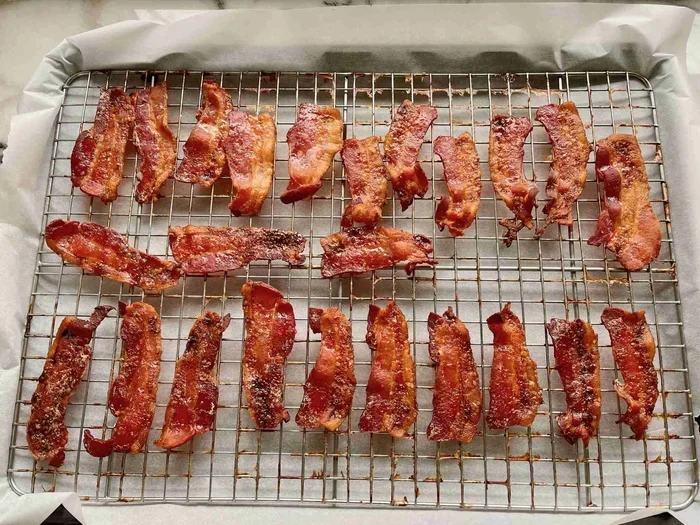
Option 1: Wire Rack. A wire cooling rack placed over your baking sheet is the gold standard for oven-baked bacon. The rack allows hot air to circulate underneath the bacon. This means the strips cook evenly on both sides. The grease drips straight through into the pan below. The result is incredibly crispy bacon strips with less grease sitting on the meat itself.
Option 2: Parchment Paper. If you do not have a wire rack, line your baking sheet with parchment paper. Place the bacon directly on the paper. This prevents sticking and makes cleanup a breeze. The bacon will still cook beautifully, though it may not get quite as crispy as it does on a wire rack because the bottom side sits against the paper.
Choosing Your Bacon
The type of bacon you choose matters more than people think. Here are the most common options:
- Thin-cut bacon: Cooks faster and gets very crispy. Great for sandwiches and salads.
- Thick-cut bacon: Takes longer to cook but has a wonderful chew. Perfect for burgers and hearty breakfast plates.
- Turkey bacon: A leaner alternative that works well in the oven. It cooks faster than pork bacon and produces less grease.
- Center-cut bacon: A happy medium between thin and thick. It has less fat and cooks evenly.
Step-by-Step Instructions For Perfect Oven Bacon
Now for the part you have been waiting for. Here is exactly how do u make bacon in the oven for the best possible results. Follow these steps closely and you will nail it every time.
Step 1: Preheat Your Oven
Turn your oven on and set it to 400 degrees Fahrenheit. This is the sweet spot for bacon oven recipes. It is hot enough to render the fat quickly but not so hot that it burns the meat. Let the oven fully preheat before you put the bacon in. This usually takes about 10 minutes.
Some people prefer a lower temperature of 375°F for a chewier texture. And others go up to 425°F for ultra-crispy results. But 400°F is the most reliable starting point.
Step 2: Prep Your Pan
Line your baking sheet with parchment paper. This is optional but highly recommended. It prevents sticking and makes cleanup almost effortless. If you are using a wire rack, place it on top of the lined baking sheet now.
Step 3: Lay Out The Bacon
Arrange your bacon strips on the pan or rack. Here is the most important rule: do not overlap the strips. Leave a small gap between each piece. Overcrowding traps steam and leads to soggy, unevenly cooked bacon. Each strip should have plenty of room to breathe.
If you are cooking a large batch, use two baking sheets or work in batches. It is worth the extra tray to get that perfect evenly cooked bacon texture.
Step 4: Bake And Wait
Place the pan in the oven on the middle rack. Set a timer for 15 minutes. At 400°F, thin-cut bacon will usually be done in 15 to 18 minutes. Thick-cut bacon may need 20 to 25 minutes.
Do not open the oven door too often. Every time you open it, the temperature drops and your cook time gets thrown off. Trust the process and let the oven do its work.
Step 5: Check For Doneness
At the 15-minute mark, peek through the oven window or quickly open the door to check. Look for golden-brown color and watch for the bacon to start curling. The fat should be rendered and bubbly. The edges should feel firm to the touch.
If the bacon is not yet as crispy as you like, give it another 2 to 3 minutes. Keep a close eye on it during the last few minutes because bacon can go from perfectly done to burnt very quickly.
Step 6: Drain And Serve
Remove the pan from the oven and transfer the bacon strips to a plate lined with paper towels. The paper towels absorb excess grease and help the bacon stay crispy as it cools. Let it rest for a minute or two before serving.
Pro tip: save that bacon grease! Pour it into a heat-safe jar and store it in the fridge. It is liquid gold for cooking eggs, potatoes, and roasted vegetables. It adds incredible flavor to everything.
Tips For Perfectly Crispy Bacon Every Time
Getting the perfect crispy bacon in the oven is not just about time and temperature. A few small details can make a huge difference in the final result. Here are the tips that separate good oven-baked bacon from absolutely amazing oven-baked bacon.
Start With Cold Bacon
Take your bacon strips out of the fridge right before you are ready to cook them. Cold bacon holds its shape better in the oven and renders fat more evenly. If you use room-temperature bacon, it may start to contract and curl too much before the fat has a chance to render properly.
Use Two Pans For Large Batches
If you are cooking more than six or seven strips, use two baking sheets instead of overcrowding one. Stacking or overlapping bacon strips creates steam pockets. Steam is the enemy of crispy bacon. Two pans give every strip the airflow it needs to get perfectly crispy and evenly cooked.
Rotate The Pan Halfway Through
Most home ovens have hot spots. To combat this, rotate your pan 180 degrees halfway through the cooking time. This simple trick ensures every strip gets equal exposure to heat. It is a small step that makes a big difference in bacon doneness.
Pat The Bacon Dry Before Cooking
This sounds strange, but it works wonders. Take a paper towel and gently pat the surface of each bacon strip before placing it on the pan. Excess moisture on the surface turns into steam, which prevents the bacon from getting crispy. Removing that moisture helps you achieve a better bacon texture right from the start.
Let It Rest On Paper Towels
Once the bacon comes out of the oven, do not skip the paper towel step. Laying the strips on fresh paper towels draws away surface grease. This keeps the bacon crispy instead of getting soggy from its own rendered fat. It also makes the final product less greasy on your palate.
Season If You Want To Get Fancy
Plain oven-baked bacon is already delicious. But if you want to elevate it, try a light sprinkle of brown sugar, cracked black pepper, or a touch of cayenne pepper before baking. These additions caramelize in the oven and create an incredible flavor profile. Just a tiny amount goes a long way.
Common Mistakes To Avoid When Baking Bacon
Even though baking bacon is simple, there are a few mistakes that can ruin your results. Here are the most common ones and how to avoid them.
Overcrowding The Pan
This is the number one mistake people make. When bacon strips are too close together, they steam instead of roast. You end up with flabby, chewy bacon that is not crispy anywhere. Give each strip its own space. The extra effort of using two pans is totally worth it.
Skipping The Parchment Paper Or Rack
Cooking bacon directly on a bare baking sheet leads to sticking and uneven cooking. The bacon often welds itself to the pan. You end up tearing the meat apart when you try to remove it. Always use parchment paper or a wire rack. These simple tools transform your bacon cleanup from a chore to a five-second wipe-down.
Setting The Temperature Too High
It might be tempting to crank the oven up to 450°F or higher to speed things along. But high heat burns the edges before the fat has time to render. The result is bacon that is burnt on the edges and undercooked in the middle. Stick to 400°F for the most reliable bacon cooking time and texture.
Not Watching The Bacon At The End
Oven-baked bacon is mostly hands-off, but it is not completely hands-free. In the last 3 to 5 minutes of cooking, keep a close eye on it. Bacon goes from perfectly done to burnt very quickly at this stage. Set a timer and stay nearby so you can pull it out at the right moment.
Throwing Away The Bacon Grease
So many people pour that beautiful bacon grease right into the trash. That is a crime against delicious food! Bacon grease is one of the most flavorful cooking fats you can have. Store it in the fridge and use it to cook your next batch of eggs, sauté vegetables, or fry potatoes. It adds a smoky, savory depth that butter simply cannot match.
How To Cook Different Types Of Bacon In The Oven
Not all bacon is created equal. Different types require slightly different approaches to get the best results. Here is how to handle the most popular varieties in your oven bacon recipe.
Thin-Cut Pork Bacon
This is the most common type of bacon found in grocery stores. Thin-cut bacon strips cook quickly and get very crispy. At 400°F, they are usually done in 15 to 18 minutes. Watch them closely after the 12-minute mark because they can go from perfect to burnt in under a minute.
Thick-Cut Pork Bacon
Thick-cut bacon is a favorite for a reason. It has a wonderful chew and a lot of meaty flavor. Because it is thicker, it needs more time in the oven. Plan for 22 to 25 minutes at 400°F. The extra time allows the fat to render fully while keeping the meat juicy and tender. Use a wire rack for the best results with thick-cut bacon because it promotes airflow around the thicker pieces.
Turkey Bacon
Turkey bacon is leaner than pork bacon, which means it behaves differently in the oven. It cooks faster and produces much less grease. At 400°F, turkey bacon is typically done in 12 to 15 minutes. Keep a very close eye on it because it can dry out quickly if overbaked. Turkey bacon also benefits from being laid flat on a wire rack to help it crisp up properly.
Canadian Bacon
Canadian bacon is actually more like a ham loin than traditional bacon. It is lean and pre-smoked. You can warm it in the oven at 350°F for about 10 minutes. It does not need to render fat the way regular bacon does. It is a great option if you want a smoky, savory protein without all the grease.
How To Store And Reheat Oven-Baked Bacon
One of the great advantages of oven-baked bacon is that it stores beautifully. You can cook a big batch and enjoy it throughout the week. Here is how to keep your crispy bacon tasting its best.
Storing: Let the bacon cool completely, then place it in an airtight container lined with paper towels. Store it in the refrigerator for up to five days. The paper towels absorb any residual moisture and help maintain the crispy texture.
Freezing: You can also freeze oven-baked bacon for up to three months. Lay the strips flat on a parchment-lined tray, freeze them until solid, and then transfer them to a freezer bag. When you are ready to eat, simply reheat in the oven or microwave.
Reheating: The best way to reheat bacon is in the oven at 350°F for 3 to 5 minutes. This brings back the crispy texture without drying it out. You can also reheat in the microwave, but be careful not to overdo it or the bacon will become tough and chewy instead of crispy.
Frequently Asked Questions
Can I use aluminum foil instead of parchment paper?
Yes, you can. Aluminum foil works as a liner for your baking sheet and makes cleanup easy. However, foil does not have the same nonstick properties as parchment paper. The bacon may stick slightly more, especially on the bottom side. If you use foil, consider using a wire rack on top to prevent sticking and promote even cooking.
How long does it take to make bacon in the oven at 400 degrees?
At 400 degrees Fahrenheit, thin-cut bacon typically takes 15 to 18 minutes, while thick-cut bacon needs 20 to 25 minutes. The exact time depends on your oven, how crispy you like it, and the thickness of the bacon strips. Start checking at the 12-minute mark for thin-cut and the 18-minute mark for thick-cut.
Do I need to flip the bacon when baking it in the oven?
No, you do not need to flip oven-baked bacon. When you use a wire rack, the hot air circulates around the bacon and cooks it evenly on both sides. If you place the bacon directly on parchment paper, the bottom side may be slightly less crispy than the top, but it will still taste great. No flipping required.
What temperature is best for crispy bacon in the oven?
400 degrees Fahrenheit is the most recommended temperature for crispy bacon in the oven. It strikes the perfect balance between rendering the fat and crisping the meat without burning it. If you prefer chewier bacon, try 375°F and add a few extra minutes. For ultra-crispy results, you can go up to 425°F but watch it carefully.
Can I cook bacon and eggs in the oven at the same time?
Absolutely! This is one of the best parts of oven-baked bacon. You can cook bacon on a lower rack and place eggs in muffin tins on a higher rack. The bacon grease even drips down and adds flavor to the eggs. Just make sure the eggs are on a higher rack so they do not get too much direct heat from the bacon below.
Is oven-baked bacon healthier than stovetop bacon?
Oven-baked bacon is generally considered slightly healthier because the wire rack and parchment paper allow a significant amount of grease to drip away from the meat. This means less fat per serving compared to bacon that sits in its own grease on a stovetop. It is a small difference, but it adds up if you eat bacon regularly.
Final Thoughts
How do u make bacon in the oven for perfect results? Now you know the answer. It is simple, it is reliable, and it produces some of the best crispy bacon you will ever taste. With just a baking sheet, some parchment paper or a wire rack, and about 20 minutes of your time, you can have a full pound of perfectly cooked bacon without standing over a hot pan or dealing with grease splatter.
The beauty of this oven bacon recipe is in its consistency. Once you find your ideal bacon cooking time and temperature, you can make it the same way every single weekend. It is the kind of cooking method that builds confidence and makes mornings easier.
So next time you are craving bacon, skip the stovetop entirely. Preheat the oven to 400°F, lay out your bacon strips on a lined baking sheet, and let the oven do all the work. Your kitchen stays clean. Your bacon comes out perfectly crispy and evenly cooked. And you get to enjoy every bite without the stress.
Give it a try this weekend. Your taste buds will thank you, and you will never look back at stovetop bacon again.