Why Doesnt My Oven Heat Up Top Reasons You Should Know
Why doesn’t my oven heat up? The answer usually comes down to a few common culprits like a faulty heating element, a blown thermal fuse, or a broken temperature sensor. This guide walks you through every possible reason your oven won’t heat, from simple fixes you can do yourself to signs you need a pro. Whether you have an electric oven or a gas model, we’ve got you covered with practical steps to get your kitchen back in action fast.
Key Takeaways
- Heating Element Failure: A burnt-out bake or broil element is the most common reason your oven doesn’t heat up.
- Thermal Fuse Issues: A blown thermal fuse can completely stop your oven from producing heat, and it needs replacement.
- Temperature Sensor Problems: A faulty sensor can cause uneven heating or no heat at all.
- Control Board Malfunctions: The oven control board regulates heat, and when it fails, your oven won’t work properly.
- DIY Fixes Save Money: Many heating problems can be solved with basic tools and a little know-how.
- Know When to Call a Pro: Some issues like wiring problems or gas valve failures require professional attention.
- Prevention Works: Regular cleaning and maintenance can prevent most oven heating issues before they start.
📑 Table of Contents
Why Doesn’t My Oven Heat Up? Start Here
You preheat your oven, set the temperature, and wait. But the heat just never comes. It’s one of the most frustrating moments in any kitchen. Whether you’re preparing a Sunday roast or a quick batch of cookies, a broken oven can throw your whole day off track.
The good news is that oven troubleshooting is easier than most people think. In most cases, the problem comes down to a few well-known causes. And many of them are fixable without spending a fortune on appliance repair. This guide will walk you through every possible reason your oven won’t heat up. We’ll cover electric ovens, gas models, and everything in between. By the end, you’ll know exactly what’s wrong and how to fix it.
Let’s dive in and get your oven working again.
Common Reasons Your Oven Won’t Heat
A heating problem in your oven can stem from many different sources. Each one has its own set of symptoms and solutions. Let’s break them down so you can pinpoint what’s going on with your oven not heating properly.
1. Burnt-Out Heating Element
The heating element is the part that actually generates the heat. In an electric oven, there are two elements: the bake element on the bottom and the broil element on the top. If one of them burns out, your oven won’t heat up the way it should.
Here’s how to check. Turn on the oven and set it to bake. Look through the oven door. Do you see the bottom element glowing red? If it stays dark, that’s your problem. A faulty heating element can’t produce heat, no matter how high you set the temperature.
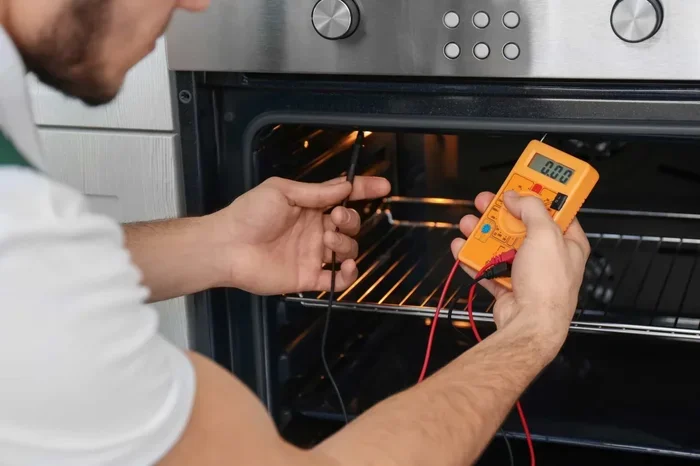
Quick Tip: Sometimes the element looks fine on the outside but is broken inside. Use a multimeter to test for continuity. If there’s no continuity, the element needs replacing.
2. Blown Thermal Fuse
The thermal fuse is a safety device. It protects your oven from overheating. But when it blows, it cuts power to the heating system entirely. This is one of the sneaky causes of an oven not working because the oven might still turn on with lights and fans, but no heat.
To check the thermal fuse, you need to access it behind the oven panel. Use a multimeter to test it. If it shows no continuity, the fuse is blown and must be replaced. You can’t repair a thermal fuse, so replacement is the only option.
3. Faulty Temperature Sensor
The temperature sensor tells your oven how hot it is. It works with the control board to regulate heat. When the sensor goes bad, your oven might not heat at all or might heat unevenly. This is a common cause of uneven heating and inaccurate temperatures.
You can test the sensor with a multimeter. Check the resistance at room temperature. If the reading is way off from the expected range, the sensor needs to be replaced. This is a relatively affordable fix that restores proper oven calibration.
4. Broken Oven Control Board
The oven control board is the brain of your appliance. It sends signals to the heating elements and sensors. When the control board fails, your oven can’t regulate heat properly. You might notice that the oven doesn’t respond to temperature changes, or it heats erratically.
Control board issues are more complex to diagnose. If you’ve ruled out the elements, fuse, and sensor, the board might be the culprit. Replacement can be costly, but it’s necessary for restoring full oven heating function.
5. Gas Igniter Failure
If you have a gas oven, the igniter is what lights the gas to create heat. Over time, the igniter can weaken or fail completely. A common sign is that the oven takes a very long time to heat up, or it doesn’t heat at all. You might also notice a gas smell without ignition.
Check the igniter by turning on the oven. Does it glow? A weak, orange glow instead of a bright blue-white glow means the igniter is failing. Replacing the gas oven igniter is usually straightforward and inexpensive.
6. Power Supply Problems
Before you tear into any parts, check the basics. Is your oven getting power? A tripped breaker, a blown fuse in your home’s electrical panel, or a loose outlet connection can all cause an oven not heating situation. This sounds obvious, but it happens more often than you’d think.
Check your circuit breaker first. Reset it if it’s tripped. Then check the outlet with another appliance. If the outlet isn’t working, the problem isn’t your oven at all, it’s your home’s electrical system.
How to Diagnose the Heating Problem
Now that you know the common causes, let’s talk about how to diagnose the problem step by step. Proper oven troubleshooting saves you time, money, and frustration.
Step 1: Check the power supply. Make sure the oven is plugged in and the breaker hasn’t tripped.
Step 2: Look at the heating elements. Turn on the oven and observe whether the elements glow. If they don’t, they might be burnt out.
Step 3: Test the thermal fuse. Access it and use a multimeter to check for continuity.
Step 4: Inspect the temperature sensor. Test its resistance and compare it to the manufacturer’s specifications.
Step 5: Check the control board. If everything else looks fine, the board might be sending incorrect signals.
Following this diagnostic process helps you narrow down the cause quickly. It also prevents you from replacing parts that aren’t actually broken.
Fixes You Can Do Yourself
Not every oven repair requires a technician. Many common heating problems are easy to fix at home with basic tools. Here are the DIY fixes that work for most oven not heating issues.
Replacing a Heating Element
If your bake element or broil element is burnt out, replacing it is straightforward. First, disconnect the power. Remove the screws holding the element in place. Detach the wires and take the old element out. Connect the wires to the new element and secure it with screws. Restore power and test.
Quick Tip: Always match the replacement element to your oven model. Check the owner’s manual or the manufacturer’s website for the correct part number.
Swapping Out a Thermal Fuse
Replacing a thermal fuse requires opening the oven panel. Disconnect power first. Locate the fuse, usually near the back of the oven. Disconnect the wires, remove the old fuse, and install the new one. Reconnect the wires, close the panel, and test the oven.
Make sure the replacement fuse matches the amperage rating of the original. Using the wrong fuse can create a safety hazard.
Replacing the Temperature Sensor
The temperature sensor is usually located inside the oven cavity. It’s a thin metal rod that extends into the oven. To replace it, disconnect power, remove the screws holding the sensor, pull it out, and install the new one. Reconnect the wires and restore power.
This fix is especially helpful if your oven has been giving you uneven heating or inaccurate temperatures during baking.
Resetting the Oven
Sometimes the fix is simple. A power reset can clear electronic glitches that prevent the oven from heating. Unplug the oven for 30 seconds, then plug it back in. Turn it on and set the temperature. This simple step resolves many minor heating problems without any part replacements.
When to Call a Professional
DIY fixes are great, but some problems need a professional touch. Knowing when to call for appliance repair saves you from making things worse.
Call a technician if you notice any of the following signs:
- The oven smells like burning plastic or electrical insulation.
- You see sparks or arcing inside the oven.
- The control board shows error codes that you can’t clear.
- Your gas oven has a gas leak or won’t ignite despite a working igniter.
- The oven heats but the temperature is wildly inconsistent.
- You’ve replaced multiple parts and the problem persists.
These situations point to deeper issues that require professional diagnosis. A qualified technician has the tools and expertise to handle complex electrical and gas problems safely.
Expert Insight: Regular maintenance can prevent many of these serious issues. Schedule a professional inspection once a year to keep your oven running smoothly and safely.
Preventing Future Heating Issues
The best way to deal with an oven not heating is to prevent the problem in the first place. A little maintenance goes a long way toward keeping your oven in top shape.
Clean Your Oven Regularly
Food debris and grease buildup can interfere with heating elements and sensors. Clean your oven after every use, and do a deep clean at least once a month. Avoid using harsh chemicals on the elements or sensors, as they can cause damage.
Avoid the Self-Clean Cycle Too Often
The self-clean cycle uses extreme heat to burn off residue. While convenient, running it too frequently can wear out the heating elements and damage the temperature sensor. Use it only when necessary, and never more than a few times a year.
Check the Door Seal
A worn-out door seal lets heat escape, which makes your oven work harder. Inspect the seal regularly for cracks or gaps. Replace it if it looks damaged. A good seal helps maintain consistent oven calibration and energy efficiency.
Use the Right Cookware
Thick, warped pans can block heat flow and create uneven heating spots. Use flat, oven-safe cookware that fits properly on the racks. This small change improves baking results and reduces strain on your oven’s heating system.
Gas Oven vs. Electric Oven Heating Problems
Not all heating problems are the same across oven types. Understanding the difference between gas and electric models helps you narrow down the cause faster.
Electric ovens rely on heating elements and electronic controls. Common issues include burnt-out elements, faulty control boards, and sensor failures. These are usually straightforward to diagnose and fix.
Gas ovens depend on igniters, gas valves, and safety features like the thermal fuse. Gas-related problems can involve gas supply issues, igniter weakness, or valve malfunctions. These often require professional attention due to the safety risks involved with gas lines.
Regardless of your oven type, the diagnostic process starts the same way. Check the power or gas supply first, then work through the components systematically.
Key Takeaways
- Heating Element Failure: A burnt-out bake or broil element is the most common reason your oven doesn’t heat up.
- Thermal Fuse Issues: A blown thermal fuse can completely stop your oven from producing heat, and it needs replacement.
- Temperature Sensor Problems: A faulty sensor can cause uneven heating or no heat at all.
- Control Board Malfunctions: The oven control board regulates heat, and when it fails, your oven won’t work properly.
- DIY Fixes Save Money: Many heating problems can be solved with basic tools and a little know-how.
- Know When to Call a Pro: Some issues like wiring problems or gas valve failures require professional attention.
- Prevention Works: Regular cleaning and maintenance can prevent most oven heating issues before they start.
Conclusion
Dealing with an oven that won’t heat up is stressful, but it doesn’t have to be overwhelming. The most common causes are heating element failure, a blown thermal fuse, a faulty temperature sensor, or a broken control board. Each of these problems has a clear path to diagnosis and repair.
Start with the basics. Check the power supply, inspect the elements, and test the safety components. Many fixes are simple enough to handle on your own. But when the problem goes beyond DIY repair, don’t hesitate to call a professional. Safety always comes first, especially with gas ovens and electrical components.
Remember, regular maintenance is your best defense against oven heating problems. Clean your oven, check the seals, and use the self-clean cycle wisely. These habits extend the life of your appliance and keep it performing at its best.
Now that you know the top reasons your oven doesn’t heat up, you’re equipped to tackle the problem with confidence. Grab your multimeter, gather your tools, and get your kitchen back to cooking perfection.
Frequently Asked Questions
Why does my oven turn on but not heat up?
This usually means the heating element, thermal fuse, or temperature sensor has failed. The oven’s control board and lights may still work even when the heating system is completely dead. Start by checking the bake element for visible damage and test it with a multimeter for continuity.
How much does it cost to fix an oven that won’t heat?
Costs vary depending on the problem. Replacing a heating element typically costs between $50 and $200 for parts and labor. A thermal fuse replacement is usually $100 to $200. Control board repairs can run $200 to $600. Always get a quote from a licensed technician before committing to expensive repairs.
Can a tripped breaker cause my oven not to heat up?
Yes, absolutely. A tripped circuit breaker cuts power to the oven, which means the heating elements can’t work. Check your home’s electrical panel first. Reset the breaker and see if the oven heats up. If the breaker trips again, there may be a deeper electrical issue that needs professional attention.
How do I know if my oven temperature sensor is bad?
Signs of a bad temperature sensor include inaccurate oven temperatures, uneven baking, and the oven not reaching the set temperature. You can test the sensor with a multimeter by measuring its resistance at room temperature. Compare your reading to the manufacturer’s specifications to confirm if it needs replacement.
Is it safe to use an oven with a broken heating element?
No, it’s not safe. A damaged heating element can cause arcing, sparks, or even a fire. If you notice visible damage like cracks, blistering, or gaps in the element, stop using the oven immediately. Replace the element before using the appliance again.
How often should I have my oven professionally inspected?
Once a year is a good rule of thumb for most households. Regular inspections catch small problems before they become expensive repairs. A technician can check the wiring, test the heating elements, inspect the gas lines, and verify proper oven calibration to keep your appliance running safely and efficiently.