Why Is My Pan Bending In The Oven And How To Fix It
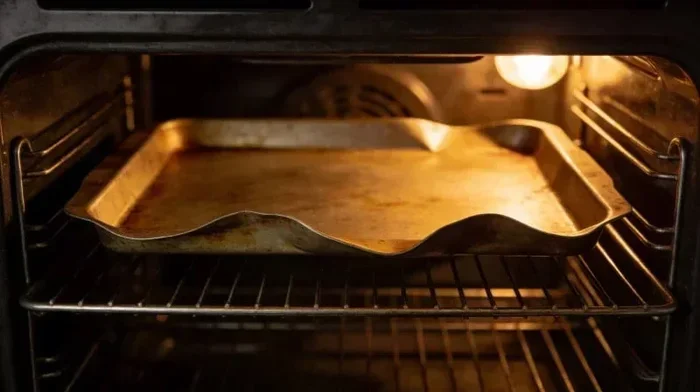
A pan bending in the oven is a common problem caused by thermal shock, poor materials, and uneven heating. When the bottom of your pan buckles or curls, it leads to uneven cooking and wasted food. The good news is that you can often fix a warped pan at home with simple methods like the towel trick or using a heavy weight. This guide covers every reason your pan might be bending and gives you clear, actionable steps to fix and prevent it. Whether you use a stainless steel pan or a basic aluminum baking sheet, you will find practical solutions that work.
You pull your pan out of the oven and immediately notice something wrong. The bottom is curved, the edges don’t sit flat, and your once perfectly flat cooking surface now rocks back and forth like a rocking chair. If you have ever asked yourself, “why is my pan bending in the oven,” you are not alone. This is one of the most common kitchen frustrations home cooks face, and it happens to everyone from beginners to seasoned chefs.
The good news is that understanding why your pan bending in the oven occurs is the first step toward fixing it and preventing it from happening again. In this guide, we will walk through every reason your metal pan might be warping, show you how to fix a bent pan with simple household methods, and share expert tips to keep your baking sheet and cookware flat for years to come. Whether you use a stainless steel pan, a thin aluminum pan, or a standard cookie sheet, this article has you covered.
We will keep things simple and practical. No jargon, no fancy cooking terms, just clear advice you can use right away. Let us get into it.
Key Takeaways
- Thermal shock is the #1 cause: Sudden temperature changes make metal expand and contract unevenly, which leads to warping.
- Thin pans warp faster: Lightweight cookie sheets and thin aluminum pans are the most vulnerable to bending.
- You can fix a bent pan: Simple methods like the towel trick and the heavy object method can flatten a warped pan at home.
- Prevention is easy: Preheating gradually, using the right pan size, and avoiding cold water on hot pans stops warping before it starts.
- Replace when needed: A severely warped pan creates safety risks and cooks food unevenly, so know when to let go.
- Material matters a lot: Clad pans and heavy-gauge metal resist warping far better than cheap thin alternatives.
- Proper placement helps: Center your pan on the oven rack for even heat distribution and less stress on the metal.
📑 Table of Contents
- Why Does My Pan Bend In The Oven?
- Understanding Pan Warping: How It Actually Happens
- How To Fix A Bent Pan At Home
- How To Prevent Your Pan From Bending In The Oven
- When Should You Replace A Warped Pan?
- Expert Tips For Better Cooking Results With Your Pans
- Common Mistakes That Cause Pan Warping
- Final Thoughts On Why Pans Bend In The Oven
Why Does My Pan Bend In The Oven?
The short answer is heat. But the full story is a bit more interesting than that. When metal heats up, it expands. When it cools down, it contracts. The problem happens when one part of the pan heats faster than another part. This uneven expansion forces the metal to buckle, curl, or warp. Let us look at the specific reasons this happens.
Thermal Shock Is The Biggest Culprit
Thermal shock is what happens when you expose your pan to a sudden and extreme temperature change. Think about it. You take a cold pan straight from the dishwasher and place it in a hot oven. Or you remove a screaming-hot pan from the oven and set it on a cold wet countertop. In both cases, different parts of the metal expand or contract at different speeds. This stress causes the pan to warp.
This is the same reason why pouring boiling water into a freezing glass can crack it. The metal cannot handle the rapid change. Warped pans almost always trace back to thermal shock at some point in the pan’s life.
Thin And Lightweight Materials Warp Easily
Not all pans are created equal. A thin aluminum pan or a budget cookie sheet simply does not have the mass to resist the forces of heat. Heavy-gauge pans are much more stable because the extra metal thickness absorbs and distributes heat more evenly. When you use a thin pan at high temperatures, the bottom expands faster than the sides, and that mismatch creates a curve.
If your baking sheet is paper-thin, you should expect some bending over time. This is not a defect. It is just physics working against thin metal.
Oven Rack Placement Matters
Where you place your pan inside the oven affects how evenly it heats. If you set your pan too close to the top heating element or too close to the bottom, one side gets more heat than the other. This uneven heat distribution puts stress on the metal and can cause it to warp over time. Always try to center your pan on the middle oven rack for the most balanced heating.
Overheating Your Pan Beyond Its Limit
Every pan has a temperature limit. Some oven-safe pans are rated for 400 degrees while others handle 500 degrees or more. If you crank your oven to its maximum setting and place a pan not built for that heat, the metal will soften and begin to deform. This is especially true for nonstick pans with thin bases. Always check the manufacturer’s temperature recommendation before using any pan at high heat.
Understanding Pan Warping: How It Actually Happens
Now that we know the causes, let us understand the actual mechanics of how a flat pan becomes a curved one. This helps you see why prevention matters so much.
The Science Of Metal And Heat
Metal is made of tiny crystals that expand when heated and shrink when cooled. When heat is applied evenly, all parts of the pan expand at the same rate and the pan stays flat. But when heat is uneven, the hot side expands more than the cool side. The metal has nowhere to go except to buckle upward or curl at the edges. This is what we call a warped baking sheet or a bent cookie sheet.
The process is gradual. You might not notice a slight curve the first few times. But over dozens of heating cycles, the warping gets worse. What starts as a minor wobble becomes a pan that rocks and spins on the oven rack.
Which Types Of Pans Warp The Most
Some pans are much more likely to warp than others. Here is a quick breakdown of common pan types and their warping tendency:
- Thin aluminum pans: These warp the fastest because the metal is lightweight and heats unevenly. A cheap baking sheet from a discount store is very likely to bend.
- Stainless steel pans (thin): Stainless steel is harder than aluminum but thin stainless steel pans still warp under high heat and rapid temperature changes.
- Nonstick pans with thin bases: The coating adds little structural strength. These pans warp easily if overheated or shocked with cold water.
- Heavy-gauge stainless steel or clad pans: These resist warping very well because the thick metal distributes heat evenly and handles thermal stress better.
- Cast iron pans: Cast iron rarely warps because it is extremely thick and heavy. However, it can crack under severe thermal shock instead.
How To Fix A Bent Pan At Home
The moment you notice your pan is warped, you do not have to throw it away. There are simple methods you can try at home to flatten it back out. These methods work best on pans that are only slightly to moderately warped. Severely damaged pans may be beyond saving.
The Towel Method
This is the most popular and easiest fix for a warped pan. Here is how to do it:
- Fold a clean towel into a thick pad.
- Place the towel on a flat, hard surface like a countertop or cutting board.
- Set your warped pan face-down on the towel so the curved bottom faces up.
- Apply even pressure by pressing down on the center of the curved area with your hands.
- Hold for 30 to 60 seconds, then check if the pan sits flat.
- Repeat if needed. The heat from the pan softens the metal slightly, making it easier to reshape.
This method works because the towel provides a cushion that lets you apply steady, controlled pressure without scratching the pan. It is gentle but effective for minor warping.
The Heavy Object Method
For slightly more serious warping, you can use a heavy object to flatten the pan:
- Place the warped pan on a flat surface with the curved side facing up.
- Put a piece of wood or a thick cloth over the curved area to protect the surface.
- Place a heavy object on top, such as a cast iron skillet, a stack of heavy books, or a dumbbell.
- Leave it for several hours or overnight.
- Check the pan. The weight should have slowly pulled the metal back into shape.
This method takes advantage of gravity and sustained pressure. It works well for pans that have a gentle curve but are not completely twisted.
When To Call A Professional Or Replace The Pan
If your pan is severely twisted or the edges are completely curled up, home methods may not work. At that point, it is better to replace the pan than to waste time trying to fix it. A severely warped baking sheet will never cook food evenly, and it can slide around on the oven rack, which is a safety hazard.
How To Prevent Your Pan From Bending In The Oven
Prevention is always easier than repair. Once you know what causes pan warping, you can take simple steps to stop it from happening. These tips will help you keep your cookware flat and functional for a long time.
Choose The Right Pan For High Heat Cooking
The single best way to prevent warping is to buy the right pan in the first place. Look for pans labeled as heavy-gauge or thick-bottomed. These pans have more metal mass, which means they absorb heat without warping. Clad pans with an aluminum or copper core sandwiched between stainless steel layers are especially good at resisting warping because the different metals work together to distribute heat evenly.
When shopping for a cookie sheet or baking sheet, choose one that feels substantial in your hand. A pan that feels flimsy will likely warp eventually. Spending a little more on quality cookware saves you money in the long run.
Always Preheat Your Oven Gradually
Do not place a cold pan into a preheated oven. This is one of the fastest ways to cause thermal shock and warp your pan. Instead, put the pan in the oven while it is still cold, and then let the oven heat up gradually along with the pan. This gives the metal time to expand evenly and avoids the sudden temperature difference that causes warping.
Avoid Cold Water On Hot Pans
Never rinse or soak a hot pan in cold water. This is the fastest way to warp a pan and can also damage nonstick coatings. Let your pan cool down naturally on a wire rack or a dry towel before washing it. If you need to speed up cooling, place it on a dry wooden cutting board and let air do the work.
Match Your Pan Size To The Oven Rack
A pan that is too small for the oven rack will lean and tilt, which creates uneven heating. Similarly, a pan that hangs over the edge of the rack will heat unevenly and warp more easily. Always use a pan that fits comfortably on the oven rack with a little room on all sides. This ensures even heat distribution and reduces stress on the metal.
Use Lower Temperatures When Possible
You do not always need to crank your oven to the highest setting. Many recipes work perfectly fine at 350 or 375 degrees instead of 425 or 450. Lower temperatures mean less thermal stress on your pan, which means less warping over time. If a recipe calls for 450 degrees and your pan is thin, consider reducing the temperature by 25 degrees and increasing the cook time slightly.
Flip Your Pan Halfway Through Cooking
If you are baking for a long time, try flipping your pan around halfway through the cooking process. This helps ensure both sides of the pan are exposed to similar levels of heat, which reduces the chance of one side expanding more than the other. This simple habit can significantly extend the life of your baking sheet and other pans.
When Should You Replace A Warped Pan?
Not every warped pan is worth saving. There comes a point where the warping is too severe, and continuing to use the pan actually makes your cooking worse. Here are the signs that your pan has reached the end of its useful life.
Signs Your Pan Is Beyond Repair
- The pan rocks severely: If your pan wobbles so much that it spins on the oven rack or spills liquid when you move it, it is time to replace it.
- Food cooks unevenly: If your cookies burn on one side and stay raw on the other, the warped bottom is preventing proper heat distribution.
- The warping keeps coming back: If you fix the pan and it warps again after just one or two uses, the metal has lost its structural integrity.
- The pan is discolored or damaged: Warping often comes with other damage like scratches, peeling coatings, or deep scratches that affect cooking performance.
- The pan is very thin: If the pan was already thin when you bought it, it was likely to warp eventually. At that point, replacement is the smarter investment.
A pan that rocks on the oven rack is not just annoying. It can also be dangerous. A bent cookie sheet can slide off the rack or tip over, causing burns or spills. Safety should always come first in the kitchen.
Expert Tips For Better Cooking Results With Your Pans
Once you have fixed or replaced your warped pan, you want to keep it in great shape. Here are some expert-backed tips that make a real difference in how your pans perform and how long they last.
Use Parchment Paper Or Silicone Mats
Lining your baking sheet with parchment paper or a silicone baking mat protects the surface and promotes even heating. These barriers reduce direct contact between the food and the metal, which helps maintain a flat cooking surface over time.
Hand Wash When Possible
Dishwashers expose your pans to harsh detergents and extreme temperature changes from the hot wash cycle to the dry cycle. Hand washing with warm water and mild soap is gentler on the metal and helps prevent warping. If you must use a dishwasher, place your pans on the top rack away from the heating element.
Store Pans Flat
How you store your pans matters more than you might think. Stacking pans haphazardly in a cupboard can gradually bend them over time. Store your pans flat or hang them from a pot rack to keep them in perfect shape. If you must stack them, place a soft cloth or paper towel between each pan to prevent scratching and bending.
Rotate Your Pans Regularly
Just like tires on a car, pans wear out more on one side if you always use them the same way. Rotating your pans and using them evenly helps distribute wear and extends the overall life of your cookware set.
Common Mistakes That Cause Pan Warping
Many home cooks unknowingly make habits that speed up the warping process. Here are the most common mistakes to avoid:
- Using a pan that is too thin for high-heat cooking: Thin pans are not designed for intense oven temperatures.
- Placing a hot pan on a cold or wet surface: This causes instant thermal shock and can warp the pan immediately.
- Overheating an empty pan: Heating a pan with nothing in it concentrates all the heat on the metal, which can soften and deform it.
- Ignoring manufacturer guidelines: Every pan comes with care instructions. Ignoring them is the fastest way to damage your cookware.
- Buying the cheapest option every time: Budget pans save money upfront but cost more in the long run because they warp, wear out, and need replacing frequently.
Avoiding these mistakes alone can double or even triple the lifespan of your favorite stainless steel pan or baking sheet. Small changes in how you treat your pans make a huge difference.
Final Thoughts On Why Pans Bend In The Oven
Now you know the full answer to the question, “why is my pan bending in the oven.” The main reasons are thermal shock, thin materials, uneven heating, and overheating beyond the pan’s limits. The great thing is that most of these causes are completely within your control.
You can fix a slightly warped pan with simple methods like the towel trick or using a heavy weight. You can prevent warping in the future by choosing heavy-gauge pans, preheating gradually, and avoiding cold water on hot surfaces. And when a pan is truly beyond saving, you know exactly when it is time to replace it.
Taking care of your cookware is one of the easiest ways to improve your cooking results and save money over time. A flat, stable pan cooks food evenly, looks better, and lasts for years. Follow the tips in this guide, and your pan bending in the oven problem will become a thing of the past.
Start today. Check your pans for warping, try a fix if needed, and make a few small changes in how you use and store them. Your kitchen will thank you, and your food will taste better for it.
Frequently Asked Questions
Can I fix a warped pan at home?
Yes, you can often fix a mildly warped pan at home using the towel method or by placing a heavy object on the curved area overnight. These simple techniques apply steady pressure that gradually reshapes the metal. However, severely warped pans may be beyond repair and should be replaced for safety and cooking performance.
Is using a warped pan dangerous?
A slightly warped pan is not dangerous but will cook food unevenly. A severely warped pan can slide on the oven rack or tip over, which creates burn risks and spills. If your pan rocks badly or spins when you move it, it is safest to replace it with a flat, stable pan.
What type of pan does not warp in the oven?
Heavy-gauge stainless steel pans, cast iron pans, and clad pans with thick composite bases resist warping the best. These pans have enough metal mass to absorb heat evenly without buckling or curling. Avoid thin aluminum pans and budget cookie sheets if you want long-lasting, warp-free cookware.
Can warping affect how my food cooks?
Absolutely. A warped pan creates an uneven cooking surface, which means some parts of your food get more heat than others. This leads to burned edges, raw centers, and inconsistent results. Keeping your pan flat ensures even heat distribution and much better cooking outcomes.
Should I use a warped pan on a glass stovetop?
No, you should avoid using a warped pan on a glass stovetop. The uneven bottom can press unevenly against the glass surface, which may cause the glass to crack or break. A warped pan also rocks and slides on glass cooktops, creating a safety hazard. Use a flat pan on any stovetop surface.
How long does a pan last before it starts warping?
The lifespan of a pan depends on its quality, material, and how you use it. A cheap thin pan may warp within a few months of regular use. A high-quality heavy-gauge pan can last many years without any warping at all. Proper care, gradual heating, and gentle cooling all help extend the life of your baking sheet and other cookware.