How To Make Roast Potatoes In The Oven From Scratch
Learn how to make roast potatoes in the oven from scratch with our simple, foolproof recipe. You will discover the secrets to getting crispy golden outsides and fluffy insides every single time. This guide covers everything from choosing the right potatoes to perfect seasoning and oven temperature. Whether you are a beginner or a seasoned cook, these tips will level up your roast potatoes game.
There is nothing quite like a plate of crispy roast potatoes sitting alongside a Sunday roast or a hearty weeknight dinner. Golden on the outside, fluffy on the inside, and bursting with flavor, homemade roast potatoes have a way of making any meal feel special. Yet so many people shy away from making them from scratch, thinking it is too difficult or too time-consuming.
The truth is, how to make roast potatoes in the oven is one of the simplest cooking skills you can learn. You do not need fancy equipment or years of experience. With the right ingredients, a little patience, and a few proven techniques, you can create crispy roast potatoes that rival anything from a restaurant. This guide walks you through every single step, from picking the best potatoes to pulling a perfect tray out of the oven.
We will cover everything you need to know. You will learn why certain potato types work better than others, how to get that signature crispy exterior, and what common mistakes to avoid. By the end, you will feel confident enough to make oven roasted potatoes like a pro. Let us get started.
Key Takeaways
- Parboiling is the secret: This step creates the rough, crispy edges that make roast potatoes irresistible.
- Choose the right potato: Floury varieties like Maris Piper or Russet give the best texture for oven roasting.
- Hot oil and high heat are key: Preheating your oil and oven ensures crispy roast potatoes from the first bite.
- Do not overcrowd the tray: Giving each potato space lets hot air circulate for even roasting.
- Season at every stage: From the boiling water to the final toss, layered seasoning builds deep flavor.
- Rest before serving: Letting roast potatoes sit briefly keeps them crispy and prevents steaming.
📑 Table of Contents
- Why Homemade Roast Potatoes Are Worth the Effort
- Choosing the Best Potatoes for Roasting
- Step-by-Step: How to Make Roast Potatoes In The Oven
- Pro Tips for Perfect Roast Potatoes Every Time
- Common Mistakes That Ruin Roast Potatoes
- Delicious Variations to Try
- How Long to Roast Potatoes and Temperature Guide
- Storing and Reheating Leftover Roast Potatoes
- Quick Tips for Success
- Conclusion
Why Homemade Roast Potatoes Are Worth the Effort
Store-bought frozen roast potatoes might seem convenient, but they simply cannot compare to fresh, homemade ones. When you make roast potatoes from scratch, you control every ingredient. You decide how crispy you want the outside, how fluffy the inside should be, and what flavors to include.
Homemade oven roasted potatoes also taste significantly better. The caramelization that happens when raw potato meets hot oil creates a depth of flavor that frozen versions simply do not have. Plus, there is something deeply satisfying about pulling a tray of golden roast potatoes out of your own oven.
Another big advantage is cost. A bag of potatoes costs just a few dollars and feeds an entire family. Add a little oil and some seasoning, and you have a side dish that costs pennies compared to buying pre-made alternatives. Roast potatoes from scratch are genuinely one of the easiest ways to elevate a simple meal.
The Science Behind Crispy Roast Potatoes
Understanding why roast potatoes turn out crispy helps you troubleshoot when things go wrong. The key process is called the Maillard reaction. This is a chemical reaction between amino acids and sugars that occurs when food is exposed to high heat. It is what gives roasted potatoes their brown, crispy exterior.
For this reaction to work well, you need three things. Dry surface moisture on the potato, high oven temperature, and enough oil to conduct heat. This is exactly why parboiling and drying the potatoes before roasting is so important. It removes surface moisture and creates rough edges where the crispy exterior can form.
Choosing the Best Potatoes for Roasting
Not all potatoes are created equal when it comes to roasting. The variety you pick has a huge impact on the final texture. Some potatoes turn fluffy and soft inside, while others stay waxy and dense. For the best roast potatoes crispy outside, you need a floury or starchy variety.
Best Potato Types for Roast Potatoes
Here are the top potato varieties to use for oven roasted potatoes:
- Maris Piper: The classic British choice for roast potatoes. Floury, light, and crispy when roasted.
- Russet potatoes: Great for fluffy interiors and golden, crunchy outsides.
- King Edward: Another excellent floury variety that roasts beautifully.
- Yukon Gold: Slightly waxier but still produces good results with a buttery flavor.
- Desiree: A firm, waxy option that holds its shape well during roasting.
Avoid using new potatoes or any very waxy variety if your goal is maximum crispiness. They tend to stay soft and do not develop that rough, crispy exterior as well. Stick with large, mature floury potatoes for the best results when you make roast potatoes in the oven.
How to Prepare Potatoes for Roasting
Proper preparation sets the stage for perfect roast potatoes crispy outside. Start by peeling your potatoes if you prefer a smooth finish. Some people like to leave the skin on for extra texture and nutrients, and that works fine too.
Cut your potatoes into even-sized chunks or wedges. Uniform size ensures they cook at the same rate. If you have very large potatoes, quarter them. Smaller ones can be halved. Aim for pieces that are roughly 4 to 5 centimeters wide.
Place the cut potatoes in a large bowl of cold water. This removes excess surface starch, which helps them crisp up later. Let them soak for at least 10 to 15 minutes. You can even soak them overnight in the fridge for even better results.
Step-by-Step: How to Make Roast Potatoes In The Oven
Now for the main event. Here is a detailed walkthrough of how to make roast potatoes in the oven from start to finish. Follow these steps and you will get fantastic results every time.
Step 1: Parboil the Potatoes
Parboiling is the single most important step for achieving crispy roast potatoes. Fill a large saucepan with cold water and add a generous amount of salt. Bring it to a boil, then add your drained potato pieces.
Boil them for about 8 to 10 minutes. You want them to be just cooked through but still firm enough to hold their shape. If they fall apart, they will turn mushy in the oven. You can test by piercing one with a fork. It should go in with slight resistance.
Drain the potatoes thoroughly in a colander. Then return them to the hot saucepan and let the steam evaporate for a minute or two. This drying step is crucial for crispiness.
Step 2: Roughen Up the Edges
Here is the trick that makes crispy roast potatoes possible. Hold a fork in each potato piece and firmly shake it against the side of the saucepan. This roughs up the edges and creates all those delicious crispy bits.
Do not be gentle about this. The more rough and irregular the edges, the more surface area there is for crispiness to develop. This step alone makes a massive difference in your final result.
Step 3: Preheat the Oven and Prepare the Tray
While the potatoes are drying, preheat your oven to 220 degrees Celsius (425 degrees Fahrenheit). This high heat is essential for getting a good crisp. Place a baking tray or roasting pan in the oven as it heats up.
Adding oil to a preheated tray is a game-changer. The hot oil immediately starts cooking the bottom of the potatoes, creating instant crispiness. Be careful when handling the hot tray, and use oven mitts.
Step 4: Add Oil and Season
Pour a generous amount of best oil for roast potatoes into your hot tray. Vegetable oil, sunflower oil, or goose fat all work wonderfully. Goose fat is a traditional choice that adds incredible flavor, but vegetable oil is a great budget-friendly option.
Carefully add the roughened potato pieces to the hot oil. Toss them gently to coat every surface. Now is the time to add your seasoning. Salt, freshly ground black pepper, garlic powder, and dried rosemary or thyme all work beautifully.
Spread the potatoes out in a single layer. Make sure none of them are touching or overlapping. Overcrowding traps steam and prevents crispiness. If you need to roast a large batch, use two trays.
Step 5: Roast to Perfection
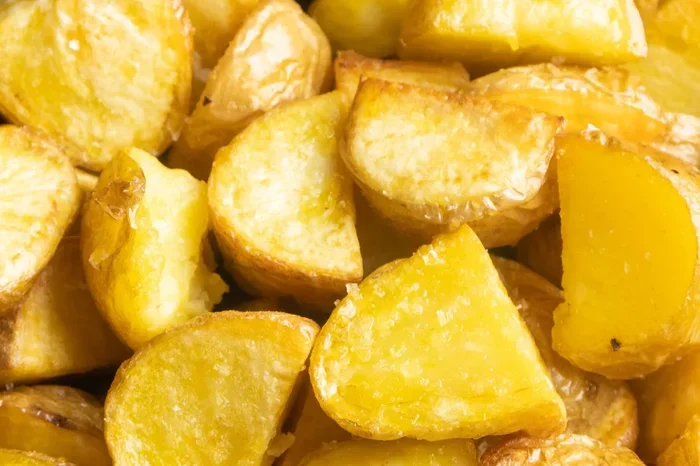
Place the tray in the preheated oven and roast the potatoes for 40 to 50 minutes. Resist the urge to open the oven door too often, as this drops the temperature and can make them soggy.
After about 25 minutes, carefully remove the tray and turn each potato piece over. This ensures even browning on all sides. Return the tray to the oven and continue roasting until the potatoes are deep golden brown and sound hollow when you tap them.
For extra crispy roast potatoes crispy outside, you can turn up the heat to 230 degrees Celsius for the last 10 minutes. Keep a close eye on them to prevent burning.
Step 6: Rest and Serve
Once done, remove the tray from the oven and let the potatoes rest for about 5 minutes. This brief resting period allows the steam inside to redistribute, keeping the inside fluffy while the outside stays crispy.
Transfer the golden roast potatoes to a serving dish and enjoy immediately. They are best served fresh and hot. If you have leftovers, reheating them in a hot oven rather than a microwave helps maintain that crispy texture.
Pro Tips for Perfect Roast Potatoes Every Time
Even with a great recipe, small details can make or break your oven roasted potatoes. Here are some expert tips that separate good roast potatoes from absolutely perfect ones.
Use the Right Amount of Oil
Too little oil and your potatoes will dry out and burn. Too much oil makes them greasy and heavy. You want just enough to lightly coat each piece. A good rule of thumb is about 2 to 3 tablespoons of oil for every 500 grams of potatoes.
Do Not Skip the Parboiling Step
Some recipes skip parboiling, but this is the step that creates the rough, crispy edges. Without it, you get soft, pale potatoes that lack texture. Always parboil for the best roast potatoes crispy outside.
Hot Oil Is Your Friend
Adding potatoes to cold oil and then heating everything together is a common mistake. Starting with hot oil gives the outside an immediate crunch. This is why preheating the tray and oil before adding the potatoes is so important.
Season at Multiple Stages
For the deepest flavor, season your potatoes at every stage. Salt the boiling water, season them after draining, add seasoning with the oil, and finish with a little extra salt and freshly cracked pepper right out of the oven.
Add Aromatics for Extra Flavor
Tossing a few whole garlic cloves, sprigs of fresh rosemary, or smashed garlic cloves into the tray adds wonderful aroma and taste. These flavors infuse the potatoes as they roast, giving you restaurant-quality homemade roast potatoes with minimal extra effort.
Try Different Oils and Fats
While vegetable oil works great, consider experimenting with different fats. Duck fat, goose fat, and even olive oil each bring unique flavors. Best oil for roast potatoes is ultimately the one you enjoy most, so feel free to get creative.
Common Mistakes That Ruin Roast Potatoes
Even experienced cooks sometimes make mistakes when making roast potatoes in the oven. Being aware of these pitfalls helps you avoid them and get better results.
Using the Wrong Potato Type
Waxy potatoes like red bliss or new potatoes do not roast well. They stay dense and do not develop crispy edges. Always choose floury, starchy varieties for the best texture.
Overcrowding the Tray
When potatoes are packed too tightly, steam gets trapped instead of escaping. This creates soggy, soft potatoes rather than crispy ones. Give each piece plenty of space for hot air to circulate freely.
Not Drying the Potatoes After Parboiling
Excess moisture on the potato surface turns to steam in the oven, preventing crispiness. After draining, let the potatoes sit and steam off for a few minutes. Then rough up the edges and toss with oil immediately.
Opening the Oven Door Too Often
Every time you open the oven door, the temperature drops significantly. This slows down the cooking process and prevents even browning. Trust the process and only open the door when you need to turn the potatoes.
Underseasoning
Plain roast potatoes are boring. Make sure you season generously at every stage. Salt, pepper, garlic, and herbs transform simple potatoes into a standout side dish.
Delicious Variations to Try
Once you have mastered the basic method, you can start experimenting with different flavors. Homemade roast potatoes are incredibly versatile and pair well with almost any flavor profile.
Rosemary and Garlic Roast Potatoes
This is a classic combination that works beautifully. Add fresh rosemary sprigs and whole garlic cloves to the tray before roasting. The garlic becomes soft and sweet, and the rosemary infuses the potatoes with a wonderful earthy aroma.
Spicy Roast Potatoes
For a kick, add smoked paprika, cayenne pepper, and a pinch of cumin to your seasoning. These spices pair wonderfully with the natural sweetness of roasted potatoes and add a bold, flavorful twist.
Herby Pesto Roast Potatoes
Toss your potatoes with a tablespoon of pesto before roasting. The basil, garlic, and parmesan flavors create something truly special. This variation works brilliantly as a side for pasta dishes or grilled meats.
Crispy Potato Wedges
Instead of cutting potatoes into chunks, cut them into wedges and roast them for a more substantial side dish. Wedges have more surface area and tend to get extra crispy. Season with paprika, salt, and a squeeze of fresh lemon juice for a simple yet delicious snack.
How Long to Roast Potatoes and Temperature Guide
Getting the timing and temperature right is crucial for how to make roast potatoes in the oven successfully. Here is a quick reference guide to help you every time.
| Oven Temperature | Roasting Time | Best For |
|---|---|---|
| 200 degrees Celsius (390F) | 50 to 60 minutes | Slower roast, very fluffy inside |
| 220 degrees Celsius (425F) | 40 to 50 minutes | Balanced crisp and fluffy texture |
| 230 degrees Celsius (450F) | 35 to 45 minutes | Maximum crispiness, golden exterior |
The sweet spot for most home cooks is 220 degrees Celsius. It gives you a great balance of crispy outside and fluffy inside without requiring constant monitoring. If you prefer extra crunch, go higher and reduce the time slightly.
Keep in mind that these times can vary based on your oven, the size of your potato pieces, and how many potatoes you are roasting. Always check for doneness by piercing a piece with a fork. It should slide in easily with no resistance.
Storing and Reheating Leftover Roast Potatoes
If you happen to have leftover oven roasted potatoes, do not throw them away. They can be reheated and still taste great with a little care.
Let the potatoes cool completely at room temperature, then store them in an airtight container in the fridge. They will keep for up to three days. When ready to reheat, spread them on a baking tray and warm them in a hot oven at 200 degrees Celsius for about 10 to 15 minutes.
Avoid reheating roast potatoes in a microwave. The microwave adds steam, which makes them soft and soggy. A hot oven restores some of that crispy exterior and keeps the inside warm and fluffy.
Quick Tips for Success
- Soak cut potatoes in cold water for 30 minutes to remove excess starch before parboiling.
- Shake the potatoes in the saucepan after draining to roughen the edges naturally.
- Use a wire rack on your tray for even airflow and crispier results on all sides.
- Add a pinch of baking powder to the boiling water for extra puffiness and crispiness.
- Flip the potatoes only once during roasting to avoid breaking the crispy exterior.
- Serve immediately for the best texture and temperature.
- Experiment with different herbs like thyme, sage, or parsley to find your favorite flavor combination.
Conclusion
How to make roast potatoes in the oven is a straightforward and rewarding skill that anyone can learn. With the right potato choice, proper parboiling, hot oil, and high heat, you can create crispy roast potatoes that turn any meal into something memorable.
Remember the key steps: choose floury potatoes, parboil until just tender, rough up the edges, use hot oil in a preheated tray, and roast at high temperature. Avoid the common mistakes like overcrowding and underseasoning, and you will be well on your way to perfect roast potatoes every single time.
Once you master the basic technique, you can get creative with flavors and variations. Rosemary and garlic, spicy paprika, herby pesto, or classic salt and pepper, the possibilities are endless. The beauty of homemade roast potatoes is that they are simple, affordable, and incredibly satisfying.
So next time you are planning a meal, skip the frozen aisle and make roast potatoes from scratch instead. Your taste buds will thank you. Pull up a chair, grab a fork, and enjoy the fruits of your labor. Crispy, golden, and absolutely delicious, these oven roasted potatoes are going to become a regular feature on your dinner table.
Frequently Asked Questions
What is the best potato for roast potatoes?
Floury varieties like Maris Piper, Russet, or King Edward work best. These potatoes have a dry, starchy texture that becomes fluffy on the inside and crispy on the outside when roasted. Avoid waxy potatoes as they tend to stay soft and do not crisp up as well.
Do I need to peel potatoes before roasting?
Peeling is optional and comes down to personal preference. Leaving the skin on adds extra texture, fiber, and nutrients. If you do leave the skin on, make sure to scrub the potatoes thoroughly before cutting them.
Can I make roast potatoes ahead of time?
Yes, you can parboil and rough up the potatoes a few hours ahead. Store them in cold water in the fridge until you are ready to roast. For best results, roast them fresh just before serving. If you have leftovers, reheat them in a hot oven to maintain crispiness.
Why are my roast potatoes soggy instead of crispy?
Soggy roast potatoes are usually caused by overcrowding the tray, not drying the potatoes after parboiling, or not using hot enough oil and oven temperature. Make sure each potato piece has space, the surface is dry before oiling, and your oven and tray are properly preheated.
What oil is best for roast potatoes?
Vegetable oil, sunflower oil, and goose fat are all excellent choices. Goose fat is a traditional option that adds rich flavor, while vegetable oil is a neutral, budget-friendly alternative. Olive oil works too but has a lower smoke point, so keep an eye on the temperature.
How do I keep roast potatoes warm for a crowd?
Keep roasted potatoes in a warm oven set to about 80 degrees Celsius with the door slightly ajar. This prevents them from steaming and turning soggy. Alternatively, serve them in batches straight from the oven for the crispiest results.
=== META TITLE ===
How To Make Roast Potatoes In The Oven From Scratch
=== URL SLUG ===
/how-to-make-roast-potatoes-in-the-oven
=== SEO TITLE ===
How To Make Roast Potatoes In The Oven From Scratch