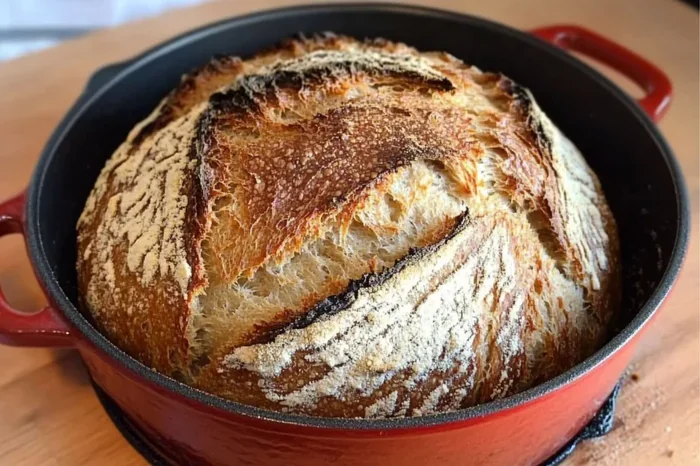
What Size Dutch Oven To Bake Sourdough Bread Perfectly
Choosing the right Dutch oven size is the single most important decision for baking perfect sourdough bread at home. A 5-quart Dutch oven is the most popular and versatile choice for standard loaves, while 3-quart and 6-quart options suit smaller or larger batches. This guide covers everything you need to know about Dutch oven size, from matching pot to loaf to mastering baking techniques.
Baking sourdough bread at home is one of the most rewarding things you can do in the kitchen. But getting that perfect crust and airy crumb depends on more than just a great sourdough starter. The Dutch oven size you choose plays a huge role in how your loaf turns out.
Many beginners pick a pot without thinking it through. They assume any cast iron Dutch oven will work. But the truth is, the right Dutch oven bake setup makes all the difference between a flat, dense loaf and a beautiful, bakery-quality sourdough loaf with a crispy crust and open crumb.
In this guide, you will learn exactly which Dutch oven size works best for baking sourdough. We will cover popular sizes, how to match your pot to your loaf, and practical tips that take your bread baking to the next level. Whether you are a beginner or a seasoned baker, this guide has you covered.
Key Takeaways
- 5-Quart Is the Sweet Spot: Most sourdough bakers get the best results with a 5-quart Dutch oven for standard-sized loaves.
- Match Pot Size to Loaf Size: Your dough should fill no more than one-third to one-half of the pot at the start of baking.
- Preheating Is Essential: Always preheat your Dutch oven for at least 30 to 45 minutes before adding dough for the best crust and oven spring.
- Cast Iron Holds Heat Best: Both cast iron and enameled cast iron work great, but bare cast iron develops a natural seasoning that enhances crust quality.
- Lid Fit Matters: A tight-fitting lid traps steam, which is critical for a crispy crust and open crumb.
- Avoid Common Size Mistakes: Too small crushes the loaf; too large lets steam escape and produces a flat, dense bread.
📑 Table of Contents
- Why Dutch Oven Size Matters for Sourdough Baking
- The Best Dutch Oven Sizes for Sourdough Bread
- How to Choose the Right Dutch Oven Size for Sourdough
- Tips for Perfect Sourdough Baking in a Dutch Oven
- Common Mistakes When Choosing a Dutch Oven for Sourdough
- Final Thoughts on Finding the Right Dutch Oven Size
Why Dutch Oven Size Matters for Sourdough Baking
A Dutch oven does more than just hold your dough. It creates a mini oven inside your oven. The trapped steam from the wet dough keeps the outside soft while the inside bakes through. This is what gives sourdough bread its signature crust and why professional bakers rely on this technique for every sourdough recipe.
The Science Behind Dutch Oven Baking
When you place dough into a hot, closed Dutch oven, the moisture from the wet dough turns into steam. This steam keeps the bread surface soft during the first part of baking. That softness allows the loaf to expand fully. This expansion is called oven spring, and it is what gives sourdough its open, airy crumb.
Without a Dutch oven, that steam escapes too quickly. The crust sets too early. The loaf cannot expand. You end up with a flat, tight bread instead of a beautiful round or oval loaf with a thin, shattering crust. The Dutch oven size you choose directly controls how much steam stays trapped and how much room your loaf has to grow.
How Pot Size Affects Crust and Crumb
The Dutch oven size directly affects how much steam stays trapped during baking sourdough. A pot that is too large lets too much steam escape. A pot that is too small squishes the dough and limits expansion. Both problems lead to poor baking results.
The right size creates the perfect balance. It holds just enough moisture to build steam. It gives the dough room to grow. The result is a sourdough loaf with a deep golden crust and a light, open crumb structure. Getting this balance right is the foundation of great bread baking at home.
The Best Dutch Oven Sizes for Sourdough Bread
Not all Dutch ovens are created equal when it comes to baking sourdough. The size you need depends on the size of the loaf you want to bake. Here is a breakdown of the most popular Dutch oven sizes and what they are best for.
3-Quart Dutch Oven for Small, Individual Loaves
A 3-quart Dutch oven is perfect for small sourdough loaves. It works well for individual-sized rounds or boules. If you bake for one or two people, this size is a great choice. Think of it like how long to roast pumpkin seeds in oven – a small batch needs a small, controlled space. The same logic applies here. A 3-quart pot gives your small loaf plenty of room to rise and bake evenly.
However, a 3-quart pot is not ideal for larger loaves. The dough will touch the lid. Steam will not circulate properly. You may end up with a crust that is too thick or unevenly baked. This size works best for personal-sized sourdough boules or when you want to bake a single small loaf for the week.
5-Quart Dutch Oven: The Sweet Spot
The 5-quart Dutch oven is the most popular choice for baking sourdough. It handles standard-sized loaves beautifully. A 5-quart pot gives a round boule or an oval batard plenty of space to expand. This size hits the sweet spot between too small and too large. The lid fits snugly to trap steam. The heat circulates evenly around the loaf. Most sourdough recipes are designed with a 5-quart pot in mind.
If you are buying your first Dutch oven for bread baking, go with 5 quarts. It is the safest and most versatile choice. You can bake a standard sourdough loaf with confidence, and the results will be consistently excellent. Many professional bread bakers recommend this size as the starting point for home baking.
6-Quart and Larger Dutch Ovens for Big Batches
A 6-quart Dutch oven or larger is great if you bake big loaves or bake in batches. It works well for oversized sourdough boules or when you want to bake two smaller loaves at once. Some bakers compare the experience to using an electric pizza oven commercial setup – the larger the cooking chamber, the more control you have over batch size and heat distribution. However, with a bigger pot, you need to be more careful about steam management.
The downside of a larger pot is that it takes more energy to preheat. It also uses more baking stone or Dutch oven surface area, which can dry out smaller loaves. If you only bake one small loaf at a time, a 6-quart pot may be overkill. Reserve the larger sizes for when you truly need the extra capacity.
Quick Comparison: Dutch Oven Sizes at a Glance
| Dutch Oven Size | Best For | Loaf Weight | Steam Control |
|---|---|---|---|
| 3-Quart | Small individual loaves | 1 to 1.5 lbs | Excellent (tight space) |
| 5-Quart | Standard boules and batards | 1.5 to 2.5 lbs | Very good (balanced) |
| 6-Quart | Large loaves or two at once | 2 to 3+ lbs | Good (needs attention) |
| 8-Quart+ | Multiple loaves or very large batches | 3+ lbs | Requires careful management |
How to Choose the Right Dutch Oven Size for Sourdough
Choosing the right Dutch oven size is not just about picking a number. You need to think about your loaf size, your oven, and how often you bake. Here is how to make the right choice for your sourdough baking setup.
Matching Your Pot to Your Loaf Size
The simplest rule is this: your dough should fill no more than one-third to one-half of the Dutch oven at the start of baking. This leaves room for oven spring. As the loaf rises, it will fill more of the pot. Think of it like how long do chicken kebabs take in the oven – different sizes need different cooking spaces and times. The same applies to sourdough.
If you fill the pot too full, the dough will touch the lid. The crust will form unevenly. The crumb will be dense and tight. If the pot is too empty, the steam escapes and the crust sets too early. Both scenarios lead to disappointing bread baking results.
Here is a quick guide for choosing the right Dutch oven size:
- Small boule (1 pound): 3 to 4 quart Dutch oven
- Standard boule (1.5 to 2 pounds): 5 quart Dutch oven
- Large boule or batard (2 to 3 pounds): 6 to 7 quart Dutch oven
- Two small loaves at once: 6 to 8 quart Dutch oven
Cast Iron vs. Enameled: What Works Best for Sourdough
When it comes to Dutch oven baking, material matters almost as much as size. Cast iron Dutch ovens are the gold standard. They hold heat incredibly well. They create a steady, even temperature that is perfect for sourdough bread. The heavy walls and lid retain heat beautifully, creating the consistent oven spring that sourdough demands.
Enameled cast iron works just as well for heat retention. The only difference is the coating. Enameled pots are easier to clean and do not rust. However, they can be heavier and more expensive. Some bakers prefer bare cast iron because it develops a natural seasoning over time. This seasoning adds a subtle crust quality that some bakers love. Both materials work great for baking sourdough. Choose the one that fits your budget and care routine.
Tips for Perfect Sourdough Baking in a Dutch Oven
Getting the most out of your Dutch oven requires more than just the right size. A few key techniques make a big difference in your sourdough baking results. These sourdough baking tips will help you get professional-quality loaves every time.
Preheating Matters More Than You Think
One of the biggest secrets to great sourdough crust is preheating your Dutch oven. You need to heat the empty pot in your oven for at least 30 to 45 minutes before adding the dough. When the hot pot meets the cold, wet dough, it creates an immediate burst of steam. This steam is what gives you that first rise, or oven spring. It also kickstarts the Maillard reaction, which creates the deep golden crust.
Think of it like how to finish ribs in oven after smoking – the final phase of cooking in a hot, enclosed space creates the best results. The same principle applies to sourdough. A preheated pot gives you a professional-quality crust at home. Never skip this step, no matter how eager you are to get the dough inside.
Managing Temperature and Bake Time
Most sourdough recipes call for baking at 450 to 500 degrees Fahrenheit. But the bake time depends on your Dutch oven size and the size of your loaf. With a 5-quart Dutch oven, a standard boule typically bakes for about 30 to 35 minutes with the lid on, then 15 to 20 minutes with the lid off. The lid-on phase traps steam and promotes oven spring. The lid-off phase lets the crust brown and crisp.
Use a kitchen thermometer to check the internal temperature of your bread. The center should reach about 205 to 210 degrees Fahrenheit. This ensures the crumb is fully set and the bread is baked through. If your loaf is browning too fast, tent it loosely with aluminum foil for the last 10 minutes of baking.
Quick Tips for Better Sourdough Results
- Always preheat empty: Give your pot at least 30 minutes to reach full oven temperature.
- Score your loaf: Use a sharp blade to score the top before baking. This controls where the bread expands.
- Use parchment paper: It makes transferring the dough from your banneton to the hot pot much easier.
- Cool completely: Let your loaf cool on a wire rack for at least one hour before slicing. This sets the crumb structure.
- Track your results: Keep notes on bake time, temperature, and loaf size for each bake. This helps you refine your technique over time.
Expert Insight: The Role of Fermentation and Proofing
Expert bakers will tell you that sourdough fermentation and proper proofing are just as important as your Dutch oven choice. A well-fermented dough with a strong sourdough starter will rise beautifully in any properly sized pot. Make sure your dough is fully fermented but not over-proofed before it goes into the Dutch oven. Over-proofed dough collapses in the oven and loses its structure, no matter how perfect your Dutch oven size is.
Common Mistakes When Choosing a Dutch Oven for Sourdough
Even experienced bakers make mistakes when picking a Dutch oven. Here are the most common errors and how to avoid them so your baking sourdough journey is a success.
Picking a Pot That Is Too Small or Too Big
The most common mistake is choosing a Dutch oven that does not match your loaf size. A pot that is too small will crush the dough as it rises. The crust will be thick and uneven. The crumb will be dense and tight. On the other hand, a pot that is too large lets too much steam escape. The crust does not develop properly. The loaf spreads out instead of rising up. You end up with a flat, wide bread instead of a tall, round loaf.
Always check the capacity of your Dutch oven before buying. Match it to the size of the loaves you plan to bake. When in doubt, go with a 5-quart Dutch oven. It is the most versatile size for sourdough bread baking and will serve you well for years.
Ignoring Lid Fit and Steam Control
The lid of your Dutch oven is just as important as the pot itself. A loose lid lets steam escape during the critical first phase of baking. This means less oven spring and a thicker, harder crust. Some Dutch ovens have lids that do not seal tightly. Others have small knobs on top that can melt if the oven temperature is too high.
Look for a Dutch oven with a tight-fitting lid and a knob that can withstand high heat. If your lid does not seal well, you can wrap the edges with a strip of aluminum foil. This creates a better seal and traps more steam. It is a simple trick that makes a noticeable difference in your sourdough results. Great steam control is one of the most underrated factors in sourdough baking.
Final Thoughts on Finding the Right Dutch Oven Size
Finding the right Dutch oven size for baking sourdough is one of the most important decisions you will make as a bread baker. The pot you choose affects your crust, your crumb, your oven spring, and your overall baking results. Getting this one detail right can transform your home baking and take your sourdough bread from good to truly exceptional.
For most home bakers, a 5-quart Dutch oven is the best all-around choice. It handles standard loaves perfectly. It traps steam just right. It gives you room for oven spring without wasting energy. If you bake smaller loaves or for just one or two people, a 3-quart pot works well. If you bake big batches or oversized loaves, consider a 6-quart or larger option.
The key is to match your Dutch oven to your loaf size and your baking goals. With the right pot, the right temperature, and a little practice, you can bake sourdough bread that rivals your favorite bakery. Start with the basics, experiment with different sourdough recipes, and enjoy the process of creating beautiful loaves at home. Your Dutch oven is the most important tool in your sourdough baking arsenal, and choosing the right size is the first step toward bread-baking success.
Frequently Asked Questions
What is the best Dutch oven size for a beginner baking sourdough?
A 5-quart Dutch oven is the best choice for beginners. It handles standard-sized loaves perfectly and gives you room for oven spring without being too large or too small. Most sourdough recipes are designed with a 5-quart pot in mind, making it the easiest size to work with.
Can I use a 4-quart Dutch oven for sourdough bread?
Yes, a 4-quart Dutch oven works well for smaller loaves weighing about 1 to 1.5 pounds. It is a good option if you bake for one or two people or prefer smaller, personal-sized sourdough loaves. Just make sure your dough fills no more than half the pot before baking.
Does a larger Dutch oven mean a better sourdough crust?
Not necessarily. A larger Dutch oven can actually hurt your crust if it is too big for your loaf. The excess space lets steam escape, which prevents the crust from forming properly. The key is matching the pot size to your loaf size, not simply going bigger.
Should I use a Dutch oven with or without a lid for sourdough?
You should use the lid for the first 20 to 30 minutes of baking. This traps steam and promotes oven spring. Then remove the lid for the remaining bake time to let the crust brown and crisp. Both phases are essential for a perfect sourdough loaf.
How do I know if my Dutch oven is the right size for my sourdough recipe?
Check that your dough fills no more than one-third to one-half of the Dutch oven at the start. If the dough touches the lid before rising, the pot is too small. If there is more than two inches of empty space above the dough, the pot is too large. Adjust your pot size accordingly.
Can I bake multiple sourdough loaves in one Dutch oven?
Yes, but you need a larger Dutch oven to do it properly. A 6-quart or 8-quart pot can accommodate two smaller loaves at once. Make sure each loaf has enough room to expand without touching the other loaf or the lid. Overcrowding leads to poor crust and uneven baking.