How Long To Cook Pot Roast In Oven At 300 Easy Steps
Learning how long to cook pot roast in oven at 300 degrees is the key to a perfect, fall-apart tender roast every single time. This low temperature lets the beef cook slowly, keeping all the moisture locked inside. We will walk you through exact cooking times, essential ingredients, and pro tips that make the whole process simple. Whether you are a beginner or a seasoned home cook, this guide gives you everything you need for a stunning oven pot roast that your whole family will love.
There is nothing quite like a hearty pot roast filling your kitchen with a warm, savory aroma. It is the kind of meal that brings everyone to the table and makes even the busiest weeknight feel special. But many people worry about getting it right. The good news? how long to cook pot roast in oven at 300 is simpler than you think, and the results are always worth the wait.
Cooking a pot roast at 300 degrees Fahrenheit is a tried and true method. It uses gentle, steady heat to break down the tough fibers in the beef. This creates a melt-in-your-mouth texture that no other cooking method can match. In this article, we will cover everything you need to know. From choosing the right cut of meat to timing your cook perfectly, you will find all the details here. Let us get started.
Key Takeaways
- 300°F is the ideal temperature: It cooks the roast evenly and keeps the meat incredibly tender.
- Plan for about 3-4 hours: A 3-4 pound pot roast typically needs this much time at 300°F.
- Use a meat thermometer: Internal temp of 190-200°F means your roast is perfectly done.
- Choose the right cut: Chuck roast, brisket, and bottom round work best for slow oven roasting.
- Sear first, then slow cook: Searing locks in juices and adds a rich, deep flavor.
- Avoid common mistakes: Opening the oven too often and skipping the sear are the top errors.
- Rest the roast before slicing: Letting it rest for 15-20 minutes keeps the juices inside.
📑 Table of Contents
- Why 300°F Is the Perfect Temperature for Pot Roast
- How Long to Cook Pot Roast in Oven at 300
- Best Cuts of Beef for Pot Roast
- Essential Ingredients for a Perfect Pot Roast
- Step-by-Step Instructions for Cooking Pot Roast at 300°F
- Quick Tips for the Best Pot Roast
- Common Mistakes to Avoid When Cooking Pot Roast
- Expert Insights on Perfect Pot Roast
- Pot Roast Variations to Try
- How to Store and Reheat Leftover Pot Roast
- Conclusion
Why 300°F Is the Perfect Temperature for Pot Roast
You might wonder why 300°F is the go-to temperature for a pot roast in the oven. The answer lies in the science of cooking meat slowly. At this temperature, the heat surrounds the roast evenly. It does not blast the outside dry like a higher heat would. Instead, it gently cooks the meat from edge to center.
The Science Behind Low and Slow Cooking
When you cook beef at a low temperature, something magical happens. The collagen in the meat slowly turns into gelatin. This is what makes the roast so tender and juicy. Collagen is a tough protein found in harder cuts of beef. It needs time and gentle heat to break down. High heat would shrink the muscle fibers too fast and squeeze out all the moisture.
At 300°F, you get the sweet spot. The meat cooks slowly enough to stay moist. But it is hot enough to actually break down those tough fibers. This is why low and slow cooking has been a favorite method for generations. It turns an affordable cut of beef into something truly extraordinary.
How Long to Cook Pot Roast in Oven at 300
The pot roast cooking time depends on a few factors. The weight of your roast is the biggest one. But the shape of the roast, the type of pan you use, and even your oven’s accuracy all play a role. Let us break it down so you can plan your meal with confidence.
Cooking Times by Weight
Here is a general guide for how long to cook pot roast in oven at 300 based on the weight of your roast. These times assume you are using an oven-safe Dutch oven or a deep roasting pan with a lid.
| Roast Weight | Approximate Cook Time | Internal Temp (Done) |
|---|---|---|
| 2-3 lbs | 2.5 – 3 hours | 190-200°F |
| 3-4 lbs | 3 – 4 hours | 190-200°F |
| 4-5 lbs | 4 – 5 hours | 190-200°F |
| 5-6 lbs | 5 – 6 hours | 190-200°F |
| 6-7 lbs | 6 – 7 hours | 190-200°F |
These times are estimates. Always use a meat thermometer to check the internal temperature. The roast is done when it reaches 190 to 200 degrees Fahrenheit. At this point, the connective tissue has fully broken down. The meat will be fork tender and easy to pull apart.
Signs Your Pot Roast Is Done
Knowing when your oven roasted beef is ready is important. You do not want to undercook it or overcook it. Here are the clear signs that your pot roast is done:
- Internal temperature reaches 190-200°F: This is the most reliable indicator. Use a digital meat thermometer inserted into the thickest part.
- The meat pulls apart easily: You should be able to shred it with just a fork. If it resists, it needs more time.
- The juices run clear: When you pierce the meat, the liquid that comes out should be clear, not pink or red.
- The vegetables are soft: If you added carrots, potatoes, or onions, they should be completely tender.
- The roast has shrunk slightly: A well-done roast will have reduced in size as the moisture cooked out slowly.
Best Cuts of Beef for Pot Roast
Not all beef cuts are created equal when it comes to slow roasting. The best cuts for a pot roast recipe have lots of connective tissue and marbling. These are usually tougher cuts, but that is exactly what makes them perfect for long, slow cooking. The heat transforms them into something incredibly tender and flavorful.
Top Cuts to Choose
- Chuck Roast: This is the most popular choice for pot roast. It comes from the shoulder area and has great marbling. It becomes incredibly tender after slow cooking.
- Brisket: A full brisket or brisket flat works wonderfully. It has a rich, beefy flavor and becomes beautifully soft.
- Bottom Round Roast: This is a leaner option from the rear leg. It benefits greatly from the slow, moist heat of a 300°F oven.
- Boneless Short Ribs: These are rich and flavorful. They cook down fast and make a stunning pot roast.
- Eye of Round: A budget-friendly option that works well when cooked low and slow.
Avoid lean cuts like sirloin or tenderloin for pot roast. They do not have enough fat or collagen to hold up to long cooking. They will dry out quickly and become tough instead of tender.
Essential Ingredients for a Perfect Pot Roast
A great pot roast ingredients list does not need to be complicated. The beauty of this dish is in its simplicity. A few quality ingredients come together to create something truly special. Here is what you will need for a classic oven pot roast.
The Core Ingredients
- Beef roast (3-5 lbs): Your chosen cut from the section above.
- Salt and pepper: Basic seasoning that brings out the natural flavor of the beef.
- Garlic cloves: Minced or whole cloves add depth and aroma.
- Onion: One large onion, sliced or quartered, adds sweetness and body.
- Beef broth or stock: This forms the base of your cooking liquid. About 2-3 cups should do it.
- Tomato paste: Two tablespoons add richness and a subtle umami flavor.
- Worcestershire sauce: A splash adds a complex, savory depth.
- Fresh herbs: Thyme, rosemary, and bay leaves are classic choices.
- Vegetables: Carrots, potatoes, and celery are traditional additions.
Optional Flavor Boosters
Want to take your beef roast to the next level? Try adding a few extras. A splash of red wine or beer adds a rich depth. A tablespoon of Dijon mustard gives a subtle tang. A splash of soy sauce or balsamic vinegar can deepen the savory notes. Even a small handful of mushrooms can elevate the whole dish. These are small additions, but they make a big difference.
Step-by-Step Instructions for Cooking Pot Roast at 300°F
Now that you know the times and the ingredients, let us walk through the actual process. Following these steps will give you a tender pot roast that impresses everyone at the table.
Step 1: Prep the Roast
Remove your beef roast from the refrigerator about 30 minutes before cooking. Let it come to room temperature. This helps it cook more evenly. Pat the roast dry with paper towels. Season it generously with salt and pepper on all sides. Do not skip this step. A good seasoning layer creates a flavorful crust.
Step 2: Sear the Roast
Preheat your oven to 300°F while you sear the roast. Heat a tablespoon of oil in an oven-safe Dutch oven over medium-high heat. Once the oil is hot, place the roast in the pot. Sear it on all sides until you get a deep brown crust. This usually takes about 3-4 minutes per side. Searing is not just for looks. It triggers the Maillard reaction, which creates hundreds of complex flavor compounds.
Step 3: Build the Braising Liquid
After searing, remove the roast and set it aside. In the same pot, add your chopped onion, garlic, and any other aromatic vegetables. Cook them for a few minutes until they soften. Stir in the tomato paste and cook for one more minute. Pour in the beef broth, Worcestershire sauce, and any wine or beer you are using. Scrape up all the browned bits from the bottom of the pot. Those bits are packed with flavor.
Step 4: Slow Cook in the Oven
Place the seared roast back into the pot. Nestle it into the liquid so it is mostly covered. Add your fresh herbs. Cover the pot with a tight-fitting lid. Place it in the preheated 300°F oven. Now the real magic begins. Let the braised beef cook low and slow. Check the temperature after the minimum cook time using your meat thermometer.
Step 5: Add Vegetables and Finish
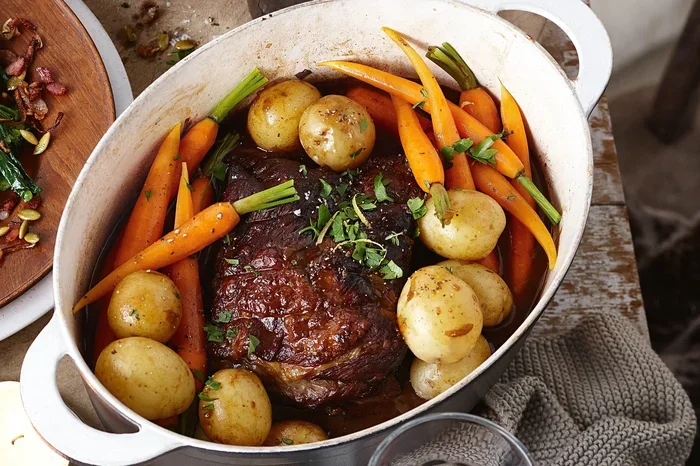
About 30 minutes before the roast is done, add your chopped vegetables around and on top of the roast. Carrots, potatoes, celery, and onions all work well. They will absorb the flavorful juices as they cook. Once the internal temperature reaches 190-200°F, remove the pot from the oven.
Step 6: Rest and Serve
This step is often overlooked but it is crucial. Let the roast rest for at least 15-20 minutes before slicing. This allows the juices to redistribute throughout the meat. If you cut too soon, the juices will run out and your roast will be dry. After resting, slice against the grain and serve with the vegetables and pan juices.
Quick Tips for the Best Pot Roast
- Do not skip the sear: It adds a layer of flavor that makes a huge difference in the final dish.
- Use a Dutch oven: The heavy cast iron retains heat evenly and locks in moisture.
- Keep the lid on: Every time you open the oven, you lose heat and moisture. Resist the urge to peek too often.
- Use a meat thermometer: It takes the guesswork out of cooking and ensures perfect results every time.
- Let it rest: Resting the roast after cooking is just as important as the cooking itself.
- Cook the day before: Pot roast tastes even better the next day. The flavors have time to meld and deepen.
- Save the broth: The cooking liquid makes an incredible base for gravy or soup.
Common Mistakes to Avoid When Cooking Pot Roast
Even experienced cooks can make mistakes with how long to cook pot roast in oven at 300. Here are the most common errors and how to avoid them.
Mistake 1: Cooking at Too High a Temperature
Some people turn the oven up to 350°F or higher to save time. This is a big mistake. Higher temperatures cook the outside of the roast too fast while leaving the inside tough. The whole point of pot roast is the slow breakdown of collagen. Stick with 300°F for the best results.
Mistake 2: Using a Lean Cut of Beef
Lean cuts like sirloin or tenderloin do not have enough fat or connective tissue for slow cooking. They will dry out and become chewy. Always choose a well-marbled, tougher cut like chuck or brisket for your oven pot roast.
Mistake 3: Not Enough Liquid
The braising liquid is what creates the steam that keeps the roast moist. If you do not add enough liquid, the meat will dry out. Make sure the liquid comes at least halfway up the side of the roast. You can always add more broth during cooking if needed.
Mistake 4: Cutting Into the Roast Too Soon
It is tempting to check the roast by cutting into it. But every time you cut into the meat, you release precious juices. Trust the thermometer and let the roast finish cooking undisturbed. The wait is worth it.
Mistake 5: Skipping the Resting Period
Resting the roast after it comes out of the oven is essential. The internal temperature will continue to rise slightly as the roast rests. More importantly, the juices will settle back into the meat. Skipping this step means your roast will be less juicy and flavorful.
Expert Insights on Perfect Pot Roast
We asked experienced chefs and home cooking experts for their top tips on making the best pot roast. Here is what they shared about cooking beef roast at 300°F.
“The sear is everything,” says Chef Maria Torres. “Take the extra 15 minutes to get a deep, dark brown crust on all sides. That is where the real flavor lives.”
“Patience is your best tool,” adds barbecue expert Jake Morrison. “Do not rush the cook. A pot roast at 300°F needs time to transform. The low temperature is what makes the meat so tender.”
“Use homemade stock if you can,” suggests home cook and food blogger Lisa Chen. “It adds a depth of flavor that store-bought broth simply cannot match. Even a simple homemade version makes a noticeable difference.”
These expert tips reinforce what we have covered throughout this guide. The key to a perfect pot roast is patience, good ingredients, and the right temperature. Keep these insights in mind as you plan your next oven roasted beef dinner.
Pot Roast Variations to Try
Once you master the basic pot roast recipe, you can start experimenting with different variations. Here are some fun ideas to try:
- Red Wine Pot Roast: Replace half the beef broth with red wine for a richer, deeper flavor.
- Asian-Inspired Pot Roast: Add soy sauce, ginger, and star anise to the braising liquid. Serve with steamed bok choy.
- Beer Braised Pot Roast: Use a dark stout or ale as part of your cooking liquid for a malty, rich taste.
- Herb Crust Pot Roast: After cooking, spread a mix of breadcrumbs, herbs, and butter on top and broil for 3-5 minutes.
- Slow Cooker to Oven Hybrid: Start the roast in a slow cooker on low for 6 hours, then finish in the oven at 300°F for a crispy exterior.
Each variation brings a unique twist to the classic dish. They all share the same principle of low and slow cooking at 300°F. Once you find your favorite combination, it will become a family staple.
How to Store and Reheat Leftover Pot Roast
Pot roast is one of those meals that tastes even better the next day. Here is how to store and reheat your leftovers properly.
Let the roast cool completely before storing. Place it in an airtight container and refrigerate within two hours. Leftover pot roast keeps well in the fridge for up to 4 days. You can also freeze it for up to 3 months. Wrap it tightly in plastic wrap and aluminum foil, or store it in a freezer-safe bag.
To reheat, place the roast in a baking dish with a splash of the cooking broth. Cover with foil and heat in a 300°F oven for about 20-30 minutes. This gentle reheating method keeps the meat moist and tender. Avoid microwaving if possible, as it can dry out the beef quickly.
Conclusion
Cooking the perfect pot roast is easier than most people think. The secret lies in understanding how long to cook pot roast in oven at 300 and following a few simple steps. Choose a well-marbled cut of beef, season it well, sear it for flavor, and let the low heat do the work. With about 3 to 4 hours of gentle cooking, you will have a tender, juicy roast that falls apart at the touch of a fork.
Remember to use a meat thermometer, let the roast rest before slicing, and save those delicious pan juices for gravy. Avoid the common mistakes we covered, and do not be afraid to experiment with different flavors and ingredients. Once you make a great pot roast, you will want to make it again and again. It is comfort food at its finest, and it is one of the most rewarding dishes you can prepare at home.
So preheat that oven to 300°F, grab a quality beef roast, and get ready to create a meal your family will talk about for days. Happy cooking!
Frequently Asked Questions
Can I cook a pot roast at 325°F instead of 300°F?
Yes, you can. Cooking at 325°F will reduce the time slightly. A 3-4 pound roast may be done in about 2.5 to 3.5 hours instead. Just keep an eye on the internal temperature and check for tenderness. The meat is done when it reaches 190-200°F and pulls apart easily with a fork.
Do I need to cover the pot roast while cooking in the oven?
Yes, covering the pot with a tight-fitting lid or aluminum foil traps moisture and creates steam. This steam is what keeps the roast juicy during the long cooking process. If you prefer a thicker sauce on top, you can remove the lid for the last 30 minutes of cooking.
What vegetables go best with pot roast?
Classic choices include carrots, potatoes, celery, onions, and parsnips. Add them about 30 minutes before the roast is done so they cook through but do not turn to mush. You can also add turnips, sweet potatoes, or green beans for variety.
Can I use frozen beef for pot roast?
It is best to thaw the beef before cooking. Cooking a frozen roast at 300°F will take much longer and the meat may cook unevenly. Thaw it in the refrigerator overnight for the safest and most even results. Then follow the same steps for a perfect pot roast.
How do I know if my pot roast is done without a meat thermometer?
The easiest way is to insert a fork into the thickest part of the roast. If the meat shreds easily and falls apart, it is done. You can also press the roast with tongs. A fully cooked roast will feel soft and give easily. However, a meat thermometer is the most reliable method.
Can I make pot roast in a regular roasting pan instead of a Dutch oven?
Yes, you can. A deep roasting pan with a tight-fitting lid works just as well. The key is to keep the roast covered so moisture stays trapped inside. If your roasting pan does not have a lid, you can cover it tightly with aluminum foil before placing the lid or foil over the pan.